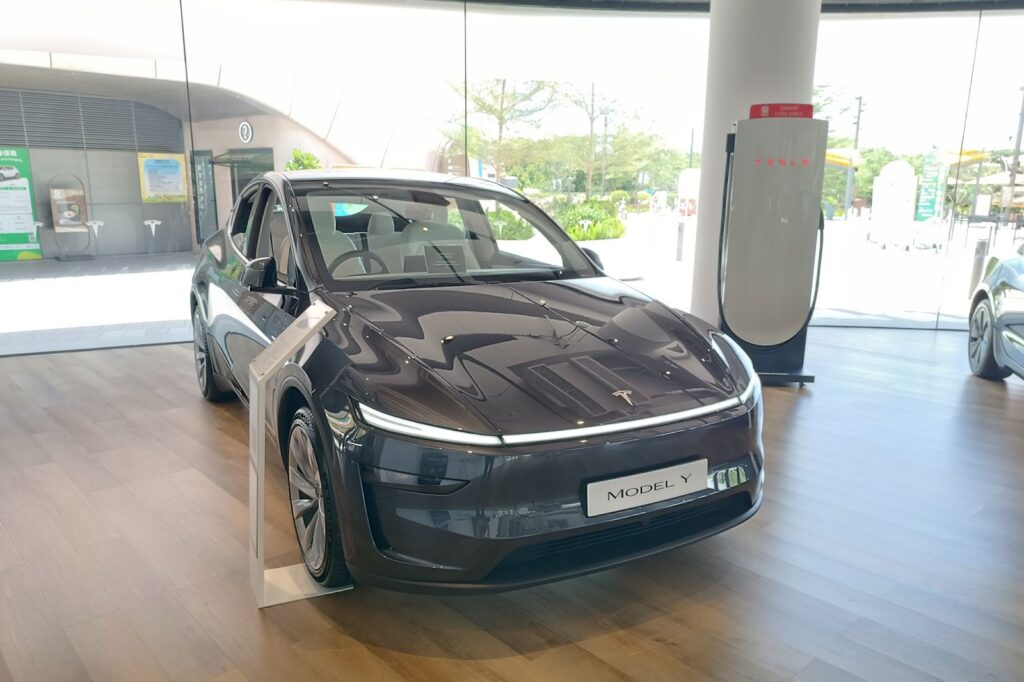
Tesla began pushing Full Self‑Driving (Supervised) v15 to Early Access Program members on 21 November, but the build will only reach vehicles equipped with the AI‑4 (HW4) computer. Cars running the older HW3 hardware remain on a separate software branch and will not receive the update.
The v15 Feature Set
The headline addition is Reality View, a real‑time generative driving visualization streamed from a virtual camera positioned above the car. Tesla’s release notes describe it as a single end‑to‑end visualization that replaces the previous explicit model signals, and the company says it uses less total compute than the old display. Drivers can choose full‑screen, map, split view or a quiet mode.
Under the hood, every part of the end‑to‑end driving network has been upgraded. A new vision encoder — shared across FSD, the Robotaxi platform and the Optimus humanoid robot — has been trained on millions of internet videos for improved generalisation and data efficiency. Tesla claims this encoder improves the critical intervention rate by 25 ×. Navigation now relies on an end‑to‑end learned model built from fleet route‑preference data, initially covering only the start and end of trips. Parking spot selection draws on the driver’s personal history, and driver monitoring has been relaxed for hats, sunglasses and higher‑speed profiles. The update also adds better detection of signs, small animals, debris, potholes, standing water and more natural speed handling in school zones and inclement weather, plus Speed Camera Slowdown and a Bike Rack Mode for hitch accessories.
Why HW4 Is Mandatory
The technical reality is that the new vision encoder and the Tesla Augmented Reality pipeline demand far more compute headroom and memory bandwidth than the Nvidia‑based HW3 computer can deliver. Tesla’s own notes highlight that the encoder is shared between FSD, Robotaxi and Optimus, implying a unified, higher‑throughput compute architecture that exists only in HW4. Elon Musk confirmed on the Q1 2026 earnings call that v15 would require AI‑4 hardware and that HW3 owners would need a hardware upgrade to receive it.
HW3 units, which have powered Tesla vehicles since April 2019, lack the sensor‑fusion bandwidth and raw inference throughput needed for the 25 × safety‑case improvement and the real‑time generative visualization. As a result, roughly two million cars equipped with HW3 will stay on the prior FSD software version — referred to internally as v14 Lite — while the wider v15 rollout proceeds in December for AI‑4 vehicles only.
Rollout Timeline
Tesla plans a wide release of FSD v15 in December 2026, targeting exclusively vehicles with the AI‑4 (HW4) computer. The company has not disclosed how many cars or which regions received the initial Early Access build.
Sources
- Tesla starts FSD v15 rollout to early testers and leaves HW3 cars out – Startup Fortune
- Tesla Autopilot
- Who Needs Automatic Driving? You Love to Drive! However, for Many Handicapped, Tesla’s Full Self Driving Is the Only Option. It’s Use It, or Don’t Drive! – CleanTechnica
- Mercedes Takes Aim at Tesla with New Hands-Free Driving Tech
- Tesla launches FSD v15, targets its biggest weaknesses, from signs to potholes
- Tesla Full Self-Driving v15 rollout begins: full release notes and improvements
Photo: Littootze 622 Miammoel (CC0)