WASHINGTON, D.C., November 22, 2026 — The Semiconductor Industry Association has welcomed bipartisan legislation introduced to extend the 25 percent investment tax credit at the heart of the CHIPS and Science Act. The move is a direct response to the technical reality that the credit’s current sunset threatens to outpace the actual construction cycles of the fabs it was designed to seed.
The Legislative Mechanics
The CHIPS and Science Act, signed into law on August 9, 2022, authorized roughly $280 billion in new funding, with $52.7 billion appropriated for domestic semiconductor manufacturing and research. The manufacturing incentives sit on two legs: $39 billion in direct subsidies and a 25 percent investment tax credit for equipment costs. By March 2024, analysts estimated the package had incentivized 25 to 50 projects representing $160 billion to $200 billion in projected private investment and 25,000 to 45,000 new jobs. The proposed extension aims to keep the tax credit alive past its current horizon, aligning the fiscal tool with the multi-year cadence of breaking ground on leading-edge logic and memory fabs.
Timelines Slip Past 2025
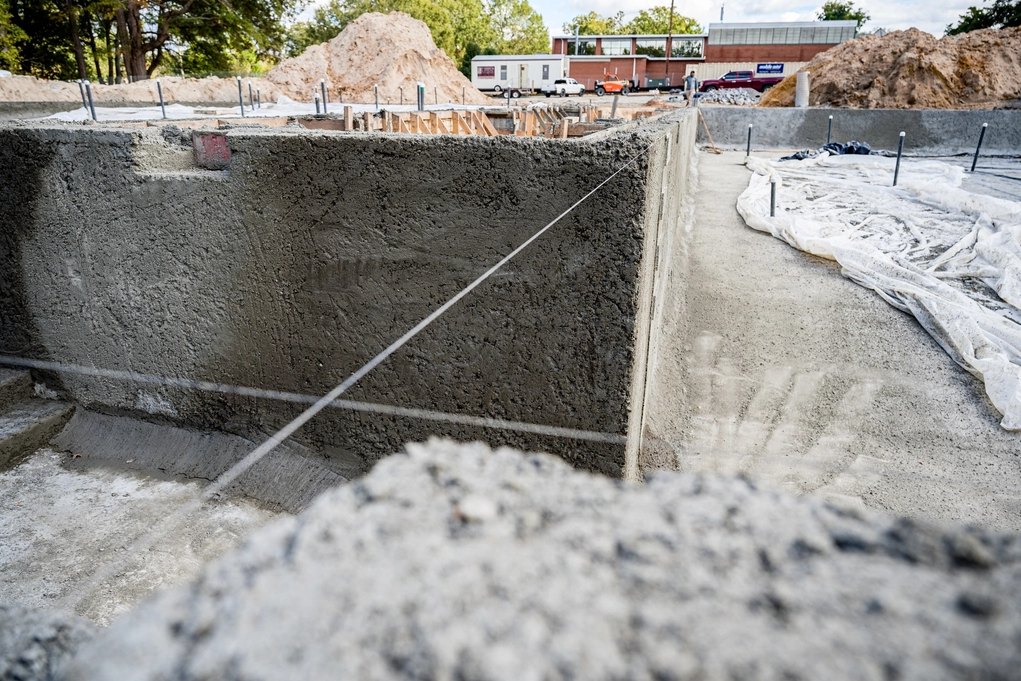
The technical reality of fab construction is that the credit’s original timeline was always optimistic. Projects have stalled on bureaucratic hurdles, skilled worker shortages, and congressional funding deals that cut research provisions by tens of billions of dollars. Intel’s Ohio mega-fab, once slated for an earlier ribbon-cutting, is now expected to open in 2030, contingent on workforce availability. The extension signals that lawmakers have accepted the schedule risk: you cannot depreciate equipment on a tax return for a cleanroom that hasn’t poured concrete yet.
The 150,000-Person Gap
SEMI analysis projects a U.S. shortage of roughly 150,000 semiconductor and microelectronic workers by 2030, with acute gaps in Ohio, Texas, and Arizona — precisely where the CHIPS-funded giants are rising. In Lorain County, Ohio, the community college has spent 13 years ramping a microelectronic manufacturing program to feed the Intel pipeline. Professor Johnny Vanderford focuses on troubleshooting: if a process drifts, his students need to diagnose and fix it, not just swap the board. Dean Kelly Zelsnik notes the industry has shifted from “throw it away” to “repair,” a distinction that matters when a wafer lot costs six figures. Industry veteran Steve Williams warns the explosive growth of AI demand will only widen the gap between the technicians available and the technicians required.
Supply-Chain Vulnerabilities Beneath the Fab
The workforce is the visible bottleneck; the specialty gases are the invisible one. A typical fab consumes roughly 150 specialty gases, representing about $5 billion in annual economic activity — a rounding error against a $1 trillion industry. But as Carl Jackson of SSoT Group put it at a recent AEI panel: “If you lose one of those 150 gases and inputs into a fab, it’s no gas, no chips. The fab’s down.” An SIA study of 300 inputs found 95 percent of top-level equipment comes from the U.S., Europe, or Japan. Go one tier deeper — the materials making up that equipment — and half the supply chain carries medium or high risk of geographic concentration or export controls. Go deeper still, and the supplier count often collapses to one or two. Tungsten hexafluoride offers a case study: China controls roughly 80 percent of global tungsten capacity and 60 percent of fluorspar, the feedstock for fluorine. Tungsten is already under Chinese export controls. The tap can be turned off several tiers below where procurement teams usually look.
Scaling the Lab-to-Fab Bridge
While the fabs wait for workers and gases, the research infrastructure is scaling. Penn State recently unveiled new capabilities at its Millennium Science Complex funded by $4.3 million through the CHIPS-established Microelectronics Commons via the Midwest Microelectronics Consortium. The kit includes a metal-organic chemical vapor deposition system for growing semiconductor films, an atomic force microscope for wafer-scale metrology, and a metal evaporation system for electrical contacts. The detail that matters: these tools were selected for compatibility with industry processes, explicitly to shrink the gap between university lab scale and commercial fab scale. Distinguished professor Joan Redwing said the new infrastructure lets them take 2D semiconductor processes developed at laboratory scale and move them to larger wafer sizes — a necessary step before atomically thin materials can replace silicon at the three-nanometer node and beyond.
Parallel Tracks in Europe
The U.S. is not alone in adjusting the policy levers. The European Chips Act entered force in September 2023, and in June 2026 the European Commission proposed a Chips Act 2.0 successor. The original regulation rests on three pillars: the Chips for Europe Initiative for research and pilot lines, a security-of-supply regime for first-of-a-kind facilities, and a monitoring and crisis-response mechanism. The Commission’s five strategic objectives mirror the U.S. agenda: research leadership, manufacturing capacity, 2030 production targets, skills shortages, and supply-chain mapping. The bipartisan U.S. tax credit extension suggests a tacit consensus that the first act was a down payment, not the mortgage.
Next Steps
The legislation now moves through the congressional committee process where the text will be marked up against the appropriations baseline. Industry implementation hinges on the Treasury guidance for credit eligibility — specifically whether the extension applies to equipment placed in service after 2025 or merely to projects that broke ground before the deadline. That definition, as ever, determines which fabs get the 25 percent and which get the bill.
Sources
- CHIPS and Science Act
- Worker shortage could impact semiconductor industry
- Penn State unveils new semiconductor research capabilities | Penn State University
- No Gas, No Chips: The Hidden Supply Risk Beneath the Fab
- European Chips Act: Pillars, Articles & Status — CASRAI
Photo: Toon Lambrechts / Unsplash (Unsplash License)