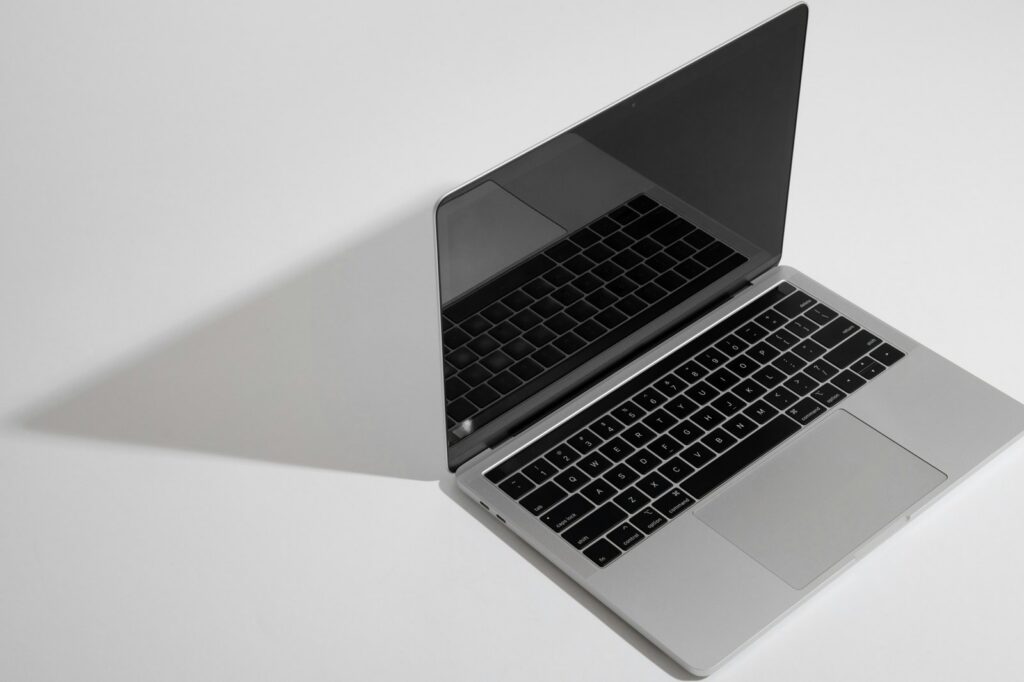
LOS ANGELES, November 2, 2026 — Apple has finally cracked the one design principle it swore by for two decades: the laptop screen is now a touchscreen. The company unveiled its first MacBook Pro with a touch-sensitive display on Wednesday, marking the most significant hardware shift for the line since the transition to Apple Silicon in 2020.
The End of the Trackpad-Only Era
For twenty years, the MacBook Pro has been defined by a rigid separation between input and display. You typed on the keyboard; you clicked on the trackpad; you looked at the screen. That boundary is gone. The new 14-inch and 16-inch models feature what Apple calls the PROLED XDR Display, a tandem OLED panel that supports direct touch interaction.
This is not a hybrid tablet-laptop in the mold of the early Windows 8 era, where screens were clunky and software was confused. The technical reality here is more subtle. Apple states that the touch sensor is built into the display itself rather than layered on top, a design choice intended to reduce latency when swiping or scrolling. The system translates touches into clicks, meaning many existing applications should work immediately without specific optimization. However, the company notes that updates for third-party apps will arrive later this year, while updates for Apple Creator Studio are scheduled for November.
Johny Srouji, Apple’s chief hardware officer, framed the release as a result of “deep integration between Apple silicon, hardware, and software.” He described the device as a “monumental step forward for the Mac,” claiming it offers a “whole new way for pros to interact with their content.”
Under the Hood: PROLED and M5 Chips
The display is the headline, but the silicon powering it is equally dense. The new MacBook Pro runs on the M5 Pro or M5 Max chips, which Apple describes as its most powerful yet for a pro laptop. The machines can be configured with up to 128GB of unified memory and 16TB of storage.
The PROLED XDR panel offers up to 2,000 nits of peak brightness for both HDR and SDR content, with a 10,000,000:1 contrast ratio. For color-critical work, the screen supports P3 and Adobe RGB color gamuts, with Apple claiming more than 80% Rec. 2020 coverage for HDR video editing. A nano-texture option is available for those who need anti-glare performance.
One detail that matters for outdoor use or bright studio environments is the sustained brightness. While the peak is 2,000 nits, Apple’s product page specifies up to 1,000 nits of sustained full-screen brightness. That distinction is crucial for buyers comparing displays, as peak brightness often fades during long, continuous use.
The physical design has also shifted. The traditional notch has been replaced by the Dynamic Island, the pill-shaped cutout familiar from iPhones, which now displays information and houses the front camera on a laptop. The illuminated Mac logo has returned to the lid. Battery life is claimed to reach up to 24 hours, and the six-speaker system now delivers 50% deeper bass than previous models.
Who Is This For?
Apple is positioning the touchscreen not as a gimmick, but as a tool for specific professional workflows. The company highlights use cases for creative professionals and app developers. For developers, the touch capability allows them to directly test how apps behave on the hardware. For designers and musicians, it enables drawing sketches or playing virtual instruments directly on the screen.
The reception has been mixed. Marques Brownlee, a prominent tech reviewer, noted that touch was not something he had been looking for on a MacBook Pro, though he was tempted by the lighter weight of the new chassis. Mark Ellis, a UK-based reviewer, expressed excitement about using touch for music creation projects. Noel Campion, a photography enthusiast who writes for the Irish Examiner, was less convinced, stating he was not a fan of touchscreens on laptops.
For the average user, the value proposition is less clear. The M5 Pro and M5 Max chips are already available in non-touch versions of the MacBook Pro. The new touch layer adds a dimension of interaction, but it does not fundamentally change the computing power. Buyers should consider whether direct interaction with the screen saves time or improves precision in their specific workflow, or if they are paying a premium for a feature they may never use.
Pricing and Availability
The new MacBook Pro models start at $2,899 for the 14-inch version and $3,399 for the 16-inch version. Preorders opened on October 28 in 30 countries and regions, including the United States. The devices are scheduled to launch on November 6, 2026.
This launch is part of a broader product push under John Ternus, who has been CEO for his first two months. The touchscreen MacBook Pro joins other recent announcements, including the iPhone Duo and a new M6-powered iMac. For IT buyers and organizations, the decision to refresh fleets should be based on specific display or interaction needs, rather than a blanket upgrade. A screen that improves one team’s work does not establish a reason to replace every employee’s laptop.
The next major date for Apple users is November 6, when the new MacBook Pro becomes available for purchase.
Sources
- Apple Unveils Its First-Ever MacBook Pro With a Touchscreen OLED
- Apple Unveils Touchscreen OLED MacBook Pro From $2,899
- Apple unveils first touchscreen laptop, new iPad mini, and M6 iMac & MacBook Pro
- Apple Cuts iPhone 17 Prices, Launches OLED iPad Mini and Touchscreen MacBook Pro
- Apple just announced its first ever MacBook with a touchscreen | CNN Business
Photo: Giorgio Trovato / Unsplash (Unsplash License)