TS Lombard’s downside model starts with a stark number: a fall of at least 30% in US stocks if the artificial intelligence investment boom ends. Technology shares would drop 40% in that scenario, other sectors 20%, and roughly $20 trillion of market value would disappear.
That is a scenario, not a forecast with a fixed date. Dario Perkins, the firm’s managing director for global macro, advises retaining normal risk through diversified global stocks rather than trying to call the top.
The spending arithmetic
Meta, Alphabet, Oracle, Amazon and Microsoft have committed $800bn between them in 2026. Alphabet expects investments of up to $205bn this year, almost entirely connected to AI, while Amazon has committed $220bn.
Across the US technology sector, annual investment is running around $1 trillion. TS Lombard expects AI companies to issue approximately $700 billion in new bonds during 2027, including $400 billion from hyperscalers. It puts hidden liabilities in off-balance-sheet structures at $1.5 trillion to $2 trillion.
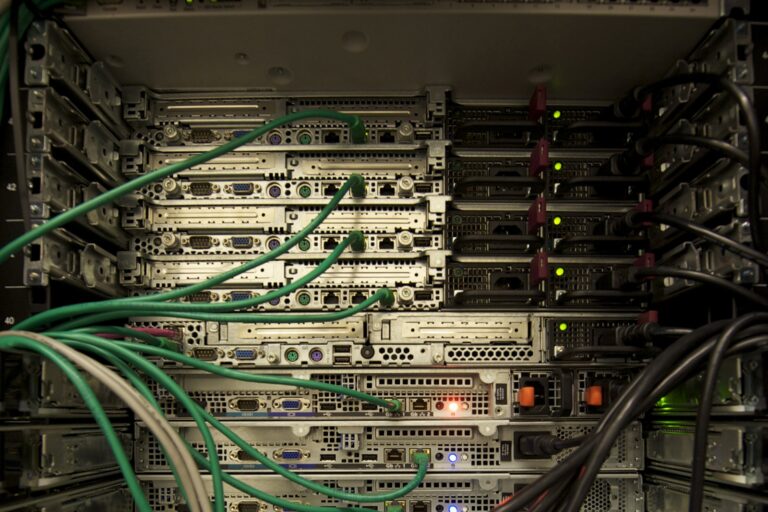
The technical reality is a circular financing chain. AI laboratories contract for computing capacity before using it. Cloud providers count those commitments as backlog, then borrow to construct data centers. Continued access to fresh capital keeps that structure working.
Concentration adds another vulnerability: TS Lombard says just 1% of customers generate 80% of the combined earnings at OpenAI and Anthropic. Most are unprofitable AI start-ups. CoreWeave, one of the cloud providers it identifies as a weak link, is already paying 15% interest.
A crash without a 2008 repeat
The report puts losses from private credit and other AI-related borrowing between $125 billion and $190 billion. It nevertheless expects only a mild US recession, comparable with 1990 or 2001, rather than a systemic banking crisis.
Its reasoning rests on room for Federal Reserve rate cuts and healthier private-sector balance sheets. The modeled crash lowers US GDP by about 2 percentage points. Data-center construction has created around 500,000 jobs, and the report’s 2027 year-end projection is 800,000.
“We’re not expecting major job losses and the Fed has plenty of room to cut interest rates,” the report says. It also argues that lower rates could release demand in housing and other parts of the economy constrained by tight monetary policy.
Government bonds therefore come later in its playbook, once signs of fragility appear. Buying long-dated debt too early could mean underperforming while stocks rise and yields climb. The firm also expects markets outside the US to outperform over time and the dollar eventually to weaken.
Earnings expose the divide
Amazon’s third quarter illustrates why headline profit figures alone miss the tension. Revenue reached $201.94B against a $202.20B estimate, while EPS of $1.89 missed the $1.96 consensus. Yet operating income rose 61.15% to $28.08B and its operating margin reached a record 13.9%.
AWS revenue surged 39% to $46B. Capital expenditure still reached $77.26B for the quarter, with management expecting to spend meaningfully more in 2027. Trailing free cash flow was an outflow of $42.4B.
Investors were also watching the Fed’s Wednesday decision and Chair Kevin Warsh’s press conference, followed by Alphabet and Microsoft results and then Amazon. Market pricing put the probability of a December hike at about 75%, making Warsh’s inflation language and any dissents favoring immediate tightening especially important.
For Alphabet, Cloud and Search growth must be weighed against capital spending. Microsoft’s tests include Azure expansion, Copilot revenue and demand for its data-center buildout. Amazon’s rough $220 billion capital-expenditure forecast provides the third check on whether AI income is keeping pace with construction.
Perkins’s working assumption places the investment-boom reversal in early 2028, with the explicit caveat that the date could slip.
Sources
- Fed decision and Alphabet, Microsoft, Amazon earnings could shake up the AI trade over the next 48 hours
- What Musk's neocloud warning means for investors
- A Wall Street Firm Modeled Out an AI Crash: S&P 500 Down 30%, $20 Trillion Gone. But Here's What Happens Next | The Motley Fool
- US tech stocks see sharp falls as AI spending nears $1tn
- Amazon Stock Fell After Earnings. Jim Cramer Says Buy Right Here
Photo: Maxim Klimashin / Unsplash (Unsplash License)