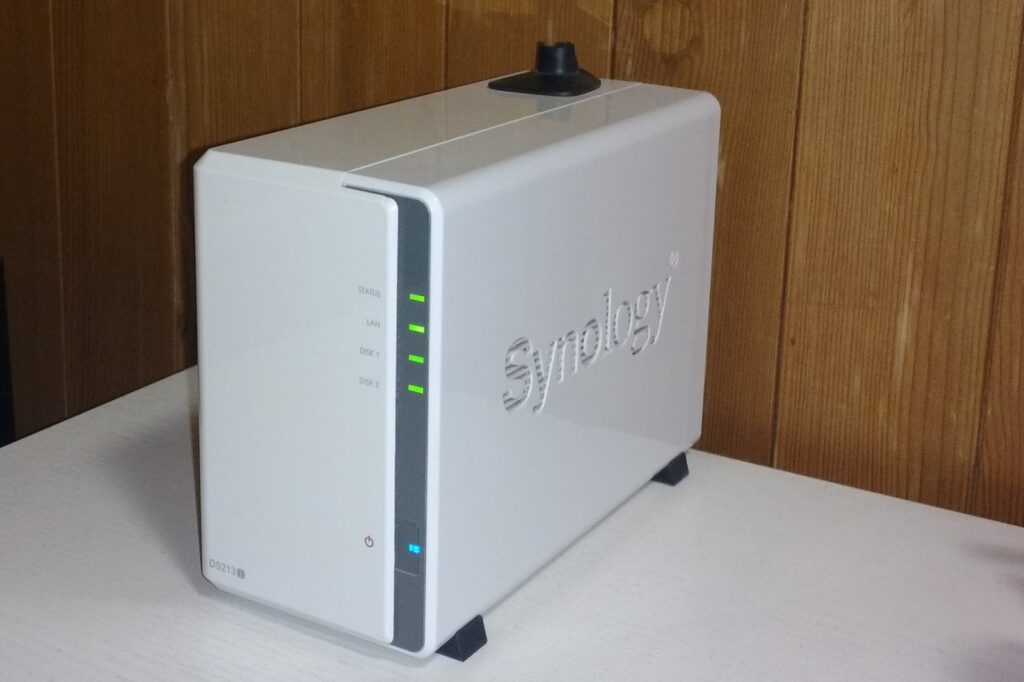
Files on attacked Synology storage systems are receiving the suffix .L0CK3D, while folders gain a ransom note called read-me3.txt. The company is urging owners to update DiskStation Manager immediately and stop exposing its management interface to the internet.
Security teams have provisionally identified the ransomware as C3RB3R. Reports appeared in South Korea around Oct. 28, but neither Synology nor the Korea Internet & Security Agency has disclosed a victim count.
The patch and the dispute over entry
Synology’s Oct. 29 statement says attackers are exploiting a vulnerability patched in December 2024 against outdated DSM installations. It links the campaign to advisory Synology-SA-24:20 and rejects involvement of the newer PHP2Shell flaws.
That advisory covers three vulnerabilities disclosed after Pwn2Own 2024. CVE-2024-10441, rated 9.8, permits unauthenticated remote code execution without user interaction.
CVE-2024-50629 is a webapi issue allowing limited remote file reads and scores 5.3. CVE-2024-10445, rated 4.3, concerns update-certificate validation and lets an adjacent attacker write limited files.
The notice does not establish which vulnerability was used in each incident or whether several were combined.
Security firm 360 gives a different account. It attributes incidents it examined to CVE-2026-13684 and CVE-2026-13639, disclosed on Sept. 18, 2026 and each rated 9.8. They involve insufficient entropy in login logic and inadequate SCGI output encoding.
Solar’s responders found DSM 7.4.1-90080 Update 1 on an affected device. It has not ruled out packages, containers or stolen credentials. No public evidence establishes a zero-day.
One development may help explain renewed interest in the older bug: a public technical writeup and proof of concept appeared on GitHub on Oct. 25, four days before the advisories.
What the malware does
The analyzed C3RB3R sample bypasses 27 system directories and selected file categories, then recursively processes other content. Files associated with 187 priority extensions receive full encryption; other files are only partly encrypted, reducing the time needed.
Under the hood, the malware generates a 256-bit key for each file, uses ChaCha8 to encrypt the contents and wraps the key with RSA-2048. Changing a filename back from .L0CK3D does nothing to repair those encrypted bytes.
Each ransom note carries a Tor address and six-digit ID. The opening demand is 0.036960 bitcoin, approximately $2,952. After five days it rises to 0.073920 bitcoin, about $5,904.
The criminals offer to decrypt one file without payment and market a program called “C3rb3r Decryptor.” Their note claims third-party restoration attempts will be “fatal” for the files.
No free decryption tool has been identified. Synology’s recovery advice is to restore from backup data or snapshots, not to pay for a promised utility.
The full build number matters
SA-24:20 identifies DSM 7.2.2-72806-1 as a fixed release. It also lists 7.2.1-69057-6. The 7.2 branch has build 64570-4. For 7.1.1, the listed build is 42962-7. DSM 6.2.4-25556-8 completes the advisory’s historical fixes. These are floors, not a reason to stop updating.
The September advisory sets different thresholds. DSM 7.4-90075 is one listed release. Another is 7.3.2-86009-4. The list also includes 7.2.2-72806-9, followed by 7.2.1-69057-12. A device can therefore carry the 2024 fix while still lacking the September patch.
Administrators should install the newest release their model supports and update official and third-party packages. Automatic updates help, but they do not necessarily move a device between major DSM versions.
Synology also recommends blocking internet access to the management web interface. Appinn’s incident checklist extends that advice to SSH and suggests using a VPN for remote connections.
Two-factor authentication remains useful for account attacks, but it cannot repair an unauthenticated software flaw. Patching and reducing exposure do different jobs.
Check for intrusion, then protect recovery
Synology’s checklist begins with a Security Advisor scan. Administrators should inspect Task Scheduler for unfamiliar scripts and User & Group for administrator accounts they did not create, then contact Support if either appears.
Disconnect an infected device from its network. Power it off if disconnection is impossible. Installing a patch is not, by itself, proof that an earlier intruder has been removed.
Backups need to be independent, offline or off-site. Hyper Backup and Snapshot Replication can create separate copies, but snapshots kept only on the same NAS may be encrypted with everything else.
Shadowserver tracks more than 380,000 internet-exposed Synology devices, without saying how many are vulnerable or are honeypots. Synology says it has more than 14 million systems deployed worldwide.
PSIRT is tracking the campaign. Affected users can contact the company’s Support team through Support Center in DSM.
Sources
- Hackers Exploit Patched Synology NAS Vulnerabilities to Deploy C3RB3R Ransomware and Encrypt Files
- Synology warns of C3RB3R ransomware attacks targeting NAS devices
- Synology NAS Ransomware Alert: C3RB3R Locks Files W/ .L0CK3D
- Ransomware 'C3RB3R' Hits Synology NAS: 3.9 Million Won in Bitcoin Demanded, No Fix Beyond Patching — BigGo Finance
- Ransomware hits Synology NAS in Korea, demands bitcoin as damage spreads
- Synology NAS Ransomware: C3RB3R and DSM Security Gaps
Photo: Fabian sigrist (CC BY-SA 4.0)