GM Energy is advancing its vehicle-to-grid ambitions with a California pilot that puts Ultium-platform EVs into Southern California Edison’s Emergency Load Reduction Program, using AC-based bidirectional charging to sidestep the cost and complexity of the DC hardware it ships today. The program, run with software partner WeaveGrid, marks the first time GM drivers in the state can export power from their vehicles to the grid, not just to their homes.
The Pilot: First GM V2G Export in California
Select EV owners in SCE territory will enroll through WeaveGrid’s platform, install a GM Energy V2H system, and participate in utility demand-response events. The pilot examines the full customer journey: enrollment, equipment installation, utility interconnection approval, and actual dispatch during high-demand grid events. GM Energy and WeaveGrid will use the findings to design future V2G programs that are easier to access and offer better financial returns, according to the company’s announcement.
Participants in SCE’s Emergency Load Reduction Program can qualify for up to $8,000 toward the GM Energy V2H system through the California Energy Commission, plus up to $8,099 for eligible installation and interconnection costs. Payments for energy exported during grid events are on top of those incentives, though actual savings depend on eligibility, rate plans, usage, and program terms.
Under the Hood: AC Versus DC Bidirectional Charging
The technical reality is that today’s GM Energy Home System uses DC-based bidirectional charging: the vehicle’s onboard inverter stays dormant while a wall-mounted inverter handles the DC-to-AC conversion for home backup. That hardware is bulky, expensive, and requires a dedicated interconnection agreement.
GM is now pursuing AC-based bidirectional charging, where the vehicle’s own inverter exports grid-compliant AC directly. The approach removes the external inverter, lowers hardware cost, and simplifies utility interconnection — provided the car, the charger, and the grid all speak the same language. The Ultium platform’s architecture supports this; the missing piece has been standardization.
Standardization: The CharIN North America AC Working Group
To that end, GM is joining CharIN’s North America AC Vehicle-to-Grid Task Force, which is launching soon. The group will align technical standards, certification, and utility interconnection requirements so AC V2G works reliably across vehicles, charging equipment, and utility networks. As GM noted in its June 2026 open letter, the home energy industry is young and there’s still work to do; standardization is the detail that matters for scale.
Context: Volkswagen’s DC BiDi Charger in Germany
For comparison, Volkswagen subsidiary Elli launched a mass-market V2G offer in Germany this month using an 11 kW DC bidirectional charger priced at €1,995 before installation. The unit supports ISO 15118-20 and works with 400-volt and 800-volt MEB-platform vehicles — over one million in Europe, roughly 360,000 in Germany. Elli pays a plug-in bonus of €0.24 per connected hour (capped at 250 hours monthly) and plans a €0.40/kWh feed-in tariff later. The DC hardware requirement and installation cost remain barriers; GM’s AC strategy aims to remove them.
What Comes Next
The California pilot is live now with select SCE customers. GM Energy currently offers managed charging programs with 13 U.S. utilities, controlling charge timing for off-peak rates and bill credits. The V2G pilot adds the export leg, turning parked Ultium EVs into dispatchable grid assets — if the standards process delivers interoperable AC hardware at a price that makes the incentives pencil out for owners.
Sources
- Vehicle-to-grid
- GM Vehicle-To-Grid Power Technology Progressing
- Vehicle-to-Grid power is getting closer. Hereâs GMâs latest progress
- Elli launches vehicle-to-grid charging offer in Germany | Automotive World
- Volkswagen Launches Mass-Market Vehicle-To-Grid Charging, Letting EV Owners Earn Money
- VW Will Pay German Drivers To Plug In Their EVs. Even If The Grid Never Uses Their Power
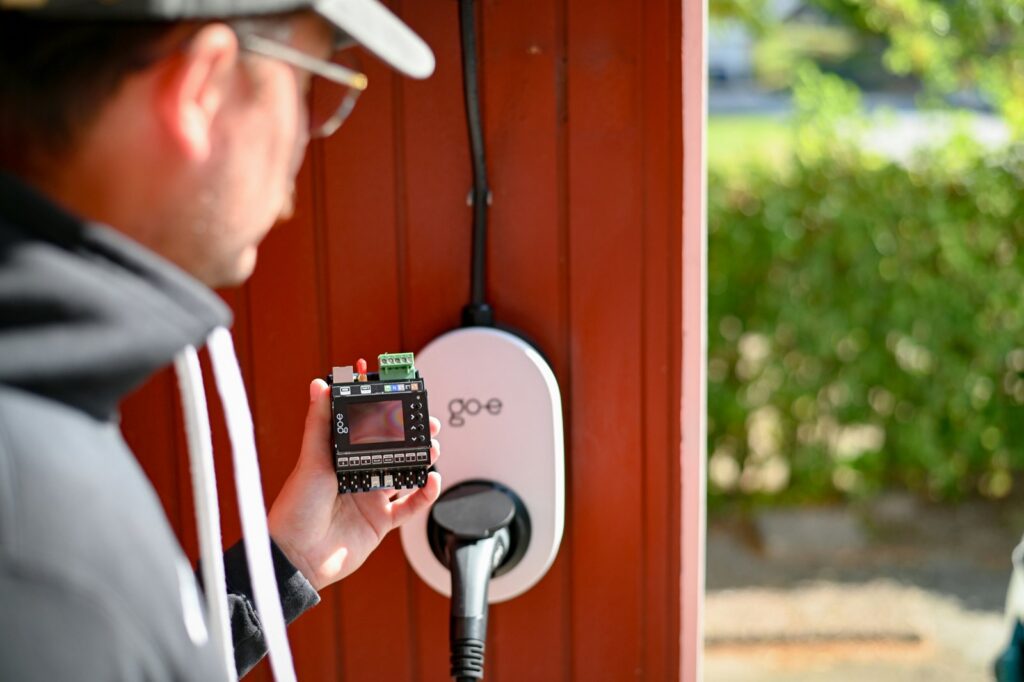
Photo: go-e / Unsplash (Unsplash License)