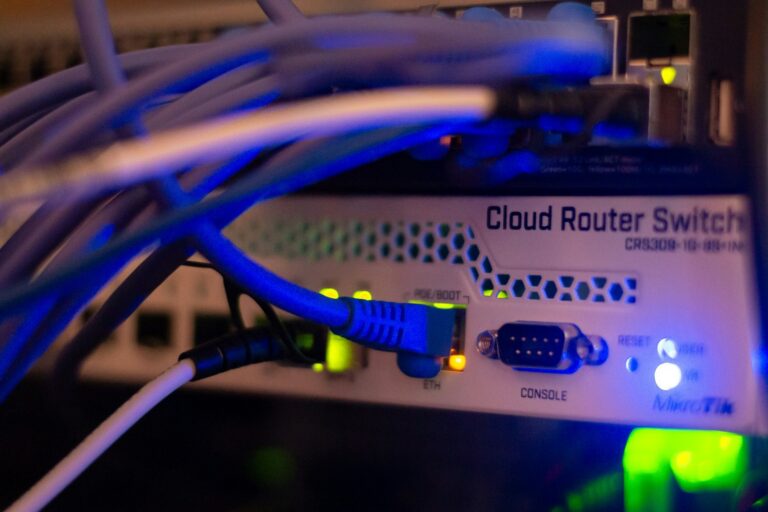
The City of Berlin did not yield to ransomware demands after cybercriminals stole 5.8 terabytes of confidential data from its government network. The perpetrator group, identified as Ryuk and later renamed Rhysida, demanded a mere 30 Bitcoin, roughly 2 million euros at the time.
The Franchise Model Behind the Breach
Ryuk operates as a franchise-style criminal organization known globally as Ransomware-as-a-Service. This business model allows different groups to sell access to their malware tools, creating a distributed network of attackers who can target high-value institutions without building their own infrastructure from scratch.
The stolen data included government employee records, confidential contracts, critical infrastructure information, and private citizen information. This incident is not a story about a small business’s customer email list being leaked. Instead, one of the most important capitals in Europe had its core digital assets compromised by a sophisticated external threat.
Cybercriminals infiltrated the Berlin city government’s network at the end of summer while citizens were enjoying cold beers at famous beer gardens. The shift is happening where least expected, exposing a gap between public perception of safety and the reality of municipal digital defenses.
Why the City Refused to Pay
Berlin refused to pay the ransom demand despite the severity of the breach. This decision stands in stark contrast to many other high-profile attacks where municipalities feel forced to negotiate under duress to restore critical services quickly.
The urban area of Berlin has a population of 4.5 million, making it the second most populous city in Germany after the Ruhr. With such a large population relying on complex public transportation networks and essential government services, the pressure to pay is immense. However, the city leadership chose not to yield.
This refusal highlights a hardening stance against criminal extortion tactics. The incident serves as a warning that paying ransom does not guarantee data safety or service restoration. Criminal organizations often leak stolen data publicly if their demands are ignored, but the decision to refuse payment signals a strategic shift in how governments view these threats.
Structural Flaws in German Digital Infrastructure
In Germany, known for its bureaucracy and adherence to rules, the fact that criminals were able to walk away with official records is shocking in itself. The incident exposes structural problems inherent in Germany’s digital infrastructure that allowed such a massive theft to occur without immediate detection.
Berlin serves as a continental hub for air and rail traffic and has a complex public transportation network. The reliance on digital systems across these critical sectors makes the city vulnerable if the foundational security protocols are not robust enough to stop modern ransomware groups.
The Berlin-Brandenburg capital region has around 6.2 million inhabitants and is Germany’s second-largest metropolitan region after the Rhine-Ruhr region, as well as the fifth-biggest metropolitan region by GDP in the EU. Despite its economic importance, the digital backbone supporting these operations faced a breach that compromised sensitive information on a massive scale.
The city includes lakes in the western and southeastern boroughs, the largest of which is Müggelsee. About 1/3 of the city’s area is composed of forests, parks and gardens, rivers, canals, and lakes. This green landscape masks the digital reality where critical data flows through interconnected networks that require constant vigilance against evolving threats.
Lessons from Similar Incidents
The attack on Berlin offers lessons learned from similar incidents affecting government employee data across Europe. Cybersecurity resilience must be treated as a continuous process rather than a one-time fix, especially for municipalities managing vast amounts of citizen data.
Berlin is the capital and largest city of Germany. With 3.7 million inhabitants, it has the highest population within its city limits of any city in the European Union (EU). The metropolis is also one of the states of Germany, being the third-smallest state in the country by area.
The breach underscores the need for better isolation of critical systems and stricter access controls. Government employee data, confidential contracts, and private citizen information must be protected with layers of security that can withstand the pressure of a determined attack group like Rhysida.
This post runs on cybernewschronicle.com, which covers Electronics, semiconductors, computing hardware, physics, product releases and reviews, EV technology – plus cybersecurity and data breaches. What’s changing in the way cities defend themselves will determine whether similar breaches happen elsewhere in the EU.
The Department of Energy and Enviornmental Protection responded to assist with the mitigation of hazardous materials from a transformer that was damaged during a separate crash in Berlin on October 27, 2026. This unrelated event highlights how physical infrastructure failures can compound digital vulnerabilities when emergency response systems rely on compromised networks.
A person suffered serious injuries after a crash in Berlin near Spruce Brook Road. It was initally reported as a rollover crash with a person trapped, car fire, and knocked down power lines. A nearby police officer pulled the operator from the vehicle before it becamse fully engulfed in flames.
The blaze spread to nearby brush and grass but was extinguished. The area will remain closed while officials work to remove any hazards and make repairs. These physical disruptions remind us that cyber incidents often have real-world consequences that extend far beyond digital screens.
Ransomware-as-a-Service Mechanics and the Berlin Breach
Ryuk (later identified as Rhysida) operates as a franchise-style criminal organization known globally as Ransomware-as-a-Service. This business model allows different groups to sell access to their malware tools, creating a distributed network of attackers who can target high-value institutions without building their own infrastructure from scratch. The stolen data included government employee records, confidential contracts, critical infrastructure information, and private citizen information. Cybercriminals infiltrated the Berlin city government’s network at the end of summer while citizens were enjoying cold beers at famous beer gardens, exploiting the shift where least expected to expose a gap between public perception of safety and the reality of municipal digital defenses.
The ransom demanded was a mere 30 Bitcoin, roughly 2 million euros at the time, yet Berlin refused to yield despite the severity of the breach. This decision stands in stark contrast to many other high-profile attacks where municipalities feel forced to negotiate under duress to restore critical services quickly. The urban area of Berlin has a population of 4.5 million, making it the second most populous city in Germany after the Ruhr. With such a large population relying on complex public transportation networks and essential government services, the pressure to pay is immense; however, the city leadership chose not to yield. This refusal highlights a hardening stance against criminal extortion tactics and signals a strategic shift in how governments view these threats, particularly as criminal organizations often leak stolen data publicly if their demands are ignored.
Sources
- Why the City of Berlin Did Not Yield to Ransomware — 5.8TB Stolen, 30 BTC Ransom Refused, and Germany's Digital Vulnerability Exposed|きままなヤース
- Berlin
- Person suffers serious injuries after crash in Berlin
Photo: Diego Delso (CC BY-SA 4.0)