Hundreds of shops across seven European countries discarded fresh and frozen food after suspected attackers remotely altered commercial refrigerator settings. Some thermostats were raised to 50C, while other units were switched from minus 22C to a 15C defrost cycle.
The overnight incidents caused millions of euros in losses, according to The Independent. They also provide a practical warning for households increasingly connecting kitchen appliances to the internet.
What happened to retailers
Belgian branches of Carrefour, Intermarché and Ikea were affected, as were Coop and ICA in Sweden, Delhaize in Luxembourg, Kesko in Finland, SuperValu in Ireland and shops in Estonia.
A handful of British meat suppliers also reported problems, according to The Grocer. Their refrigerator temperatures were raised to 38C, spoiling food.
UK National Cyber Security Centre chief executive Dr Richard Horne told the BBC’s Today programme that his organization worked overnight to alert potentially affected British organizations and was aware of a “couple of impacts.”
No group had claimed responsibility and no ransom demand had been reported. French retailers experienced a similar earlier incident, while refrigerator malfunctions at six US military bases in August were being investigated as a possible cyberattack.
Why temperature controls are exposed
Commercial systems go online so staff can monitor and adjust temperatures remotely. That removes the need to check every unit in person, but it also makes the management connection part of the store’s security perimeter.
Phones and desktop computers commonly receive frequent security updates. Refrigerator control software can instead remain unchanged for long periods, leaving known weaknesses available to attackers.
Cyber minister Baroness Lloyd of Effra said the French supermarket incident exploited known vulnerabilities. She identified poor cyber hygiene, including weak passwords, as an continuing risk.
“Too many organisations still carry years of technical debt. Too many still rely on legacy systems, and too many still have not put cybersecurity fundamentals in place,” she said.
What this means closer to home
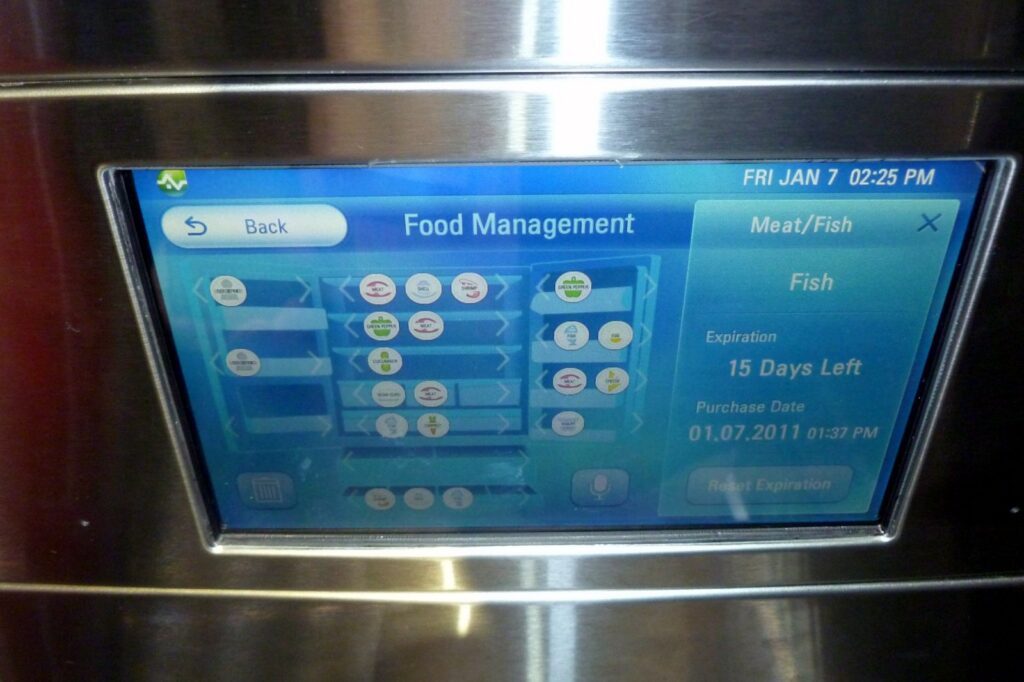
The reported campaign targeted commercial operations, not domestic refrigerators. Still, home appliances use the same basic bargain: internet access enables remote monitoring and control, and that access needs protection.
Start with the software. Check whether the refrigerator and its control application have pending security updates, and enable automatic updates where the manufacturer offers them. A connected appliance whose software is no longer supported cannot receive fixes for newly discovered weaknesses.
Next, review access. Replace any default or weak password with a strong, unique one, and protect the account used to manage the appliance. Do not reuse the password from another service.
Households should also understand what remote functions are enabled and who can use them. Shared family access should be limited to people who need it. An appliance does not need to be permanently reachable from everywhere merely because that option exists.
These steps cannot guarantee that a device will never be compromised. They address the specific weaknesses highlighted by officials: outdated software, legacy systems, weak passwords and neglected security basics.
The NCSC urged British retailers to update fridge temperature-controller software urgently. Graham Wynn of the British Retail Consortium said the agency was working to make fridges and freezers as secure as possible against potential attacks.
Sources
- UK fridges hacked in cyberattack targeting several counties – here’s what you need to know
- Home automation
- How Much Do Security Cameras Cost in 2026? | Security.org
- Need An Affordable Home Security Setup? These 5 Gadgets Can Help – BGR
- Apple's HomeView Smart Home Hub May Serve as a HomeKit Security Camera | KuCoin
- Apple HomeView May Soon Become an Indoor Security Camera
Photo: David Berkowitz (CC BY 2.0)