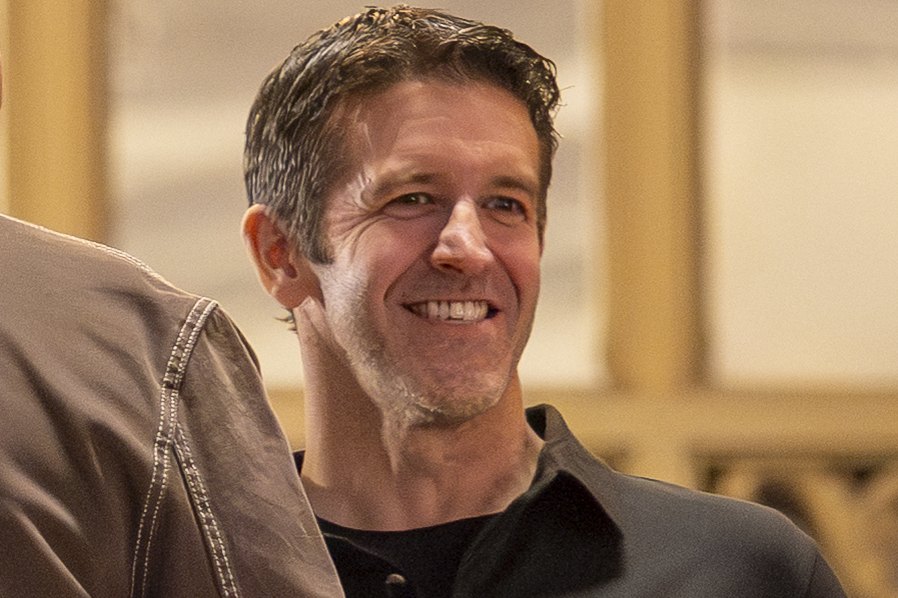
June 8, 2026 — cybernewschronicle.com — John Ternus inherits a company that just bet its voice assistant on a direct competitor. That is the reality Apple’s incoming CEO faces after Tim Cook’s final WWDC keynote Monday. The hardware chief, who takes over September 1, 2026, will lead a firm whose marquee AI play — a rebuilt Siri — now runs on Google’s Gemini models.
Not Apple’s own technology. Not an in-house breakthrough.
Google’s. That single detail tells you everything about the stakes. Apple spent years trying to catch up in artificial intelligence.
It poured money into research, hired talent, bought startups. None of it produced a large language model capable of what Cook showed on that stage.
So Apple licensed one from its biggest rival in search, advertising, and mobile operating systems. The rebuilt Siri gets a dedicated app. It handles multi-step commands.
It integrates with the Dynamic Island. All of that is powered by Gemini. Apple Intelligence, the broader AI suite announced alongside it, sits on top of someone else’s foundation.
This is not a knock on Ternus. He knows hardware cold.
He oversaw the transition from Intel to Apple Silicon, a move that remade the Mac line and gave Apple control over its chip destiny. That was a hardware play, executed flawlessly. The AI play is different.
It requires software, services, and models that Apple has not built. Ternus now has to decide whether to keep renting or build his own.
Cook’s nearly 15-year tenure saw Apple become one of the world’s most valuable companies. Revenue exploded. The iPhone became the dominant consumer device.
Services grew into a $100 billion business. But on AI, Apple came late and came empty-handed. The Gemini deal is a stopgap, and stopgaps carry risk.
Google could change terms. Google could prioritize its own devices.
Apple could find itself dependent on a competitor for the core intelligence layer of its products. That is what Ternus walks into on September 1, 2026. Cook transitions to Executive Chairman.
The board clearly backs the succession plan. Ternus has been Apple’s hardware chief, a role that puts him inside every product decision.
He knows the supply chain, the design process, the manufacturing constraints. But the AI era demands something else. Cook’s final keynote also announced expanded child-safety tools and the next generation of Apple’s operating systems.
Those are incremental. The Siri rebuild is not. It changes the relationship between user and device.
It hands the most personal interaction on the phone — the voice assistant — to an outside model. Privacy promises mean less when the intelligence comes from a partner whose business model is data.
Apple has not said how long the Gemini deal runs. It has not said whether it plans to develop its own large language model. It has not said what happens if Google decides to charge more or restrict access.
Those questions now land on Ternus’s desk. The company is not in crisis.
It still sells hundreds of millions of iPhones. Its services revenue keeps growing. Its ecosystem locks users in.
But the AI race is real, and Apple is not leading it. It is renting a seat from the leader. Ternus has roughly two years before the transition to figure out whether that seat becomes permanent or whether Apple builds its own.
Cook leaves at a moment of strength and vulnerability. Strong because Apple has never been more profitable.
Vulnerable because the next wave of computing — AI — runs on infrastructure Apple does not control. Ternus will have to change that. Or accept that Apple’s future runs on Google’s terms.