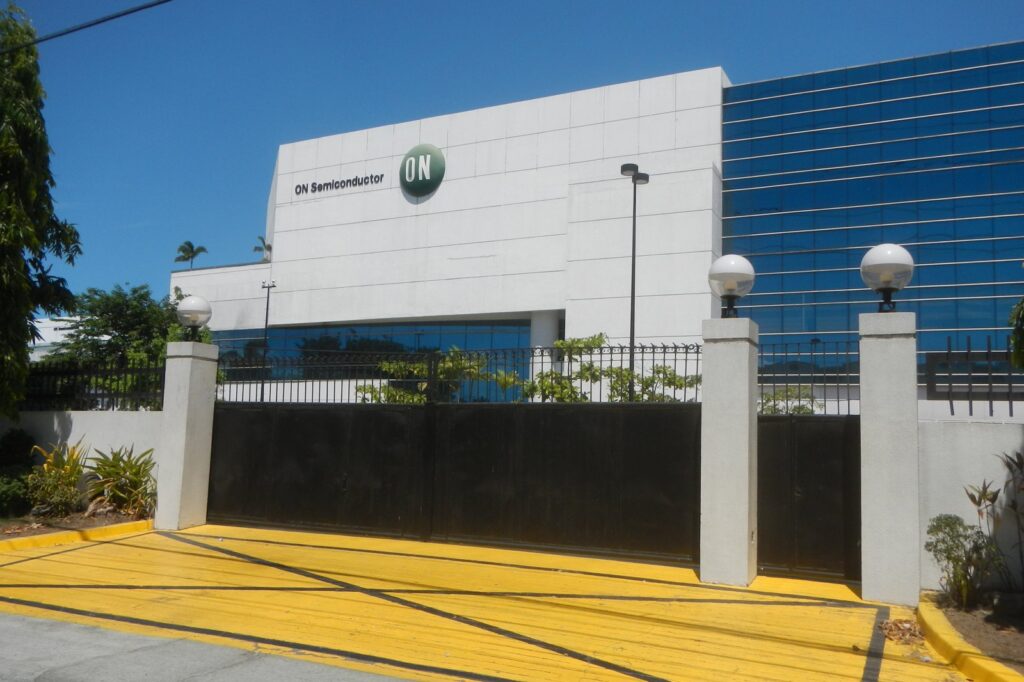
ON Semiconductor will pay $600 million in cash for Ferric, with as much as $175 million more tied to milestones. The purchase adds integrated voltage-regulation technology aimed at the growing power demands of AI data centers.
It landed alongside a strong third quarter and a weaker market reaction. Revenue reached $1.722 billion, up 11% year over year, while adjusted earnings of $0.90 per share exceeded the expected $0.88.
Revenue from AI data centers supplied the standout figure: $180 million, a 175% annual increase. Shares nevertheless fell after the results as investors focused on guidance.
The last stage before the processor
Ferric works on integrated voltage regulators. These components control the electrical supply reaching a processor, maintaining the required voltage as computational workloads change.
Under the hood, AI infrastructure is not only a contest over accelerator performance. Electricity must pass through conversion and regulation stages before chips can use it. Losses along that path consume power and create heat that data centers must then remove.
That is where Ferric fits ON’s existing portfolio. The larger company already makes power-management controllers, converters, drivers and discrete devices for automotive and industrial applications. Integrated regulation moves its offering closer to the AI processor itself.
ON also acquired rights to Vcore power technologies and associated intellectual-property licences from Aura Semiconductor in October 2025. Ferric adds another piece to that power-delivery strategy.
A bigger AI target
Chief executive Hassane El-Khoury cited surging requirements in AI and industrial markets. ON raised its 2030 AI revenue objective to more than $3 billion following the Ferric agreement.
The current $180 million quarterly figure shows why investors are paying attention, but also the distance to that target. A fast-growing business line still represented about a tenth of quarterly revenue.
The cash price is separate from the additional milestone payments, which depend on future achievements. Ferric’s contribution will consequently be judged on both technology adoption and the conditions attached to those payments.
Why an earnings beat did not lift the stock
The results arrived during a difficult session for automotive-exposed chipmakers. NXP Semiconductors had beaten third-quarter expectations but issued a cautious fourth-quarter outlook, reviving concern about vehicle-chip demand.
ON shares traded at $75 in afternoon dealing, down 5%, while NXP was at $245, down 4%. ON’s automotive exposure includes silicon carbide components for EV inverters and industrial conversion equipment, leaving it sensitive to the reading from NXP.
NXP’s third-quarter sales were $3.79 billion, up 19%, and adjusted earnings were $4.20 a share. Its automotive operation grew 13%, behind the wider company. Its fourth-quarter revenue range of $3.75 billion to $3.95 billion had a $3.85 billion midpoint, narrowly below the $3.86 billion consensus.
Those figures explain why an AI acquisition and an earnings beat did not settle the immediate argument. Investors were also weighing vehicle production, industrial demand and the next quarter’s outlook.
The valuation before the announcement
ON closed the preceding session at $75.63, a daily decline of 3.86%. The stock had gained 3.58% over the previous month, while the Computer and Technology sector lost 4.89%.
Its forward price-to-earnings ratio stood at 24.51, compared with an industry average of 32.73. The PEG ratio was 0.65 against the Semiconductor – Analog and Mixed industry’s 0.71.
Analysts’ full-year consensus called for earnings of $3.21 a share on revenue of $6.58 billion. Those projections represented annual increases of 36.6% and 9.7%, respectively.
Ferric is a bet on where power-management demand is heading, not an answer to every cyclical pressure in the present quarter. The 175% AI growth rate supplies the opportunity; execution in regulation technology will determine how much of it ON can turn into its 2030 target.
Sources
- Onsemi
- ON Semiconductor Corp. (ON) Stock Dips While Market Gains: Key Facts
- ON Semiconductor Falls 5%, NXP Semiconductors Drops 4% as Soft Guidance Revives Auto Chip Worries; Skyworks Ticks Up, Qualcomm and Texas Instruments Dip
- 【South Korean and Taiwanese Stocks Plunge 3.59% Simultaneously】 Is All-Country Also at Risk? The Weakness of Global Equities Revealed by the Semiconductor Shock|あいか❄️FP
- ON Semiconductor Tops Q3 Expectations with AI-Focused Ferric Acquisition
- ON Semiconductor Shares Surge on Strong AI Infrastructure Demand
Photo: Judgefloro (CC0)