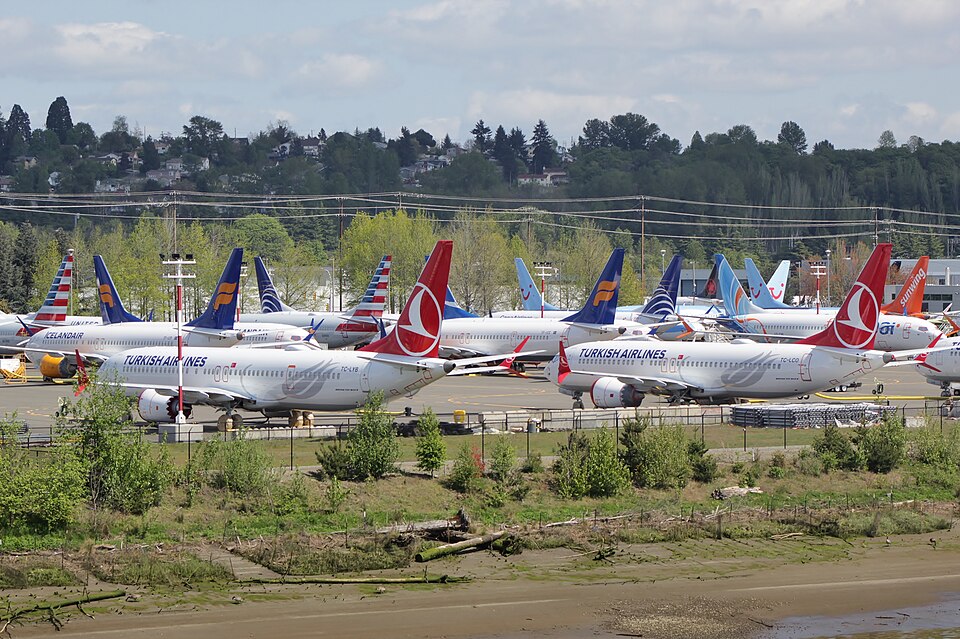
As of today, July 7, 2024, the Boeing 737 MAX passenger airliner has faced significant challenges, including two major groundings, due to safety concerns. The first grounding, which lasted from March 2019 to December 2020, was a result of two fatal crashes, Lion Air Flight 610 and Ethiopian Airlines Flight 302, that occurred in less than five months, claiming the lives of 346 people. More recently, in January 2024, the aircraft was grounded briefly following a dangerous in-flight incident.
The accidents that led to the initial grounding were devastating, with Lion Air Flight 610 crashing on October 29, 2018, and Ethiopian Airlines Flight 302 crashing on March 10, 2019. The Federal Aviation Administration (FAA) initially affirmed the MAX’s continued airworthiness, citing insufficient evidence of similarities between the two accidents. However, as more regulators around the world began to ground the aircraft, the FAA eventually followed suit on March 13, 2019. By March 18, all 387 aircraft delivered to airlines were grounded.
A key factor in the crashes was the Maneuvering Characteristics Augmentation System (MCAS), a new system introduced in the 737 MAX. In 2016, the FAA approved Boeing’s request to remove references to MCAS from the flight manual. This decision has been widely criticized, as it meant that pilots were not adequately informed about the system. After the Lion Air accident in November 2018, Boeing instructed pilots to take corrective action in case of a malfunction, but the company avoided revealing the existence of MCAS until pilots requested further explanation.
The FAA’s handling of the situation has also been subject to scrutiny. In December 2018, the agency privately communicated with Boeing about the MCAS system, but it did not take public action until after the second crash. The fact that the FAA allowed the 737 MAX to continue flying despite concerns about its safety has raised questions about the agency’s relationship with Boeing and its commitment to protecting the public. On the other hand, Boeing has faced criticism for its role in the crashes, including its decision to keep the MCAS system secret and its failure to provide adequate training to pilots.
Regulatory Response
The grounding of the 737 MAX was a global effort, with 51 regulators around the world taking action before the FAA. This coordinated response highlights the importance of international cooperation in ensuring aviation safety. The fact that so many regulators were willing to ground the aircraft suggests that there were widespread concerns about its safety, and that the FAA’s initial reluctance to take action was not shared by other authorities. The FAA’s eventual decision to ground the aircraft was likely influenced by the actions of these other regulators, and demonstrates the need for a unified approach to aviation safety.
As the aviation industry continues to evolve, it is likely that the 737 MAX will face ongoing scrutiny. The brief grounding in January 2024 suggests that concerns about the aircraft’s safety are still present, and that regulators and manufacturers must remain vigilant in their efforts to protect the public. Looking ahead, it will be important to watch how Boeing and the FAA respond to these concerns, and whether they are able to restore confidence in the 737 MAX. The safety of the flying public must be the top priority, and it is up to regulators and manufacturers to ensure that all aircraft meet the highest standards of safety.