
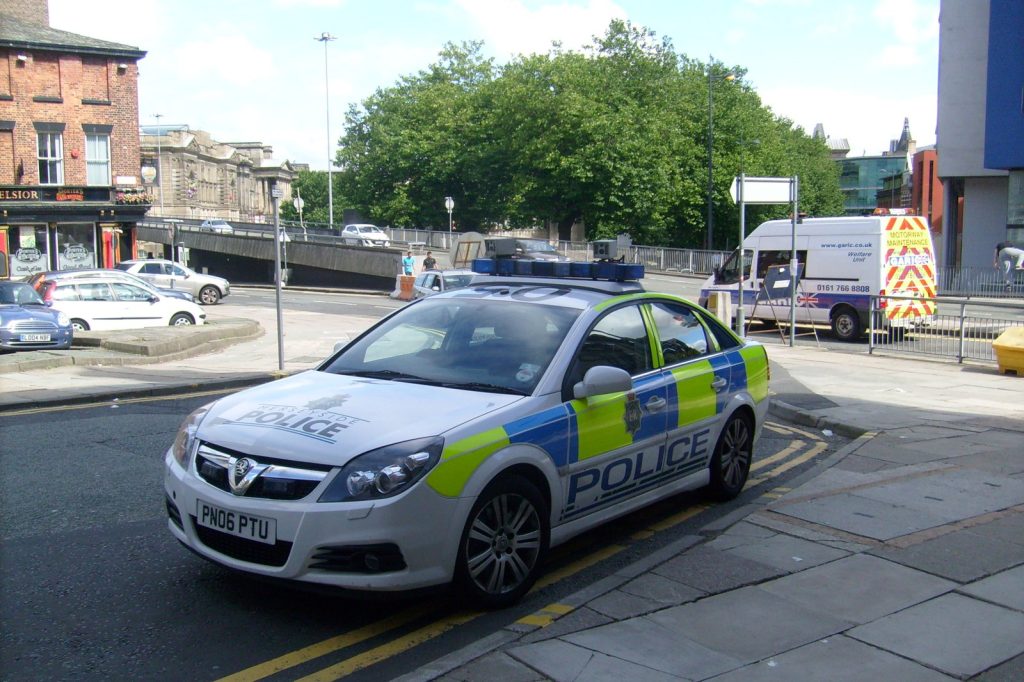
The first working prototypes of automatic number-plate recognition ran in 1979. The idea itself dates to 1976, when the Police Scientific Development Branch in Britain came up with it. Today a camera reads your registration plate, turns it into text and logs where you were. The catch is what happens to that log afterwards.
From the A1 to a murder conviction
EMI Electronics won the first contracts to build industrial systems. Computer Recognition Systems, now part of Jenoptik, took over the work in Wokingham. Early trials ran on the A1 road and at the Dartford Tunnel, and in 1981 the technology produced its first arrest, of someone driving a stolen car.
Then it stalled. Early units were expensive and hard to set up, and they only worked at fixed sites. In the 1990s, software that could run on cheaper PC hardware changed that. The cameras no longer needed plates to pass at a set angle, direction, size and speed, and police forces started fitting them to patrol cars.
By the early 2000s, some agencies were keeping plate data on purpose, so that crimes nobody had yet identified could be investigated later. In November 2005, in Bradford, plate recognition helped locate and convict the killers of Sharon Beshenivsky. It was the first documented murder case where the technology played that role.
How the system reads a plate
The software runs on ordinary computer hardware. It first finds the plate in the picture, straightens and cleans the image, then uses optical character recognition to pull out the letters and numbers. Cameras can be existing CCTV or road-rule enforcement units, or ones built for the job. Many use infrared lighting so they work at night.
Fonts and layouts vary from place to place, and the software has to cope. When Dutch plates changed style in 2002, the redesign added small gaps in letters such as P and R so machines could tell them apart.
There are two basic ways to deploy it. Done at the roadside, the plate text, date, time and lane number are captured in roughly 250 milliseconds. The alternative sends every image from many lanes to a remote computer, where the reading happens later. The London congestion charge project works this way, with a server farm of many PCs handling the load.
Who uses it, and the objections
Police forces around the world use it to check whether a vehicle is registered or licensed. Toll operators use it to charge drivers on pay-per-use roads, and highways agencies use it to count and catalogue traffic. Some systems store the plate image and the text, and some can be set up to photograph the driver too.
Privacy concerns follow from that. Critics point to government tracking of citizens’ movements, misidentification, high error rates and rising public spending, and some describe the whole thing as mass surveillance.
The technology also goes by other names, including automatic license-plate recognition (ALPR) and vehicle recognition identification (VRI).




