
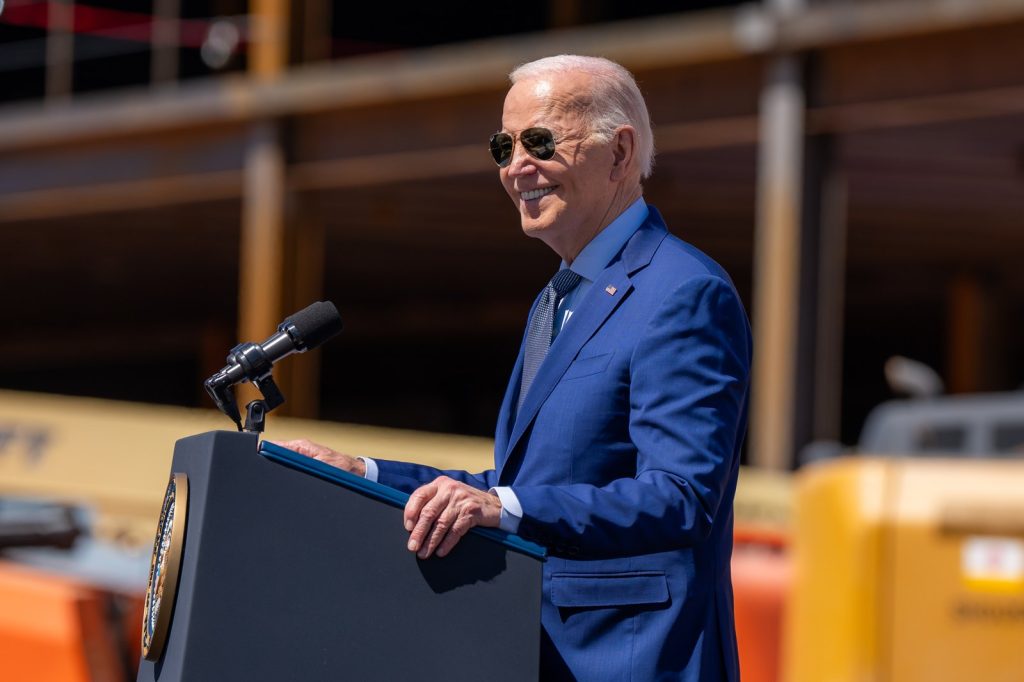
“America invented the semiconductor, and this law brings it back home.” President Joe Biden said that in the Rose Garden on Tuesday, August 9, 2022, before signing the CHIPS and Science Act.
The headline figure is $52.7 billion, sent to chip manufacturers over five years. The law as a whole authorizes roughly $280 billion, but only the semiconductor money is actually appropriated. The rest still needs to be funded.
Where the money goes
The largest piece is $39 billion in incentives for building chip factories on U.S. soil, which comes with a 25% investment tax credit on the cost of manufacturing equipment. Of that $39 billion, $2 billion is set aside for the older-generation chips that automakers and military equipment makers need. Another $13.2 billion goes to research and development and worker training. Biden said companies that take the subsidies may not spend them on dividends or stock buybacks.
The law also authorizes $174 billion for public-sector research at NASA, the National Science Foundation, the Department of Energy, the Economic Development Administration and NIST. The fields include human spaceflight, quantum computing, materials science and biotechnology. Authorized is not appropriated, so Congress has to fund that part separately.
Why Washington moved
US fabs made 37% of the world’s processors in 1990. The Semiconductor Industry Association puts that share at 12% now. A chip shortage made the dependence on overseas production hard to ignore: it frustrated shoppers hunting for PlayStation 5 consoles and shut US auto plants. CNET reported that automakers were set to cut 100,000 vehicles from production that week.
Taiwan Semiconductor Manufacturing Co. and Samsung took the technological lead while Intel struggled, and China subsidized rivals such as SMIC. The shortage helped produce rare bipartisan support. The House passed the bill 243 to 187 and the Senate 64 to 33, both in late July.
Intel said the law will take about $3 billion off the cost of a $10 billion leading-edge fab. The company is putting more than $40 billion into new and upgraded fabs in Arizona, Ohio, New Mexico and Oregon. The White House pointed to early results: Qualcomm planned to spend $4.2 billion with GlobalFoundries to build processors in New York, and Micron to invest $40 billion in memory chip capacity, which could lift the US share of memory chipmaking from 2% to 10%.
The limits
Relief will not come soon. New fabs take years to build. Fusion Worldwide, a chip distributor, expects two or three years before the funding makes a difference. Paul Romano, its chief operating officer, said the law “isn’t likely to do much to boost supply of older technology components” that cars still need, and that it “won’t go nearly far enough in helping achieve parity with the Asian fabs.”
Boston Consulting Group estimates a self-sufficient US chip supply chain would cost $350 billion to $420 billion. Jim Witham, CEO of GaN Systems, called the funding only a beginning, since the US has lost much of the supporting ecosystem, from wafer substrates to shipping materials.
Supporters answer that subsidies are the only way to compete with those in South Korea, China and Taiwan. Senate Majority Leader Chuck Schumer said the money would “cultivate the tech hubs of tomorrow.”
Sources
- CHIPS and Science Act – Wikipedia
- Biden Sends $53B to US Chipmakers by Signing CHIPS Act Into Law – CNET




