
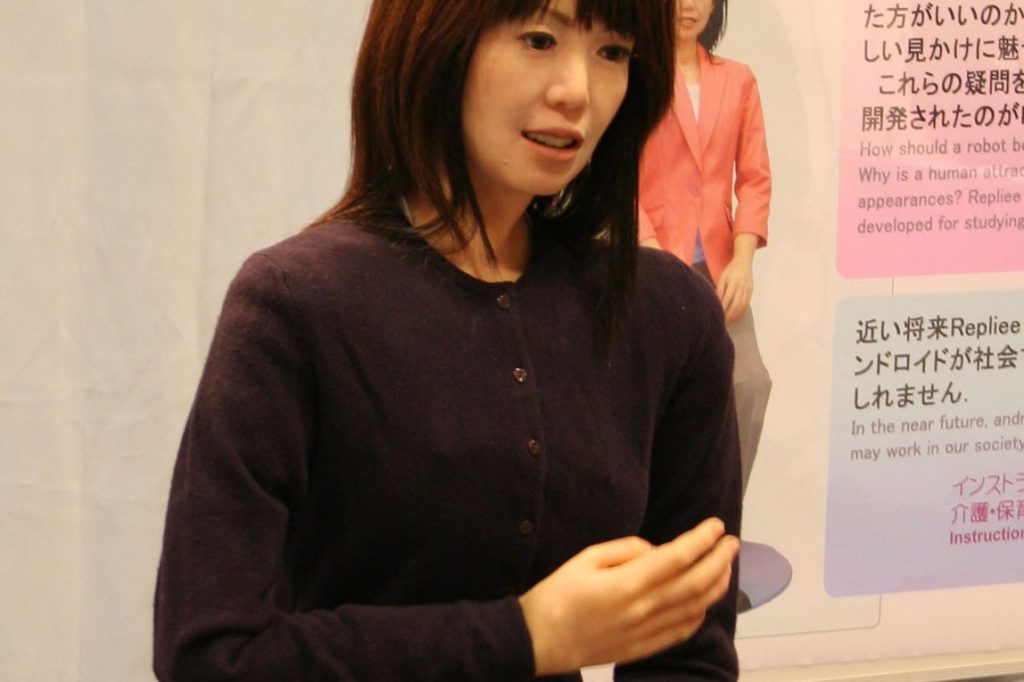
BEIJING — The face blinked. Its skin moved. It looked, for a moment, like a woman about to speak.
Then Yuhang Hu, the founder of Shouxing Technology, stepped back and let the audience stare. The demonstration was not a product launch.
It was a proof of concept. A hyper-realistic female robot face, indistinguishable from a living person in the video that circulated widely. The technology, Hu showed, is here.
The question of what to do with it is not. That single display has cracked open a debate that the robotics industry has danced around for years.
Engineers have long chased the goal of making machines approachable. A face that reads as human, they argue, could calm a frightened patient in a care home. It could make a service robot feel less like a vending machine and more like a helper.
Supporters say this is the logical next step in human-robot interaction. But the demonstration also revealed the other side of the coin. A face this real can deceive.
Not by malice, but by design. If a robot looks exactly like a person, does a user have a right to know they are speaking to a machine?
Critics argue the technology opens a door to manipulation. Consent becomes murky. The uncanny valley, long a theoretical problem for robot designers, now looks like a practical one.
Hu’s work is part of a broader push. Chinese firms have become increasingly prominent in the global race to build humanoid robots.
The demonstration suggests that the technical barriers are falling faster than the ethical ones. Engineers can now produce faces that pass a casual visual test. The next step — making them move and speak naturally — is within reach.
The public discussion that followed the video has been sharp. Some see a future where robots blend into crowds, working in shops or hospitals without announcing themselves. Others see a future where you cannot trust what you see.
Both futures are built on the same technology. Shouxing Technology did not release a timeline for commercial use.
The demonstration was just that — a look at what exists now. But the implications are immediate. If a robot can look this human, the rules of engagement change.
A person might confide in a machine they thought was a nurse. A child might bond with a toy they cannot tell from a friend.
The debate is not abstract. It is about what happens when the line between human and machine blurs to the point of invisibility. The engineers have done their job.
The rest of society now has to catch up. What comes next will depend on how the industry and regulators respond. Some countries have already begun drafting rules for AI transparency.
None have fully grappled with a robot that looks like a person. The demonstration by Hu and his team forces that conversation into the open.
For now, the face in the video remains a demonstration. But it is a demonstration that changed the terms of the argument. The question is no longer whether we can build robots that look human.
It is whether we should.




