
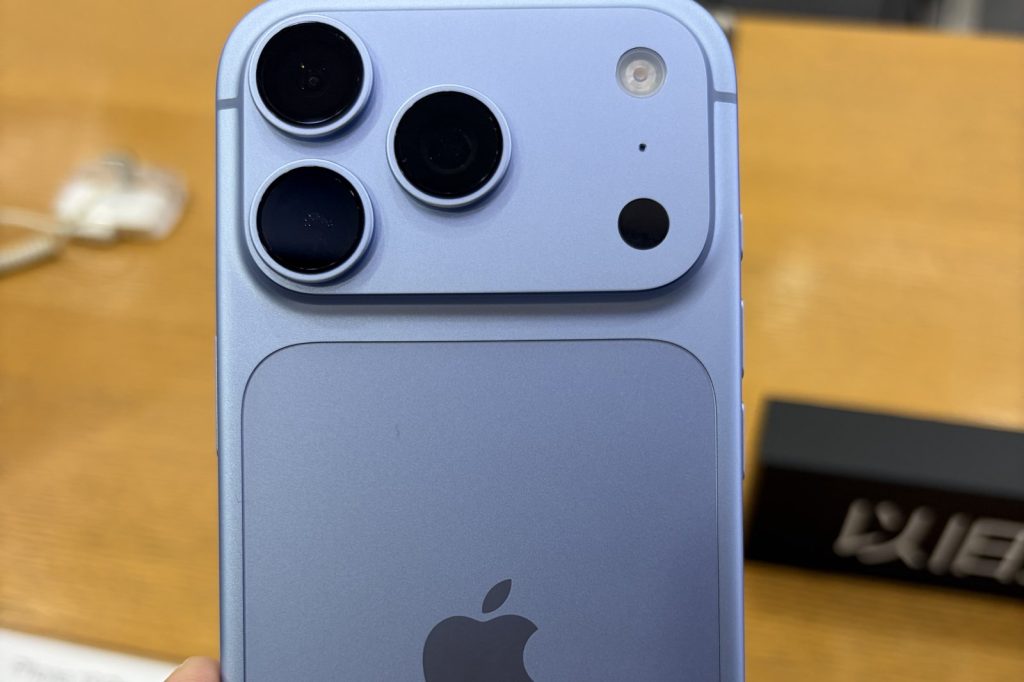
Courtney Lindwall pushed the iPhone 18 Pro until it finally got warm. Streaming and scrolling did nothing. Ten minutes of 4K video at 120 fps did it, and even then only slightly. “Impressive!” the Consumer Reports writer noted in her September 24 review, headlined “The iPhone 18 Pro Phones Are Predictably Excellent.” The subhead adds a warning: that “doesn’t mean you should rush out and buy one.”
The Pro is usually Apple’s fall headliner, but not this year. The 18 Pro and larger 18 Pro Max played second fiddle to the foldable iPhone Duo, which reaches stores next month. Apple also delayed the standard iPhone 18, now rumored to launch beside the budget iPhone 18e in the spring.
What changed
Both Pro models get the A20 Pro chip, which Apple says speeds up processing by 40 percent, plus a redesigned vapor chamber with more surface area to shed heat. Consumer Reports says that headroom may suit the growing demands of on-device AI, including the more integrated Siri AI.
Apple rates the 18 Pro at 36 hours of video playback, up from 33, and the 18 Pro Max at 45 hours, up from 39. Lindwall’s own trial, a multihour YouTube session and a photo walk, dented the battery only slightly. Consumer Reports will run its own lab battery tests; last year’s 17 Pro and 17 Pro Max delivered 34 and 43 hours there.
New colors include burgundy and “glacier” blue, replacing last year’s burnt orange, with black and silver on offer. For some shoppers, Lindwall wrote, color may be the most compelling reason to upgrade. Face ID has moved beneath the display, which shrinks the Dynamic Island slightly and lets it track three Live Activities rather than two. The screen is otherwise unchanged: Always On, 120 Hz and 3,000 nits of peak brightness.
Dimensions match the 17 Pro, so old cases fit. The weight does not. The 6.9-inch 18 Pro Max is nearly as heavy as the dual-screen Duo, and the 18 Pro is more than an ounce heavier than the iPhone 17. Anyone wanting a feather-light phone should look at the iPhone Air or the standard iPhone 17.
A variable aperture arrives
The triple rear camera system is the same one that earned the 17 Pro the top camera scores of any phone Consumer Reports has tested. The change is that the main 48-megapixel camera now has a variable aperture, with tiny blades that physically open and close. Settings are f/1.48, f/1.8, f/2.8 and f/4, against a fixed aperture of nearly f/1.78 before. A narrower aperture keeps more of the background sharp for close-ups, while a wider one blurs it and helps in low light. Lindwall called it a neat addition, though software edits can reproduce some of the effect.
Shutter speed can now be set by hand too. She slowed it to 1 second to turn late-night Brooklyn traffic into streaks of light. Pinned icons in the Camera app give quick access, and the toolbar can be swapped from a menu that includes white balance, aperture and shutter speed. None of this justifies an upgrade alone, she wrote.
Video gains Cinematic Mode editing after the fact and a Focus Tracking feature that uses AI to keep moving subjects sharp, even if they briefly leave the frame. Samsung shipped something similar on the Galaxy S26, Lindwall noted, but it worked well when her partner filmed her riding a bike toward and away from the camera.




