
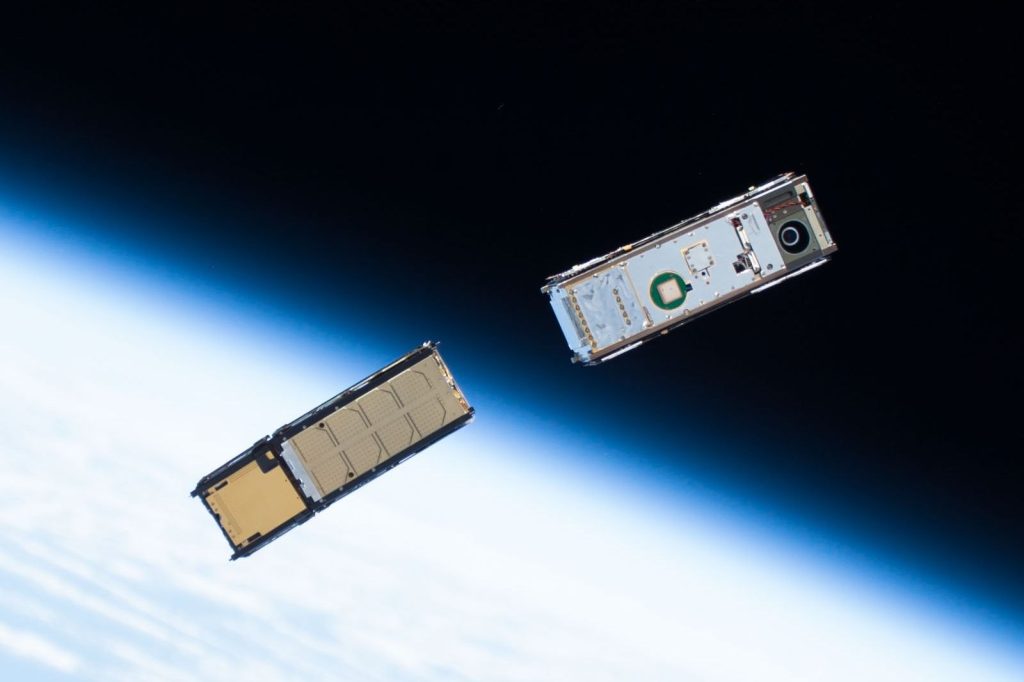
Anyone who stepped outside at dawn or dusk after SpaceX’s first Starlink launch in May 2019 may have wondered about the new moving lights overhead. Astronomers noticed them too. Ruskin Hartley, executive director of the International Dark-Sky Association, put it this way: “That’s the time that most people enjoy the sky.” Starlink’s satellites, he said, “are brighter than 99 percent of [those] in orbit at the moment.”
A law student now argues that the agency that licensed them skipped a step. Ramon Ryan, a second-year student at Vanderbilt University, makes the case in a paper due out later this year in the Vanderbilt Journal of Entertainment and Technology Law. Scientific American reported on it in January 2020.
The law the FCC bypasses
The National Environmental Policy Act, passed in 1970, tells federal agencies to weigh the environmental effects of what they approve. Reviews can run for years and fill hundreds or thousands of pages. An agency can sidestep them with a “categorical exclusion,” usually by arguing that its activities do not affect the environment.
The Federal Communications Commission has held a sweeping exclusion since 1986, covering almost everything it does, space projects included. NASA has to carry out these reviews. The FCC does not. “I don’t think there is one that’s as broad as this,” said Kevin Bell, staff counsel at Public Employees for Environmental Responsibility. He called it “a policy that was designed for another time, before large scale space exploration.”
Ryan says the FCC has never run a study showing why commercial satellites deserve that exclusion. “If the FCC were sued over its noncompliance with NEPA, it would likely lose,” he said.
How big the constellations are
The FCC has licensed SpaceX to launch 12,000 Starlink satellites, and the company has plans for 30,000 more. About 1,500 satellites are active in orbit today. SpaceX had launched roughly 180 Starlink satellites by then and scheduled another 1,500 for 2020. Over two years, the FCC authorized 13,000 satellites from 10 companies. Amazon’s Project Kuiper, with more than 3,000 satellites, was still under FCC review.
SpaceX has tried to address the astronomers’ complaints. One of the 60 satellites it launched on January 6 carried what the company calls an “experimental darkening treatment.” It is unclear how well that works.
The FCC’s answer
An FCC spokesperson rejected Ryan’s theory by email: “The FCC’s action in unanimously approving the SpaceX deployment was entirely lawful.” The spokesperson said the order rests on the public record, which “did not include any comments along the lines of these after-the-fact criticisms.” The agency knew from press reports that astronomers had raised concerns, the spokesperson added, but the issue had “not been raised in any FCC proceedings.”
Would it hold up in court?
Sarah Bordelon, an environmental lawyer at Holland & Hart in Nevada, says more than 100 NEPA cases are filed each year. In the 1980s, environmental groups beat the National Institutes of Health over genetically modified bacteria approved for crops without proper review. In 2000, the Army Corps of Engineers lost over gambling barge licenses in Mississippi. She knows of no NEPA case involving space, but said of Ryan’s argument: “It’s not a crazy argument.”
The question is whether the night sky counts. NEPA’s rules cover indirect effects, including “aesthetic, historic, [and] cultural” ones, and Ryan thinks the night sky fits. Bordelon said astronomers whose work is blocked would at least have standing to sue.
A suit could take years. Bordelon said an injunction might halt further FCC-licensed launches while it proceeds. If the FCC lost, it might have to revisit existing licenses or review future applications.
Ryan’s suggestion is that the FCC avoid all of that by assessing commercial satellites’ environmental impact, using NASA as a model.




