
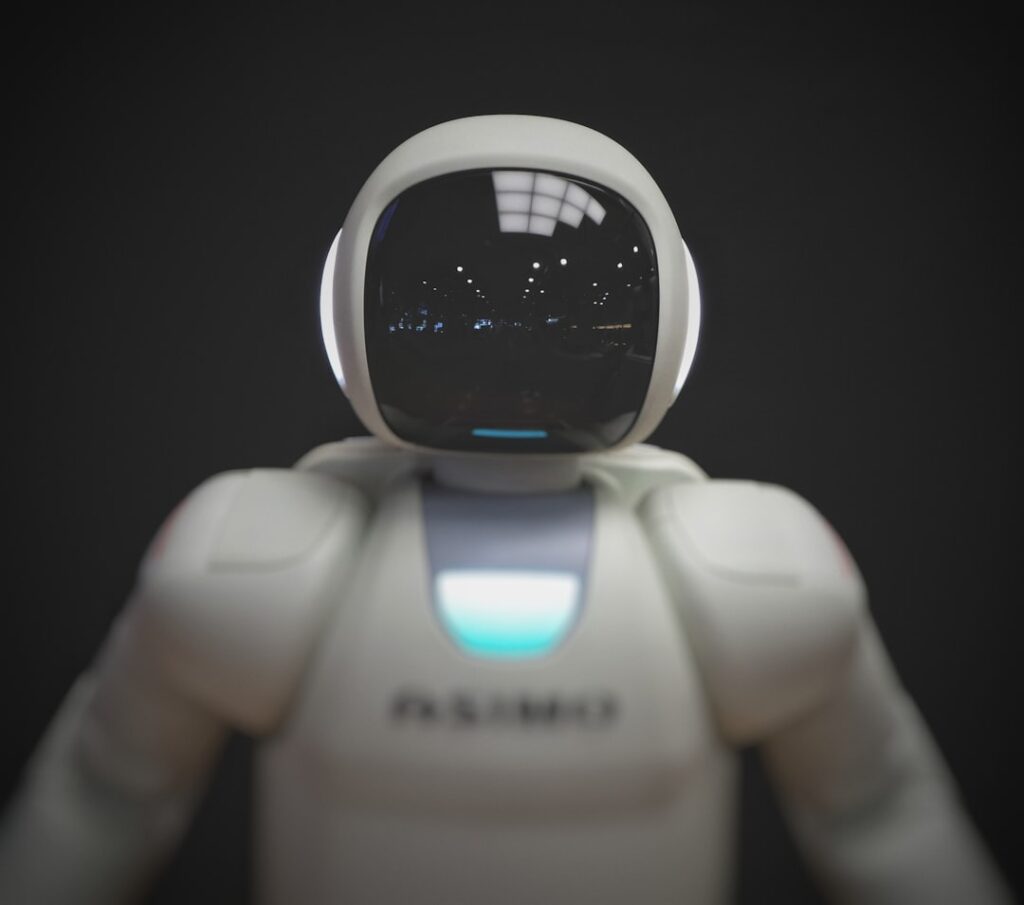
In Beijing, a groundbreaking demonstration by Shouxing Technology has sparked a wave of ethical contemplation. The event, led by the company’s founder, Yuhang Hu, showcased a remarkably human-like female robot face, blurring the distinction between machine and human.
This technological feat serves not only as a testament to technical prowess but also as a catalyst for a broader discourse: what transpires when a robot assumes a form indistinguishable from a human? While the technology is undeniably here, Hu’s demonstration underscores that hyper-realistic faces are no longer a theoretical aspiration but a tangible reality within arm’s reach of contemporary industry. The ripple effects of this development stretch far beyond the lab.
On one hand, proponents view this as a path towards increased human connection. In service and care settings, convincing faces could make robots more approachable.
For instance, an elderly patient might trust a humanoid aid resembling a friendly stranger, or a child might confide in a robotic tutor with a comforting, familiar expression. In these scenarios, the face serves as a bridge, bridging the gap between cold machinery and warm human interaction. The potential for enhanced human-robot interaction is undeniable. However, the other side of the coin presents more ominous concerns.
Critics caution that indistinguishable humanoids could facilitate misuse. Deception becomes effortless.
A robot that mirrors a human could lie without a trace. Consent becomes murky. If one cannot discern a machine from a human, can one truly consent to the interaction?
The uncanny valley—the uncomfortable sensation elicited by something that is almost but not quite human—may be overshadowed by the threat of deliberate mimicry. The debate is no longer theoretical.
Chinese firms have emerged as significant players in the global humanoid robotics race. Shouxing Technology, with Hu and his team at the helm, is a prime example of this progress. This advancement symbolizes a broader drive, one that pits rapid development against the deliberate, careful work of ethical oversight.
The next few months will be critical. The demonstration has already sparked public discourse, a discourse that is likely to intensify as more lifelike faces emerge.
Regulators, ethicists, and engineers will grapple with questions that demand complex answers. Should hyper-realistic robots bear mandatory labels? Should their use in care settings be restricted?
Who is accountable when a robot deceives a vulnerable individual? These are not hypotheticals; they are the immediate consequences of a technology that has outpaced the rules intended to govern it.
The forces driving this race are familiar: competition, ambition, and an unrelenting desire to push boundaries. Chinese firms are not alone in this competition, but they are now among its frontrunners. This position brings both prestige and responsibility.
The demonstration of the lifelike female face by Shouxing Technology signifies a future that is not distant. It is unfolding now.
The choices made in the coming months—by companies, by governments, by the public—will determine whether this future is one of trust or of suspicion. The technology will not wait. The debate must keep pace.
Related Stories
Chinese Robot Face Realism Sparks Ethical Debate on Human-Machine Boundaries
China Leads in Race to Advance Humanoid Robotics: Shouxing Technology Demo #ShouxingTechnologyRobot #FaceRaisesEthicalQuestions #HumanLikeness #Tech #News




