
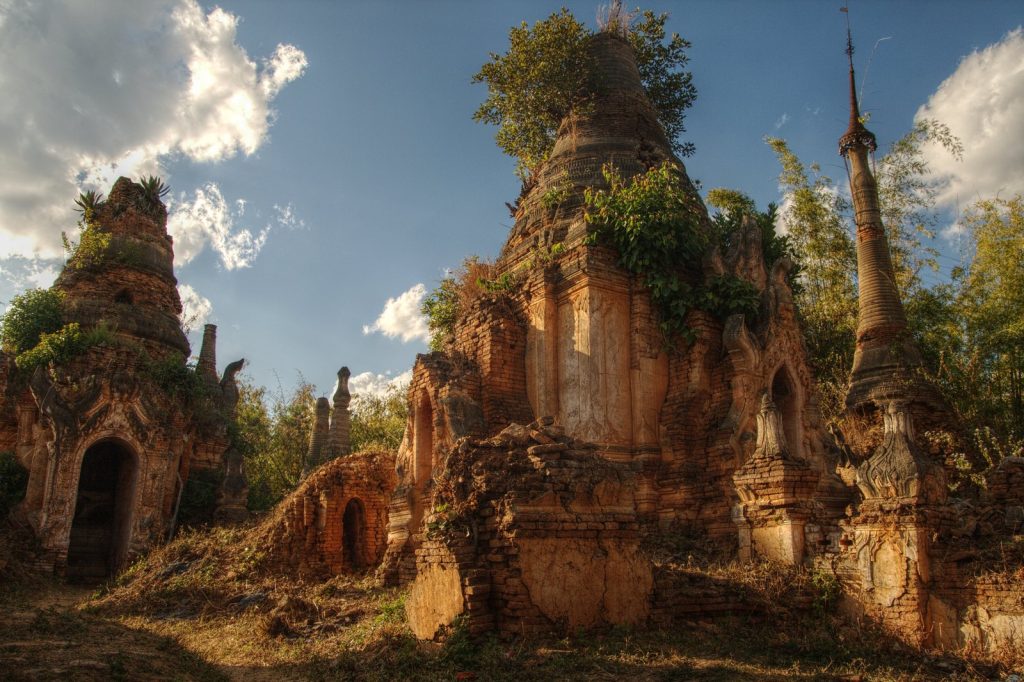
The 7.7 magnitude earthquake that hit Myanmar on Friday, March 28, 2025 left far more than homes and offices damaged: historical and religious sites across the country took heavy hits. By the Myanmar government’s count, relayed by the New York Times on Saturday morning, more than 3,000 buildings were damaged, with mosques and pagodas accounting for roughly 150 of them. Video from witnesses, verified by the Times, showed some of those ancient structures reduced to rubble.
Among the losses is the Me Nu Brick Monastery, which stands southwest of Mandalay — itself the final seat of the Burmese kingdom. Largely destroyed at roughly 200 years old, the building saw its distinctive rows of balconies collapse inward around a big interior wall. The monastery, formally the Maha Aung Mye Bon Zan, was raised in 1818 for Nanmadaw Me Nu, queen mother to King Bagyidaw, then handed to Nyaunggan Sayardaw U Po, the royal abbot, who passed it to U Bok 2. Its survival of an earlier earthquake, in 1838, ended with repairs carried out in 1873 under Queen Sin Phyu Ma Shin — a record of resilience now interrupted.
Farther south, in Mon state, the Shwe Sar Yan Pagoda lost its ornate golden spire, a collapse caught on video as onlookers screamed. The site is a revered Buddhist landmark, believed to date to the 11th century and the reign of King Anawrahta, renowned for its architecture and the sacred relics it houses. Smaller stupas and shrines, richly carved, surround the main structure, and the complex fills with visitors during Buddhist festivals.
In Pindaya, Shan state, the stupas adorning a large monastery came down, and cracks ran through the foundations of buildings that held. Fragments of golden spire and red brick lay scattered about. One witness video captured onlookers wailing as the crown of the monastery’s largest stupa came down in an aftershock. “Pindaya has had several earthquakes before but not as strong as today,” said Tun Tun Aye, who administers the monastery’s Facebook page, noting that the stupas likely date back more than a hundred years and that he had no idea how the site could be restored.
Muslim places of worship suffered alongside the Buddhist ones. Photos from the Burma Human Rights Network documented fallen minarets and collapsed domes at mosques in several parts of the country, and Mizzima, the online outlet, cited local officials and residents in reporting 490 people killed in a mosque collapse on Friday — by far the gravest single loss at a place of worship recorded so far.
The mechanics are no mystery: the quake was centered in Myanmar’s Sagaing region near Mandalay and damaged buildings in neighboring Thailand too, and the country straddles the line where two tectonic plates meet, making it among the most seismically active on Earth. What remains uncertain, as rescuers and residents take stock, is how much of this heritage can be rebuilt at all.
Sources
- Myanmar's 7.7 earthquake wipes out centuries of religious history | National Geographic
- Ancient Pagodas, Monasteries in Myanmar Destroyed by Earthquake – World En.tempo.co




