
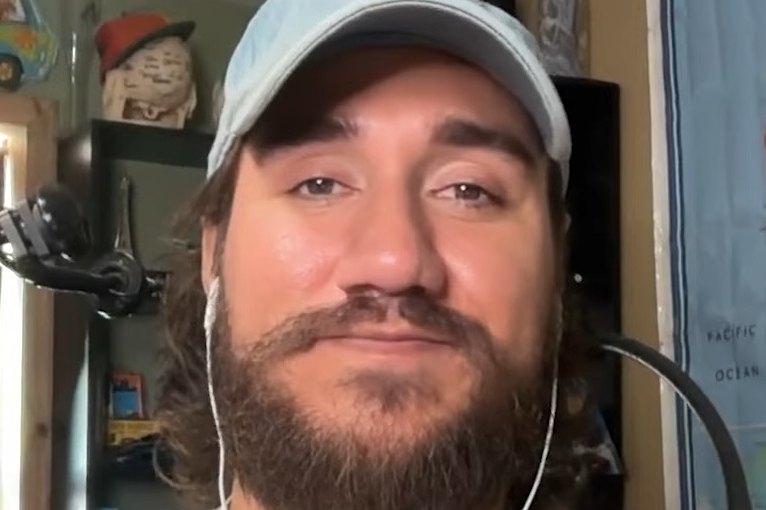
Noland Arbaugh was 22, working at a kids’ summer camp in upstate New York, when he went swimming in a lake in June 2016. He thinks a friend running into the water struck him hard on the side of the head. He woke face down, unable to move or breathe, and knew at once he was paralysed. “I am very, very calm under pressure,” he says.
Nearly eight years later, in January 2024, he became the first human recipient of a brain-computer interface (BCI) from Neuralink, Elon Musk’s company. The chip lets him control a computer using only his mind.
The surgery
Only four months passed between the day Arbaugh first heard about Neuralink and the operating table. A purpose-built robot inserted the N1 chip into his motor cortex. He accepted the risks of infection, haemorrhage and brain damage. “My brain is the last part of myself that I really feel I have control over,” he told The Guardian.
The N1 is wireless and about the size of a 50p coin. Neuralink’s recruitment brochure advertises “1,024 electrodes distributed across 64 threads, each thinner than a human hair.” Neuralink’s R1 robot places the threads 3.5mm into the cortex. By comparison, the Utah Array, the long-standing standard in human BCI design, has 100 electrodes.
Life before the chip
Arbaugh is now 30 and lives in Yuma, Arizona, in the house where he grew up. His injury sits around his fourth and fifth vertebrae, so he can move his head and shoulders but little else. He drives an electric wheelchair with a mouthpiece. His mother, Mia, helps with everything else.
For years his link to the digital world was an iPad and a stick held in his mouth, with a scrap of conductive fabric on the tip. Texting was slow. If the stick fell out, he had to call for help. “I just didn’t have a way to build my life privately,” he said.
What he can do now
At his kitchen table, Arbaugh had his mother open his laptop. His hands stayed still on the armrests while a cursor moved across a chess board. He had been playing Neuralink engineers for a few months. “None of them are very good, so it’s not too hard,” he said.
He then opened X, checked his messages and typed one out on a virtual keyboard. He also played Vampire Survivors, a video game. The Guardian’s reporter called the scene extraordinary and totally unremarkable at once: Arbaugh uses a computer like anyone else, only without moving his body.
When he first got the implant, he wanted to play video games. He challenged friends to Civilization VI, in a multiplayer version called Red Death. “Whoever’s quickest to the draw wins. And I was beating them,” he said. “It blew my mind.”
Not the first implant
Brain-computer interfaces are not new. Experiments with chips and animal brains began in the late 1960s, and the Utah Array dates to 1992. In 2004 Matthew Nagle, a quadriplegic man, became the first person to have a chip implanted in his skull. No regulator has yet allowed BCIs to be used outside experiments, but enough people have them that an online forum, BCI Pioneers, exists.
What sets Neuralink apart is Musk’s stated aim of feeding information into the brain, not only reading from it. Musk first thought of brain implants in 2016, according to Walter Isaacson’s authorised biography, when he grew frustrated with how long it took to type a message on his iPhone. “Imagine if you could think into the machine,” Musk said, “like a high-speed connection directly between your mind and your machine.”
Sources
Sources
- Elon Musk put a chip in this paralysed man’s brain. | The Guardian
- Neuralink Implant Lets Man Play Mario Kart with… | Engoo Daily News




