
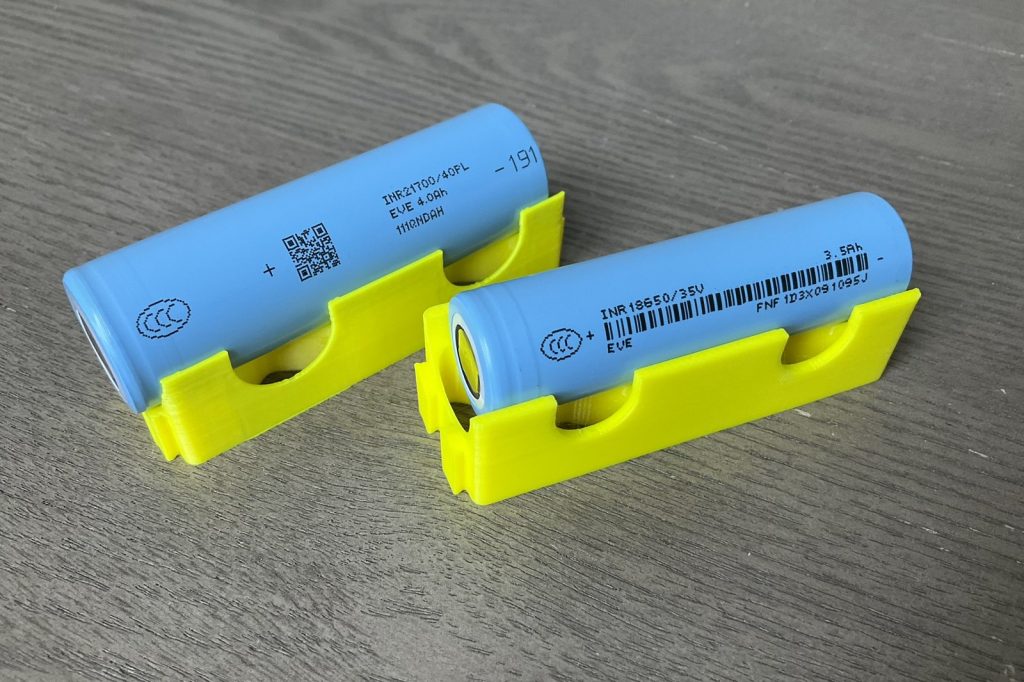
A 76-year-old woman died in July when an e-bike battery exploded inside a pizzeria in Queens. In August, smoke filled the cabin of a KLM Royal Dutch Airlines flight after a phone charger caught fire. In South Korea in 2024, a fire at a warehouse holding more than 35,000 lithium batteries killed 23 people.
A team at the University of Surrey in England thinks the answer is to put the sensors inside the battery.
Why the fires are hard to stop
When one cell in a lithium-ion pack overheats, it can set off the cells around it. They release heat, flammable gases and oxygen. Because the battery can feed the fire itself, taking away outside fuel does not always put it out.
Kai Yang, a lecturer in energy materials and nanotechnology at Surrey, says today’s sensors speak up too late. “After years in battery research, I realized the existing sensors only detect problems when it is too late,” he said. He likens them to a thermometer taped to the outside of the pack: “useful but blind to the real risks brewing inside.”
Some commercial sensors track surface temperature. They cannot see internal temperature gradients, Yang said, and those can spike over 200 degrees in a failing cell.
Sensors built into the cell
The Surrey sensors are small enough to sit in battery components such as the collectors and separators. They read temperature at the terminals, the center and the edge, which helps find hotspots early.
They also fight back. Flame-retardant materials are built into the sensor structure. “These chemicals remain inactive as robust sensor support during normal operation, but spring into action when the temperature reaches dangerous levels,” Yang said. Depending on the material, they absorb heat, interrupt the chemical reactions that spread flames, or form a protective barrier.
More than ten researchers work on the project: two academics, four doctoral students, three technicians and a technology transfer officer. They use the university’s Advanced Technology Institute, which has a microfabrication clean room and an electrochemistry lab. The team has built several prototypes. “It was a real thrill when we realized that it was not just a lab result, but it could work in real batteries and under practical operation,” Yang said.
Surrey has filed a patent and wants academic and industry partners. Yang listed what still has to be solved: scaling up production while keeping costs down, working reliably across battery types and chemistries, and proving long-term durability under extreme conditions.
Ravi Silva, who directs the institute, said the sensors are “essential to improve safety and sustainability.”
New York’s approach
New York City is tackling the problem from the street. Since 2019, lithium-ion batteries there have started 733 fires, killing 29 people and injuring 442. Under a plan announced by then-Mayor Eric Adams, the city’s Department of Transportation would run a $2 million trade-in program that swaps unsafe e-bikes and batteries for UL-certified ones for eligible food delivery workers. The fire department would spend $1 million on an education campaign.
Fire officials found that 59 percent of 2023’s lithium-ion battery fires began when the batteries were not charging.
Sources
- New Embedded Sensor Tech Aims to Stop Lithium-Ion Fires Before They Start – ASME
- Mayor Adams Takes New Actions To Prevent Deadly Lithium-Ion Battery Fires, Promote Safe E-Bike Charging And Usage




