
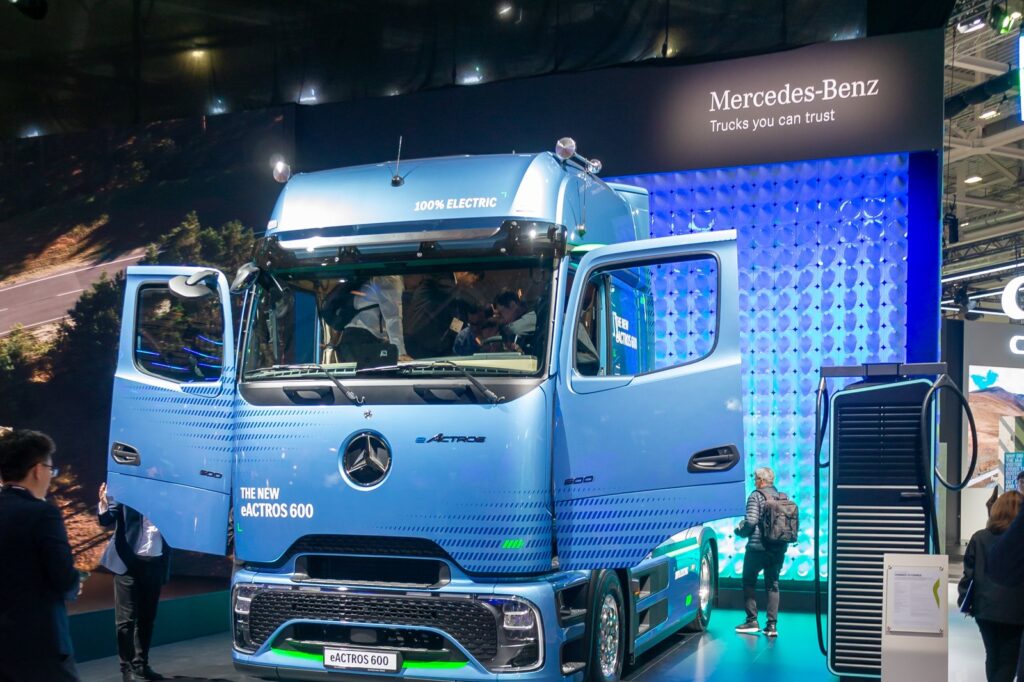
Six stalls, 1.2 MW, and no pull-through lanes. That is the first Tesla Megacharger site at a Pilot Travel Center, which opened on October 8, 2026, in Ellabell, Georgia, about 30 minutes from Savannah. It is the opening move in a partnership Pilot and Tesla announced in January 2026, and it is built for heavy-duty electric trucks.
Two sites so far
The Georgia site uses Megawatt Charging System (MCS) connectors. A second site followed shortly afterwards in Tulare, California. It is smaller, with four stalls, but its peak output is slightly higher at 1.25 MW, which is odd given that Tesla has said its V4 power electronics cabinet peaks at 1.2 MW.
Pilot said the opening “marks the launch of a new charging network at select Pilot locations, designed to support heavy-duty electric trucks along major U.S. freight corridors”. It has 12 more heavy-duty sites under construction, nine of them actively. Each will have 4 to 8 stalls fed by the V4 cabinets, and the plan covers I-5, I-10 and other freight corridors across California, Georgia, Indiana, Nevada and Texas.
For now, as far as is known, only the Tesla Semi can use them, though Tesla is expected to open the network to other compatible EVs. Pilot separately runs more than 300 DC fast-charging stations for light-duty electric vehicles.
Shannon Sturgil, Pilot’s senior vice president of alternative fuels, said the company wants to bring heavy-duty charging directly to key trucking routes and pair it with the services drivers rely on. The aim, she said, is to make fleet electrification “a more accessible option for long-haul transportation”.
The gap still to close
Diesel has dominated trucks and cars for roughly a century. Electricity was an early rival, quiet and easy to operate, but limited range held it back for most of the 20th century. Lithium batteries, with better energy density and current output than lead-acid, revived the idea. Even so, only about 2 percent of trucks sold in 2024 were electric, against over 20 percent of new cars.
The US Department of Energy has set two targets: battery pack costs below $75/kWh by 2030 with at least 300 miles of range, and charge times under 15 minutes. A megawatt charger is aimed squarely at that second number.
Sources
- Pilot and Tesla Open First Megacharger Sites
- Electric vehicle
- Batteries, Charging, and Electric Vehicles
Photo: Matti Blume (CC BY-SA 4.0)




