
Timekeeping just changed gears. On Wednesday, October 7, two research teams that never worked together published papers in Nature describing the world’s first operating nuclear clocks, one built in Vienna and one in Beijing.
The shift is from electrons to the nucleus. Conventional atomic clocks, which first appeared in 1949, count time by using lasers or microwaves to make electrons jump between two energy levels in an atom’s shell, using elements such as cesium or strontium. The new machines aim a laser at the nucleus itself, where protons and neutrons jump between energy levels. Both are built on thorium-229, an isotope trapped in solid calcium fluoride crystals.
Why go smaller? A nucleus is far tinier than the shell around it, so tracking its transitions might reach higher accuracy.
Two teams, two routes
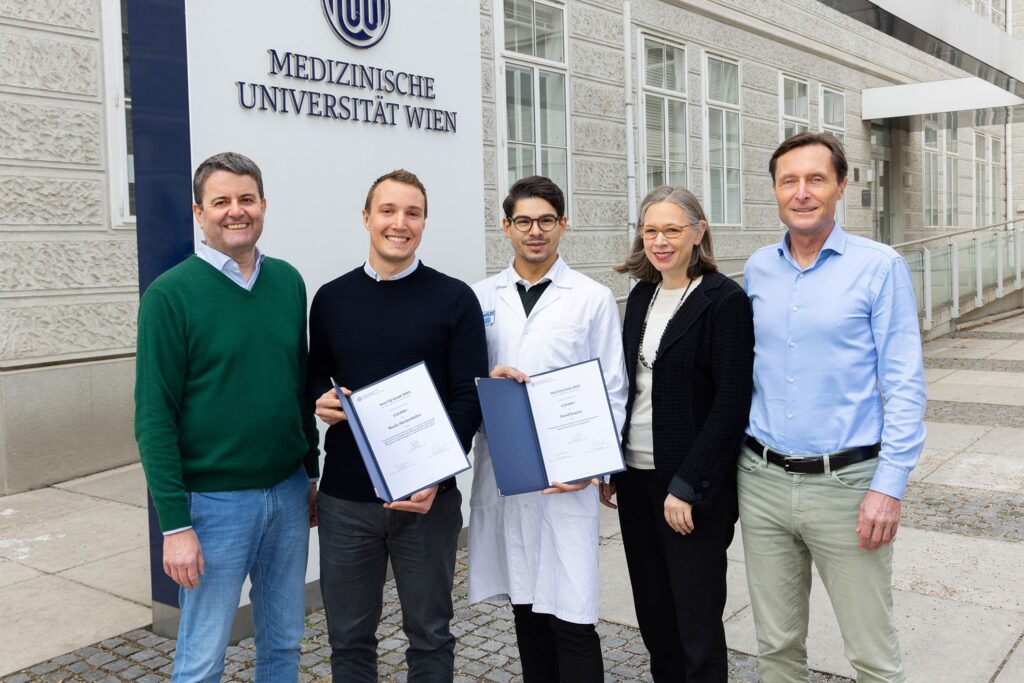
Thorsten Schumm of TU Wien has led the Vienna effort. “The creation of a nuclear clock was something that physicists dreamt of for almost 50 years,” he said. “In my team, we have been working towards this goal since 2008.” Shiqian Ding of Tsinghua University helped lead the Beijing team, and he stressed that the clocks arrived at the same moment by different paths: “I think this is very encouraging because it shows that the concept is robust and not dependent on one particular technical implementation.”
Popular Science reported that the thorium crystals for both clocks were grown separately but around the same time. Testing so far suggests the Chinese clock is about six times as stable as the Vienna one. The Vienna prototype, meanwhile, is reportedly the first nuclear clock that stabilizes itself the way atomic clocks do. Schumm has called the parallel race a “fierce but friendly global competition.”
Not there yet
Neither device beats the best conventional clocks. Those can go billions of years losing or gaining one second. Researchers estimate the new prototype may drift by about one second every 30 million years, roughly 10 times worse than the cesium clocks that currently define the official second. Schumm himself said the nuclear clock is still “far from its target performance.”
The fix may be simple arithmetic. “The Vienna clock has slightly better thorium crystals, higher concentration, better optical properties, while the Beijing team has a stronger laser,” Schumm said. “So already by putting these components together, we can build a significantly better clock.”
He sees uses in satellite navigation, data-transfer synchronization, surveying and metrology. There is a physics test already on the record, too. The Vienna team used its clock in a search for dark matter. It found none, but the nuclear clock performed at the level of the best atomic clocks. “It gives access to a whole new physics universe,” Schumm said.
Sources
- The world’s first nuclear clocks start ticking | Popular Science
- Scientists in Vienna and Beijing create world's first nuclear clocks | Cyprus Mail




