
“The only wire that comes out of them is a power cord.” That is how Chip Trowbridge, chief technology officer of Clear Ballot, describes the precinct scanners his company builds. Those machines cannot carry Wi-Fi, Bluetooth, radio or any network connection at all, he told ABC News ahead of the 2024 election.
Central counting equipment is networked, Trowbridge said, but it sits on an air-gapped network kept completely apart from the public internet. His point: remote hacking gets much harder, and anyone who wants to alter a machine would have to reach it physically.
Paper under most votes
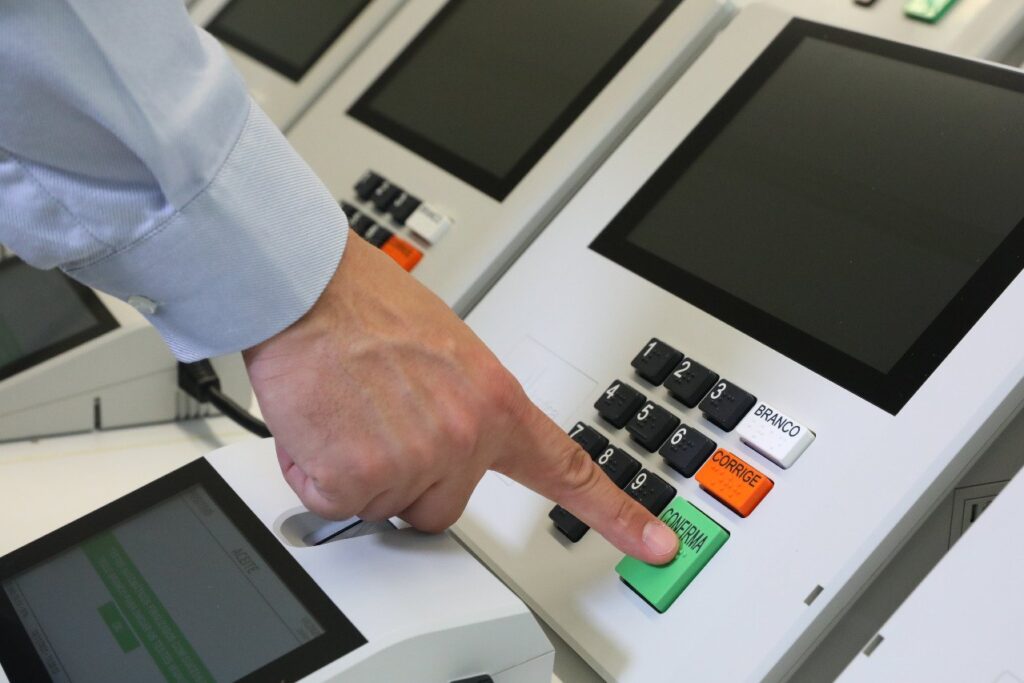
Derek Tisler, counsel in the Brennan Center for Justice’s elections program, said about 98 percent of voters nationwide leave a paper record when they cast a ballot. Most places use optical scan systems, which work something like the scanners that grade standardized tests, according to MIT. Direct-recording electronic machines, which use buttons or a touch screen, often keep a paper record for audits or recounts. Ballot-marking devices are mainly used by voters with disabilities.
The Election Assistance Commission has tested and approved voting systems from 10 manufacturers, including Clear Ballot, Dominion Voting Systems and Election Systems & Software. Testing involves stress tests and checks for software flaws. Trowbridge said any source-code or software change, big or small, has to be reviewed, and states and localities run their own certification on top of that.
Guarded machines, tracked ballots
Ted Allen, an Ohio State professor and member of the MIT Election Lab, named physical security as one of the first lines of defense. Machines sit in secure locations with access limited to election officials, and at polling places they are watched constantly. “The paper, the chain of custody of the equipment and the chain of custody of the ballots are all generally, very carefully studied and controlled,” Allen said.
ES&S, another manufacturer, says it uses encryption, digital signing, FIPS-compliant cryptographic modules and encrypted USB drives programmed for a single election.
Tampering has happened. Tina Peters, a Republican election official in Colorado, was sentenced to nine years in prison for leading a security breach of her county’s election system. In Georgia, bail bondsman Scott Hall pleaded guilty to five misdemeanor conspiracy counts over the breach of voting equipment in Coffee County after the 2020 election. Both cases involved insiders or people given access, not remote attacks on the machines.
The skeptic’s case
Not every expert is relaxed. J. Alex Halderman, a University of Michigan computer scientist who has tested voting-machine security since 2006, argued in a 2018 Scientific American interview that attackers could slip malicious code into election-management systems and spread it to many machines through memory cards or USB sticks. On a stage at MIT, he showed a tampered machine reporting that Benedict Arnold had beaten George Washington 2 to 1 in a mock race where all three volunteers voted for Washington.
His fix was paper. A voter-checked paper record cannot be changed later by a cyberattack, he said, and post-election audits of a random sample can confirm the electronic count. He put the cost of auditing every federal race to high confidence at about $25 million a year.
Tisler pointed to the checks built into the process. “Public trust is so essential to the democratic process, and that is why elections are transparent,” he said.
Sources
- The Vulnerabilities of Our Voting Machines
- Election fact check: How voting machines work and why they're hard to hack




