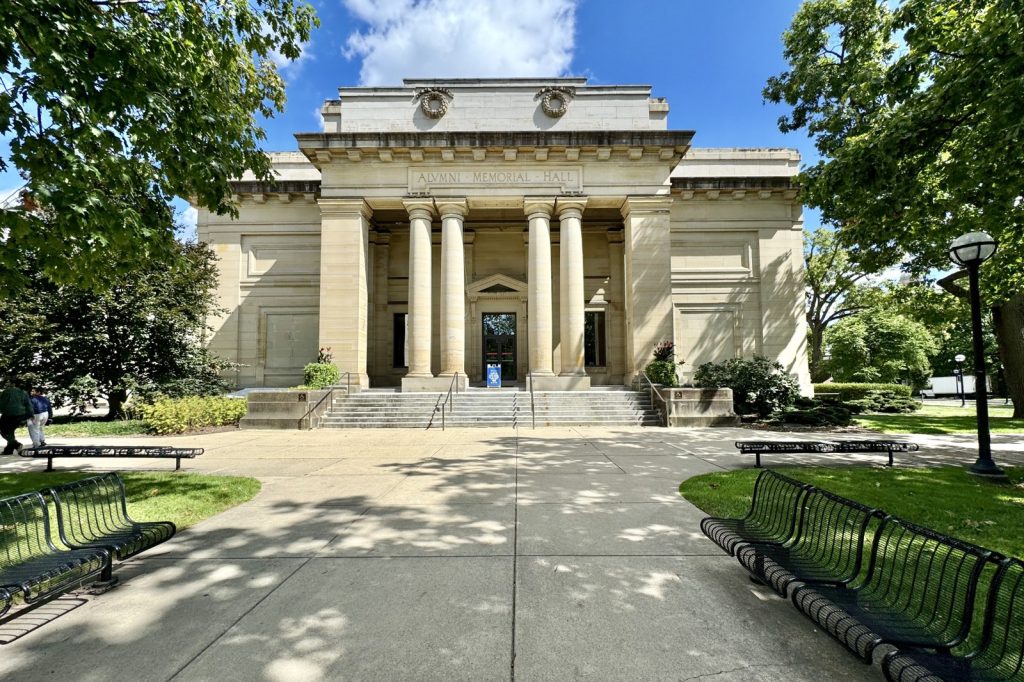
Midterm ballots in Michigan carry more than a Senate seat, and that is the point Joshua Koss keeps returning to. Koss, a political science professor who studies Congress, the presidency, elections, political media and political communications, spoke to The Eastern Echo about why voting matters and where it lands in daily life. This fall he teaches American government and a course on the political analysis of “Star Wars.”
His starting line was blunt. Voting, he said, is “the bedrock of American democracy.” The president is not on the November ballot, but local, state and federal races are, and the people who win them often make critical decisions and shape policy through the measures they back.
Why attention has risen
Koss does not think voting has become more important so much as more visible. People now see how politics touches them personally, he said. He credited part of that to the exposure Donald Trump drew when he first ran, which got many people to pay attention “whether for good or bad reasons,” and to cabinet appointments that draw more scrutiny than they once did. Social identity plays a part as well: people in certain groups can see how politics bears on questions such as who they can marry, and that feeds into whether and how they vote.
The youth gap
Young people, including college students, vote less than older people. Koss gave several reasons. Older voters have voted in every election for 30-plus years, and that habit works like muscle memory. Younger people can be cynical or unsure what government does, and a single high school civics class may not have fixed that. They are also busy, and transport can be a problem. Registering on campus helps, but not everyone does it.
Voting has become easier, he noted. Early voting is common in Michigan and several other states, and it is much simpler for a young person to vote there than it was 20 years ago. That alone will not close the turnout gap, he said. Young voters need facts in front of them: the contrasts between candidates, what is on the ballot, and why it matters. Capturing enthusiasm is the key, which is why some campaigns have pivoted to youth-focused strategies.
For those who feel voting changes little, Koss offered a patient answer. Most elections do not bring immediate change. Shifting the direction of policy takes sustained energy, and voting election after election for the people you want in office, or against those you oppose, is how it happens. Making the link between a given election and a later policy shift, he said, will raise turnout.
What is on the ballot
Michigan has a U.S. Senate race, and every seat in the House of Representatives is up. The party balance in either or both chambers could move from Republican to Democratic, which would change the character of legislation. The state’s entire executive branch is also on the ballot. Michigan has a Democratic governor and split legislative bodies, so the result could either continue the pattern or shake it up.
Koss called this midterm potentially high impact. Congressional control matters, as does whether state governments line up with the president. Opposition to policies such as the Iran war could grow if control shifts, though he judged it less likely that such policies would be reversed with the president in office.
Local races and lower turnout
Local elections are harder to follow because less information circulates; many voters see only yard signs for school board candidates. Yet city and local governments can influence property taxes, curfews and ordinances. Data centers are a hot issue, and while local governments lack absolute control, they can push back on unwanted construction, as has happened with school closures and replacement plans. Local government cannot deliver Medicare for all, Koss said, but much that affects daily life is decided there.
Midterm turnout trails presidential years because people think of the president first. Whoever holds the office inspires people to vote for or against, and Trump has been an especially strong lightning rod. In a midterm the party out of power typically frames races as a referendum on the president, and many Democratic campaigns are doing so now. Voters comfortable with the administration may feel no need to vote, which Koss attributed partly to underrating lower-level races.
Staying involved after election day
His advice for civic engagement beyond the campaign season was practical. Look at what local party chapters at state, county or township level are doing. Consider public service, because many government jobs, some appointed and some hired, carry out the core work of governing, and Koss said the bureaucracy’s importance is widely misunderstood. Pick a specific cause and join the groups doing on-the-ground work, because the fight does not end when the election does.