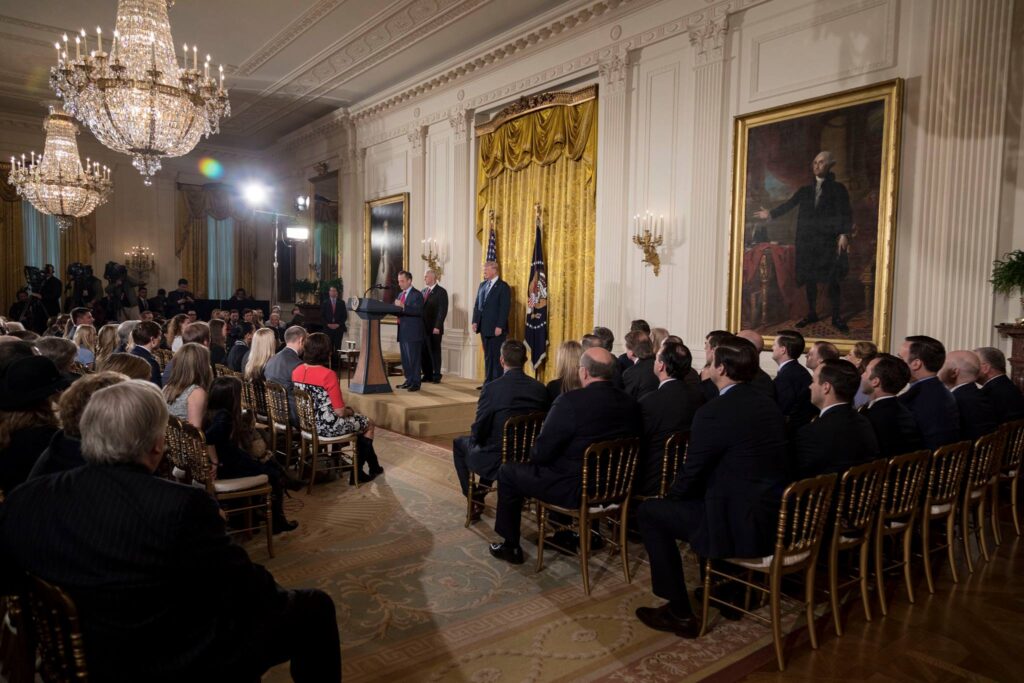
Cybercrime, in the words of the order President Donald Trump signed on March 6, 2026, is “draining American families of their life savings.” Executive Order 14390, titled Combating Cybercrime, Fraud, and Predatory Schemes Against American Citizens, tells the federal government to go after the organized groups behind phishing, ransomware, sextortion and impersonation scams. It does so with deadlines.
Who is the target
The order names the enemy as Transnational Criminal Organizations, or TCOs. It describes campaigns aimed at “the most vulnerable among us” and says foreign regimes in many cases give these groups willing or tacit support, feeding a shadow economy built on stolen identities, coercion, forced labor and human trafficking. Its stated policy is to answer attacks on Americans with a response that can include law enforcement, diplomacy and “potential offensive actions.”
The same day, Trump issued a national cyber strategy. Bloomberg’s Catherine Lucey noted that the strategy promises less regulation and more use of artificial intelligence, but does not mention adversaries such as North Korea, China or Russia and sets no spending or hiring targets.
The clock starts
The State, Treasury, War, Justice and Homeland Security departments, working with the Office of the National Cyber Director, get 60 days to review the operational, technical, diplomatic and regulatory tools they now have against cyber-enabled crime. Within 120 days they must hand the president an action plan naming the TCOs behind scam centers and cybercrime and proposing ways to disrupt and dismantle them.
That plan is to create an operational cell inside the National Coordination Center, set up under an earlier executive order of January 20, 2025. The cell would coordinate federal efforts to detect, disrupt and deter foreign groups that target Americans, businesses, critical infrastructure or public services, bringing in the private sector where appropriate. The plan must also say how Justice and Homeland Security can use threat intelligence and technical know-how from commercial cybersecurity firms to track and disrupt hackers and the infrastructure they rely on.
Two other assignments stand out:
- The Attorney General is told to keep prioritizing prosecutions of cyber-enabled fraud, scam centers and sextortion schemes, and to pursue the most serious provable charges.
- The Cybersecurity and Infrastructure Security Agency is to help state, local, tribal and territorial governments harden their systems against criminals.
Paying victims back
Within 90 days the Attorney General must recommend a Victims Restoration Program. The idea is to return money to people hit by cyber-enabled fraud, using funds clawed back, forfeited or seized from the criminal groups. Homeland Preparedness News described it as a way to repay victims with seized or forfeited money from fraudsters.
Pressure abroad
The Secretary of State is told to demand that other governments act against TCOs on their soil and cooperate with US investigators. Countries that tolerate such activity can expect consequences: limits on foreign assistance, targeted sanctions, visa restrictions and trade penalties. Where officials or diplomats are complicit, the order allows for their immediate expulsion from the United States. The State Department is to coordinate these steps with allies.
The order is a list of reviews, recommendations and plans, so none of it changes enforcement overnight. The first deadline, the 60-day review, fell in early May 2026.
Sources
- Combating Cybercrime, Fraud, and Predatory Schemes Against American Citizens – The White House
- The Impact of the White House’s New Cybercrime Order on Authentication and Fraud – What You Need to Know | Arculus for Business
- Trump Signs Order to Bolster Efforts to Combat Cybercrime | Insurance Journal (Bloomberg, Catherine Lucey)
- Trump signs executive order combating cybercrime, fraud | Homeland Preparedness News (Liz Carey)