
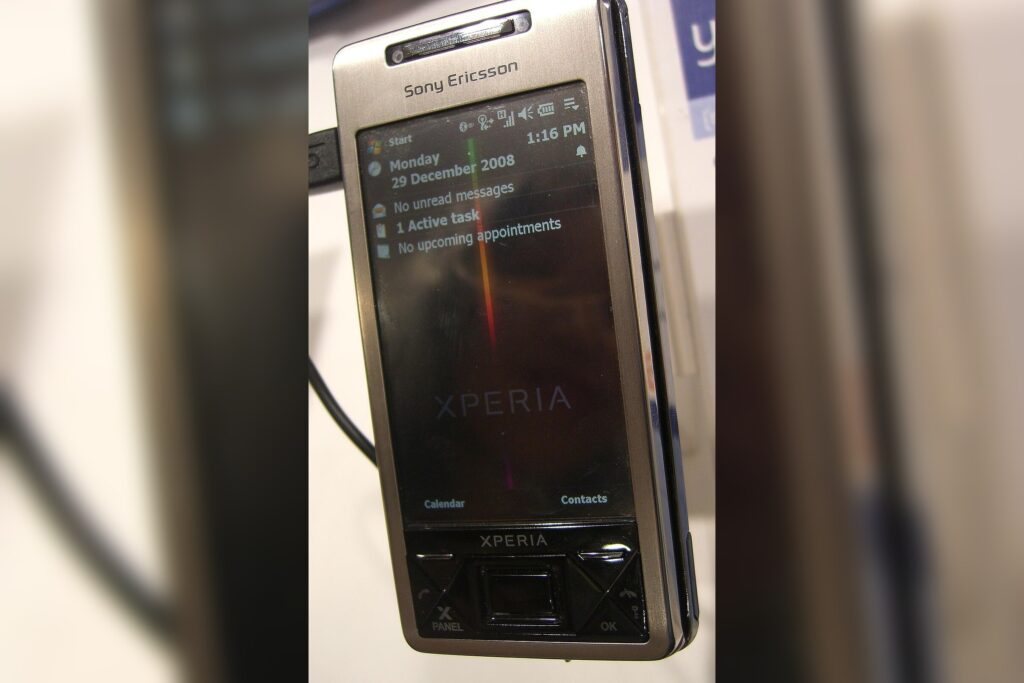
The Xperia X10 shipped in 2010 running Android 1.6, even though version 2.1 was already out. That single detail says a lot about why Sony Ericsson, a joint venture that once paired Sony’s entertainment brands with Ericsson’s phone expertise, ended up as a cautionary tale.
The hardware was good. The Walkman line led music phones and Cyber-shot pushed camera quality. The Xperia PLAY was the only Android phone officially PlayStation Certified, and the Xperia arc carried an 8.1 MP Exmor R camera. But slow Android updates became legendary, and users watched rivals roll out new features while their own handsets sat behind. Internal friction grew, and in 2012 Sony bought Ericsson’s 50% stake for €1.05 billion.
Siemens, paying to leave
Siemens Mobile held roughly 7% of the global handset market in 2002. Its compact S25, launched around 1999, was one of the first truly pocket-sized GSM phones, prized for build quality over flash. That engineering culture became a trap. Machinery built for heavy industry did not bend easily to a design-driven consumer market, and the division turned into a financial liability. In 2005 Siemens handed it to BenQ, in effect paying the Taiwanese company roughly €350 million to take it on and use the Siemens brand.
Palm and the app gap
The PalmPilot sold over a million units within 18 months of its 1996 launch, and the Treo series offered smartphone features years ahead of rivals. WebOS, unveiled with the Palm Pre in 2009, won praise for card-based multitasking and gesture navigation. Developers stayed away anyway. By late 2009 the iPhone App Store had over 100,000 apps, against a few hundred for webOS.
HP paid about $1.2 billion for Palm in 2010. Its TouchPad tablet flopped in 2011 and HP quickly dropped the hardware.
Toshiba and Panasonic
Toshiba’s 2009 TG01 had a then-huge 4.1-inch screen and a slim body, yet ran Windows Mobile 6.1, already obsolete. Its 2010 and 2011 REGZA Phone models used the company’s TV know-how for mobile TV reception in Japan, but felt more like tech demos than daily companions.
Panasonic, known for rugged Toughbook laptops, re-entered consumer smartphones around 2012 with the Eluga series and sold it on IP57 water resistance. Rivals soon matched that, and buyers noticed dated displays and weak processors. Around 2016 Panasonic left the global consumer smartphone market.




