SANTA CLARA, November 16, 2026 — Nvidia’s board has named Colette Kress interim CEO after Jensen Huang’s resignation on Thursday, ending his 33-year run at the company he co-founded. Kress steps into the role as the company prepares to report third-quarter earnings on Tuesday, November 17, with Wall Street already downgrading the stock on leadership uncertainty.
Kress’s Background and Strategic Priorities
Colette Kress has served as Nvidia’s chief financial officer since 2013, overseeing the financial architecture behind the company’s transformation from a gaming GPU vendor into the primary infrastructure provider for the generative AI boom. Before joining Nvidia, she held senior finance roles at Cisco and Microsoft, giving her deep exposure to enterprise hardware cycles and cloud infrastructure economics. As CFO, she managed the capital allocation that funded the Hopper and Blackwell architecture ramps and navigated the export control restrictions that reshaped Nvidia’s addressable market in China. The board’s statement on Sunday confirmed its support for Kress as interim chief executive while ruling out Huang’s return, a position reinforced by analyst Dan Ives, who said the reputational damage makes a comeback unrealistic.
Impact on GPU and Data Center Strategies
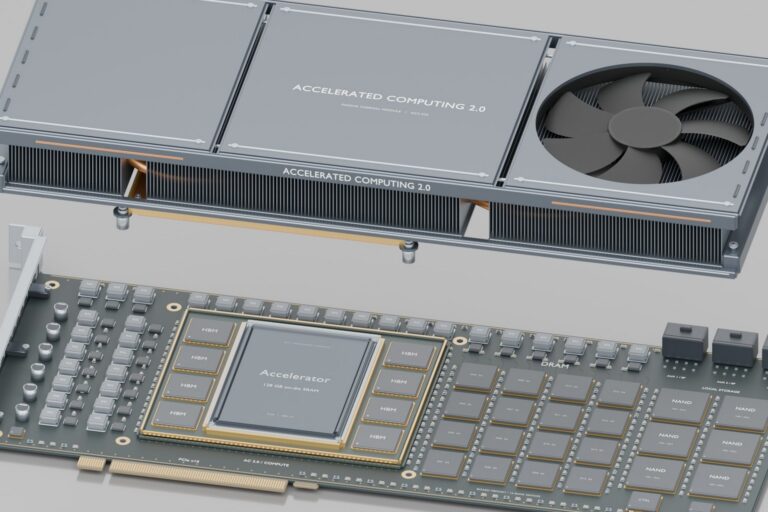
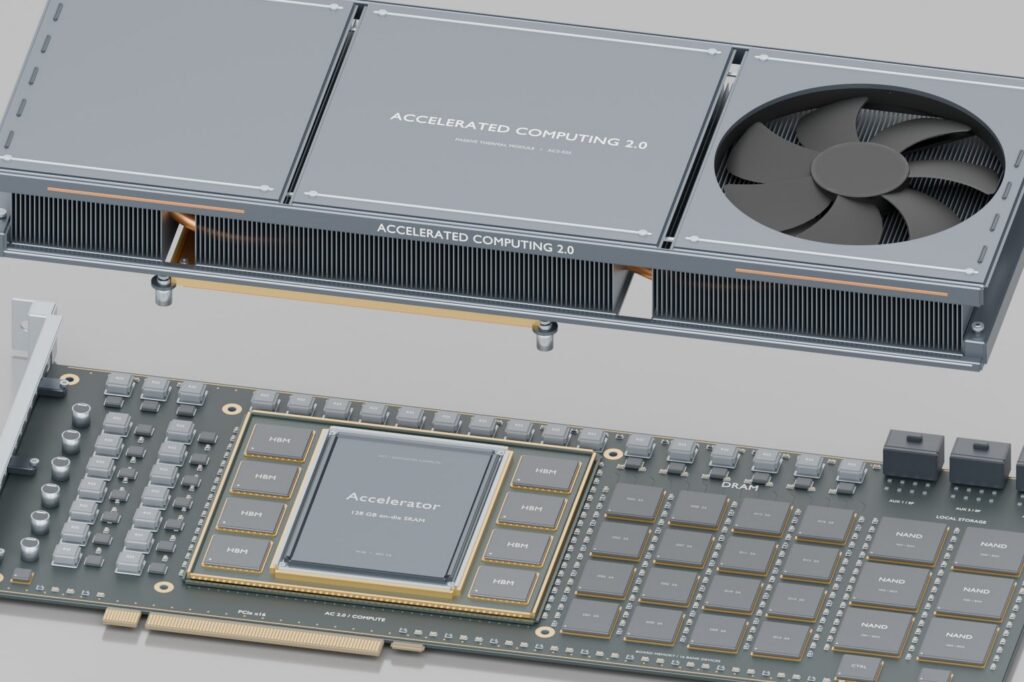
The technical reality under the hood is that Nvidia’s product roadmap for the next 18 months is largely baked. The Blackwell architecture is in volume production, the GB200 NVL72 rack-scale systems are shipping to hyperscalers, and the next-generation Rubin architecture is deep in the design validation phase. Kress’s influence will be felt less in silicon microarchitecture and more in the pacing of platform integration — how aggressively Nvidia pushes rack-level liquid cooling, NVLink domain scaling, and the software stack that binds GPUs, DPUs, and networking into a single programmable domain. Her CFO background suggests a bias toward capital discipline: she has historically emphasised gross margin expansion through software and services attach rates rather than pure silicon volume. That discipline will be tested as customers demand tighter total-cost-of-ownership guarantees on Blackwell deployments.

AI Hardware Roadmap Under New Leadership
Huang’s departure removes the single decision node that previously aligned silicon, systems, software, and go-to-market strategy across the entire AI stack. Under Huang, the roadmap was iterative but opinionated: annual architecture cadences, proprietary interconnects, and a CUDA moat that competitors have struggled to breach. Kress inherits a roadmap that extends through Rubin (2026) and Rubin Ultra (2027), but the strategic fork points — whether to open NVLink to third-party ASICs, how to price the inference-optimised product tier against custom silicon from Google, Amazon, and Microsoft, and how to manage the China-specific product line under evolving export rules — now sit with a leadership team that has not previously set that direction. The board has not announced a timeline for a permanent CEO search.
Wall Street’s Reaction to Leadership Change
At least ten analysts have downgraded Nvidia from Buy to Hold since Thursday, citing the leadership vacuum. Bernstein’s Stacy Rasgon moved to a Market Perform rating with a $200 price target, writing that the uncertainty proved too much and questioning any new CEO’s ability to fill Huang’s shoes given how tightly he managed the business, its customer relationships, and the broader industry ecosystem. Oppenheimer’s Rich Schafer echoed the sentiment, downgrading to Hold and noting Huang’s role as the “face of AI” cannot be overstated. Yorkville’s Dan Ives maintained an Outperform rating with a lowered $225 target, arguing the US tech industry remains ahead of China in the AI race and that the situation will sharpen the competitive sword. Nvidia shares fell 12.75% for the week through Friday’s close, erasing roughly $573 billion in market value. The stock comprises about 6% of the S&P 500’s total value, meaning the decline has broad implications for investment and retirement accounts.
Future Challenges and Opportunities
Kress faces immediate pressure on multiple fronts. The Commerce Department investigation into Megaspeed — the Singaporean firm led by Alice Huang, the executive at the centre of the scandal — was halted after Nvidia’s general counsel invoked a senior Trump administration official, according to The New York Times. That episode, combined with Huang’s scheduled closed-door congressional testimony on December 1 and Commerce Secretary Howard Lutnick’s appearance before the Senate Banking Committee, ensures Washington scrutiny will persist. Analysts expect Congress to push new chip and chip-equipment export controls in December. Meanwhile, the earnings call on Tuesday will be Kress’s first public test: analysts will press for clarity on Blackwell ramp yields, China revenue trajectory, and whether the board has defined the mandate for a permanent successor. The detail that matters is not the next quarter’s guidance but whether Kress can convince the market that Nvidia’s execution machine runs on process, not personality.
Sources
- Nvidia
- Commerce Dept. Chip Inquiry Was Halted After Nvidia Intervention
- Who’s who in the Nvidia scandal and what we know about what’s happened | CNN Business
- 'Massive shoes to fill': Wall Street sours on Nvidia stock after Jensen Huang's exit
- Dan Ives Rejects Jensen Huang Comeback as Nvidia Investors Push for Return
- Nvidia scandal looms large over upcoming Trump-Xi meeting : Consider This from NPR
Photo: Wikideas1 (CC0)