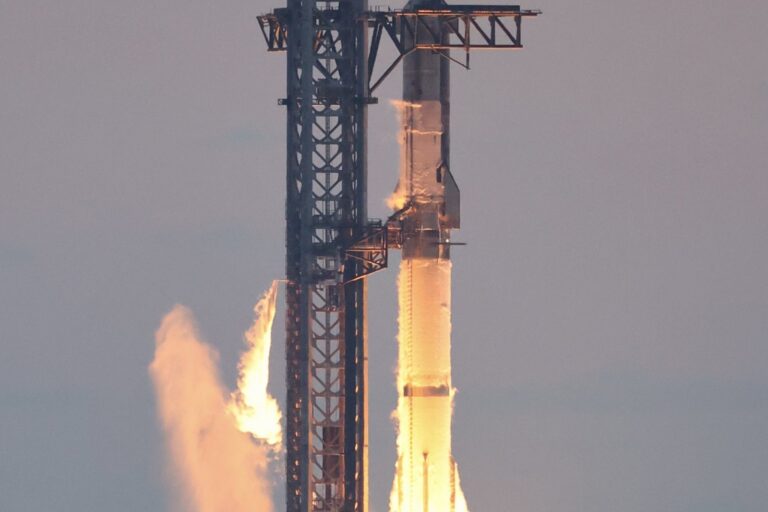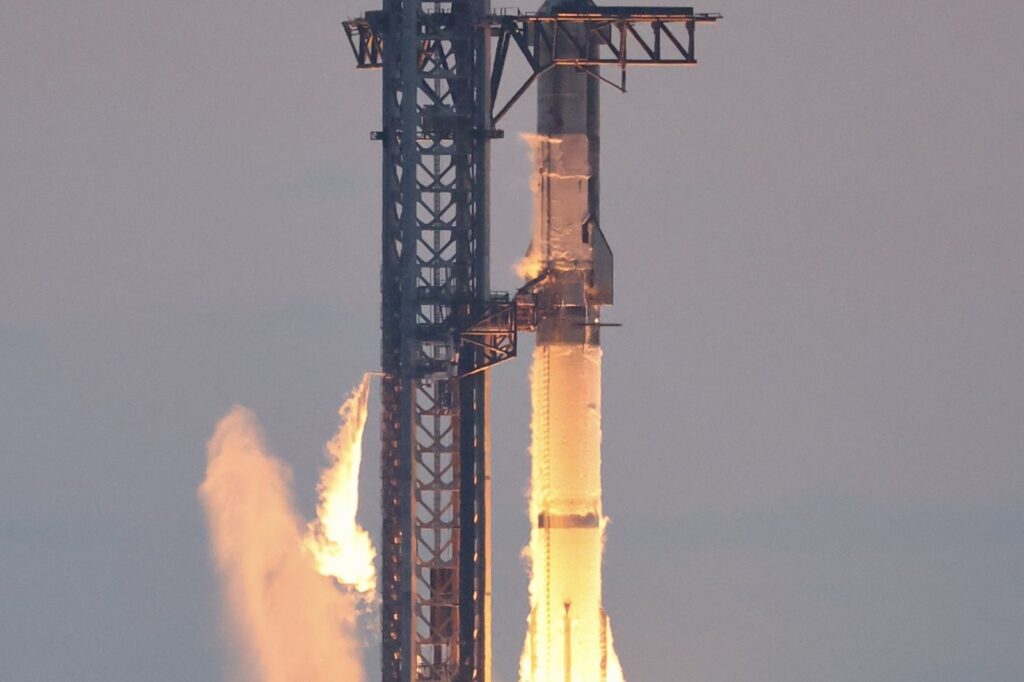
STARBASE, November 14, 2026 — SpaceX’s 15th Starship test flight lifted off at 5:47 p.m. ET and placed the Ship 42 upper stage into orbit, while the Super Heavy booster aborted its planned tower catch after detecting a guidance, navigation and control (GNC) anomaly.
Liftoff and Booster Abort
The 33‑engine Super Heavy ignited on schedule and cleared the launch pad, but the return‑to‑launch‑site maneuver that would have seen the booster snagged by the Mechazilla tower was aborted. SpaceX communications specialist Dan Huot said the booster “detected a GNC issue in the later stages of the coast” and switched to its contingency plan, hovering, cutting thrust and triggering the flight termination system before splashing down in the Gulf of Mexico.
Orbital Insertion and Starlink Deployment
Ship 42 separated cleanly and achieved orbit, marking the second successful orbital flight for Starship. While circling the globe, the vehicle deployed 26 next‑generation Starlink V3 internet satellites, three of which carry cameras aimed at monitoring the heat shield’s condition.
Technical Reality of the GNC Fault
The GNC fault, identified by onboard diagnostics, forced the booster to abort the precision landing sequence. Under the hood, the issue appears to have been a mis‑alignment between the vehicle’s inertial measurement unit and its flight‑control software, prompting the autonomous safety protocol that diverted the booster to the offshore splash‑down zone.
Upcoming Re‑Entry and Ship‑Catch Attempt
Ship 42 will remain in low Earth orbit for roughly 22 hours, completing about 14 revolutions before attempting a controlled, upright landing within the arms of the Mechazilla tower. If successful, this will be the first time an upper stage has been caught by a launch‑tower mechanism, a milestone SpaceX cites as essential for full reusability.
Implications for Reusability and Deep‑Space Missions
Capturing both stages would validate the company’s claim that a fully reusable Starship could dramatically lower launch costs and support the planned lunar and Martian missions. The booster’s abort, however, underscores the technical challenges that remain before the “holy grail” of rocketry can be routinely achieved.
SpaceX expects Ship 42 to begin its return burn on Saturday, November 15, 2026, with the landing attempt slated for later that day.
Sources
- Live updates: SpaceX Starship soars in orbit, still aiming for ship catch in unprecedented test flight | CNN
- Starship Flight 15 will put SpaceX’s moonshots to the test
- SpaceX's Starship Flight 15 launches from Texas, misses booster catch – AOL
- Live updates: SpaceX Starship soars in orbit, still aiming for ship catch in unprecedented test flight | CNN
- SpaceX aborts Starship booster catch on Flight 15
Photo: Steve Jurvetson (CC BY 2.0)