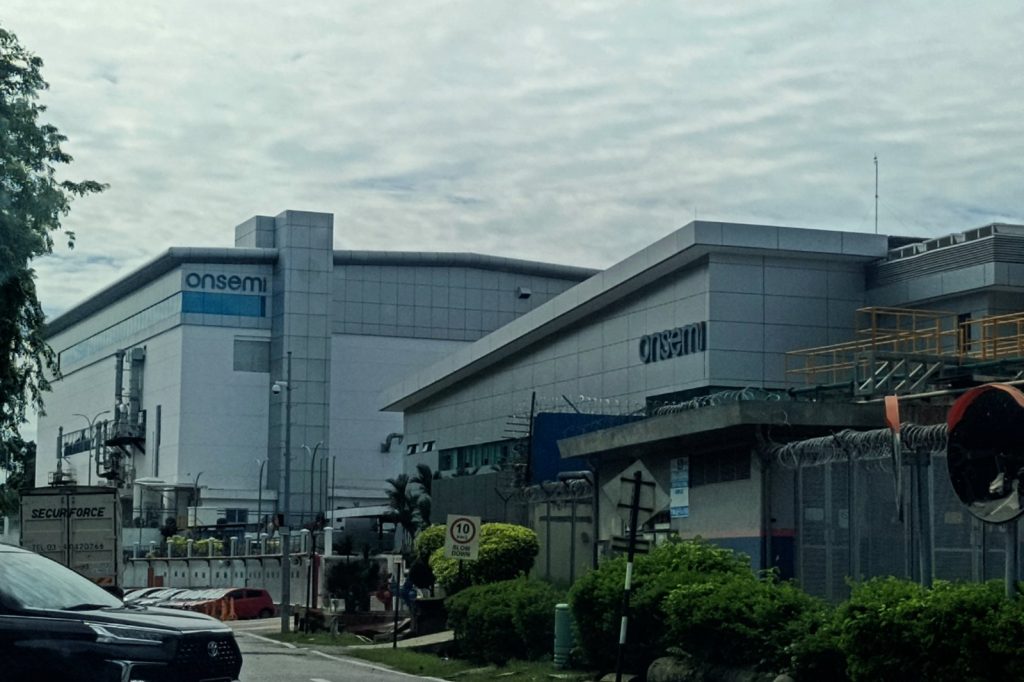
Sixteen Malaysian chip companies plan to spend more than RM4 billion over the next two years, add 3.4 million square feet of floor space and hire about 4,600 people. That is what a survey by the Malaysia Semiconductor Industry Association found, and it was reported by Bernama on 9 September 2021.
The reason is a backlog. Orders for integrated circuits had been piling up for 12 months, since lockdowns forced factories in Malaysia and elsewhere to close or run below capacity. Other shocks made it worse: fires and drought at fabrication plants in Japan, the United States and Taiwan, and the Suez Canal blockage in March, when a container ship lodged sideways for almost a week.
Back to full capacity
MSIA president Datuk Seri Wong Siew Hai said the government’s rule allowing factories to return to 100% capacity once 80% of staff are fully vaccinated had taken some pressure off. “We thank the government for understanding that electric and electronics (E&E) is one of the essential service sectors,” he told Bernama, adding that firms were “working around the clock to ship as many products as possible.” More companies were vaccinating workers, and some were hiring to lift output.
Reuters had spoken to Wong earlier, in August. Demand from customers, he said then, still exceeded what Malaysia could supply. “Predicting based on data I’m seeing, the situation should improve, but we still cannot fulfil the demand.” Orders had been stacking up since the end of the previous year. The nationwide lockdown that began in June had shut almost every industry at first, and sales losses “easily ran into billions” of ringgit, he said. Carmakers made it harder: many cut chip orders the year before, so chipmakers shifted capacity to other electronics customers. “Come January, the automotive industry realised they wanted to get back the capacity but the semiconductor fabrication plants didn’t have the capacity for them,” Wong said.
How big is the squeeze?
Industry research projects global demand for ICs to rise 20% in 2021 and a further 10% in 2022. Semi, the equipment industry body, reported that global equipment billings jumped 48% from a year earlier to a record US$24.9 billion in the second quarter. Manuel Zarauza, group managing director of Malaysian Pacific Industries, expects the shortage to run into 2022. His own company is better placed. “The MPI is not facing a major chip shortage right now,” he said, because suppliers prioritised a customer of more than 20 years. Still, “if the chip shortage continues over a long period of time, the entire industry will be impacted.”
Malaysia is one of the world’s top ten semiconductor countries. It handles about 7% of global trade in chips and about 13% of the world’s back-end assembly, test and packaging capacity. The sector contributes 6.8% of gross domestic product and employs over 575,000 people.
Sources
- Malaysia to increase efforts to address semiconductor backlog orders (Bernama, via The Star; also carried by Malay Mail)
- Malaysian chip makers still struggling to meet demand, association says (Reuters, via Yahoo News Singapore)