
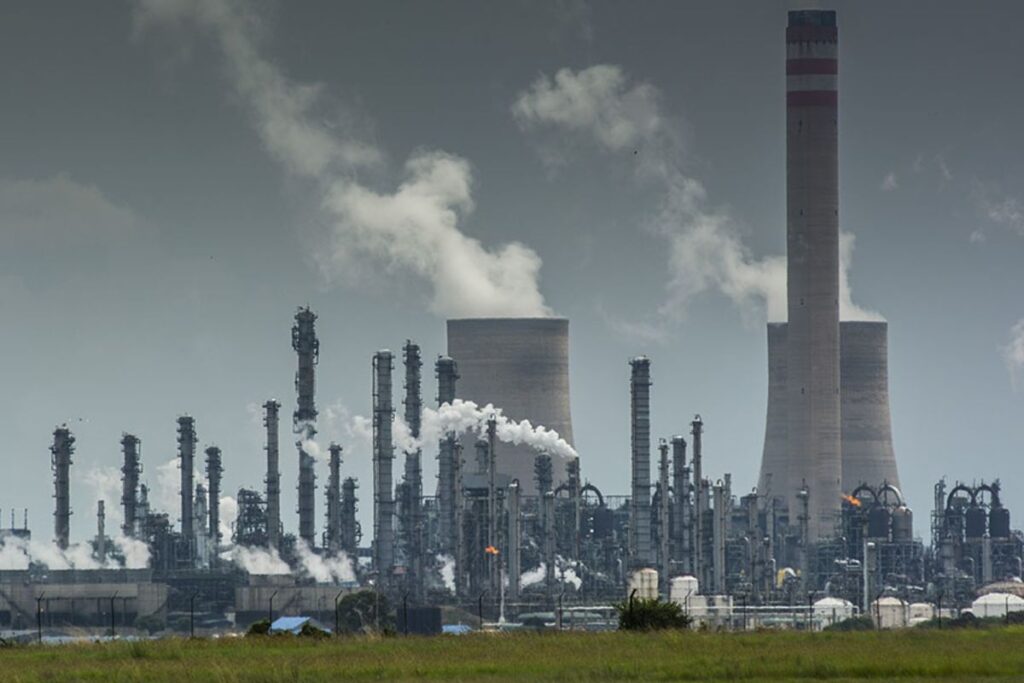
The Philippines will switch on its first LNG import terminal in July. Atlantic, Gulf & Pacific Company of Manila, the firm behind it, has already started an expansion that lifts capacity by 2023.
It is one small piece of a much larger build. According to Global Energy Monitor, Asia has more than US$350 billion (RM1.47 trillion) of gas projects under way: LNG terminals, gas-fired power plants and pipelines. That is triple the estimated spending in Europe.
Why governments want gas
China, the Philippines and Vietnam are among the economies using gas to avoid burning more coal. The fuel heats homes, cooks food and runs factories at all hours, and it cuts urban smog. It also produces half the carbon emissions of coal.
The trade-off is that the buildout risks locking in fossil fuel use for decades and could slow some renewable projects. The report says a growing consensus holds that gas use must eventually shrink to limit climate change.
China is set to invest more than any country in gas infrastructure as Beijing tries to lean less on coal and peak its emissions this decade. The world’s top LNG buyer has 30 import projects under construction and tentative plans for about three dozen more, according to BloombergNEF. In South Korea, Posco Energy, SK E&S and state-run Korea National Oil are adding LNG facilities that they say could later be converted to carry and store hydrogen.
Two readings of the same boom
Joseph Sigelman, the Manila firm’s chairman and chief executive, argues gas helps renewables along. “Combined with gas power’s ability to stabilise the electric grid, LNG opens the door to more renewables which are inherently volatile,” he said.
Robert Rozansky, a research analyst at Global Energy Monitor, sees the scale as the problem. Asia is the largest energy-consuming region and home to most of the world’s people, yet its gas market is only about the size of the U.S. market, according to BP data. That leaves a lot of room to grow. If every project in the nonprofit’s research is built as planned, global LNG import capacity would rise 50%. The research covered developments planned as of June 2021.
Rozansky warned decision makers against assuming gas will stay cheaper and steadier than renewables and storage. “These assumptions are outdated or will be long before the end of a 20-year LNG contract,” he said.
Mark Carney, the former Canadian and UK central bank governor and now a UN special envoy on climate action, took a middle line at the Asia Sustainable Finance Forum in Seoul the previous month. “There definitely is a role for gas,” he said, especially in displacing coal. “But we always need to keep in mind the ultimate horizon for any source of energy given its carbon footprint.”
The UN added to the pressure on Monday, warning that the world may be on track to warm by more than 3 degrees Celsius, twice the Paris Agreement target.
The timing is awkward for poorer buyers. A global power crunch has followed the pandemic recovery, and the war in Ukraine has pushed LNG prices to record levels, which may complicate plans by cash-strapped emerging nations to move to the fuel.
Sources
- Asia's US$350b gas buildout intensifies clean energy debate
- Asia’s US$350bil gas projects intensify clean energy debate
Sources
- Asia's US$350b gas buildout intensifies clean energy debate
- Asia’s US$350bil gas projects intensify clean energy debate




