
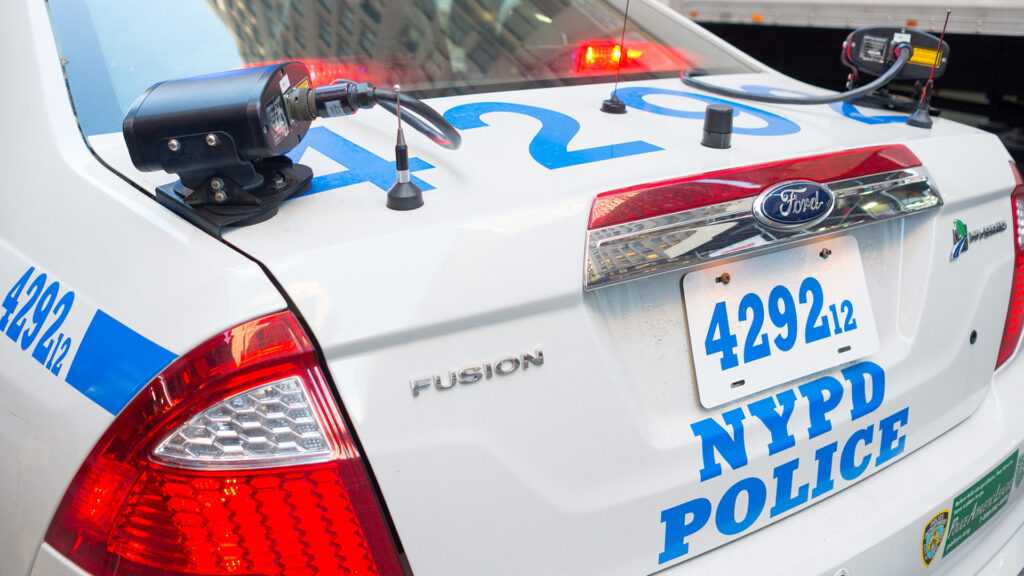
The Fifth Circuit ruled in March 2026, in United States v. Elijah Porter, that police use of a license plate reader system was not a Fourth Amendment search. The system had around ten cameras. The court said it gave only periodic information about where a person went, “much more” limited than geofence data or cell-site location records.
A different case is still working through the courts. In Schmidt v. City of Norfolk, now on appeal before the Fourth Circuit, two plaintiffs argue that the city’s 176 cameras, which keep images for 21 days, let police retrace residents’ movements without a warrant. A federal judge sided with the city on summary judgment, finding that the network did not reveal enough of the plaintiffs’ movements to be a search. He added that at some point the technology could become intrusive enough to cross the line.
Where the technology came from
Automatic number-plate recognition is older than most people assume. Britain’s Police Scientific Development Branch invented it in 1976. Prototypes were working by 1979, and early trial systems ran on the A1 road and at the Dartford Tunnel. The first arrest for a stolen car came in 1981.
Cheaper, easier software in the 1990s took it out of the workshop. By the early 2000s, agencies were keeping the data to help solve crimes that had no suspect yet. In November 2005, in Bradford, ANPR played a vital role in locating and convicting the killers of Sharon Beshenivsky.
The cameras can be existing CCTV or road-rule enforcement units, or ones built for the job, often with infrared lighting. Software cleans up the image and then uses optical character recognition to read the characters. At the roadside the whole process takes about 250 milliseconds. For high-volume projects like the London congestion charge, images go to a server farm to be read later.
The American argument
In the US the devices are usually called ALPRs, and they are typically small solar-powered cameras on a pole, a building or a police car. The ACLU estimates 80,000 to 100,000 Flock cameras are deployed nationwide. Flock says it operates in more than 6,000 communities.
Privacy advocates say the problem is the aggregate. A dense, searchable archive shared across jurisdictions, they argue, can reconstruct a person’s movements, associations and routines over time, without a warrant. The Electronic Frontier Foundation reported finding searches tied to protest activity in Flock audit logs. Advocates also point to officers allegedly searching for partners or acquaintances, and to drivers stopped and held at gunpoint after an inaccurate plate scan.
Police and Flock answer that a plate is displayed in public and that officers see only what any bystander could. Flock cites retention limits, user accounts and audit logs, and says its technology supports more than a million investigations a year.
Huntsville, Alabama, is one place where the argument has gotten local. The police department there says the cameras photograph only the rear of a vehicle and hold images for 30 days. Curt Worshek of the North Alabama Multi-Agency Crime Center said the system does not show a driver’s real-time location. Officers search for a specific plate, use data from several cameras to estimate where a suspect might be heading, and coordinate with other agencies. The department says Huntsville’s population has grown 24% since 2019 while major crimes dropped 33%.
Resident Molly Kluck is not persuaded. “Mass surveillance is a violation of our constitutional rights,” she said. Caden Helbling sees some value but is uneasy. “It seems like we’re not being given a choice,” he said. Some residents have filed public records requests for the audit logs. The police department said releasing them would compromise the privacy of hundreds of individuals.
In Congress, Rep. Tim Burchett, a Tennessee Republican, proposed the Protection Against Mass Surveillance Act. It would bar the federal government from buying or using mass tracking tools and stop states from using federal money for them. Burchett wants to “ban these dadgum” things.
Sources
- Automatic number-plate recognition – Wikipedia
- The surveillance camera on your street corner: lawful spying or constitutionally problematic?
- License plate readers spark privacy debate in Huntsville as police defend their use




