
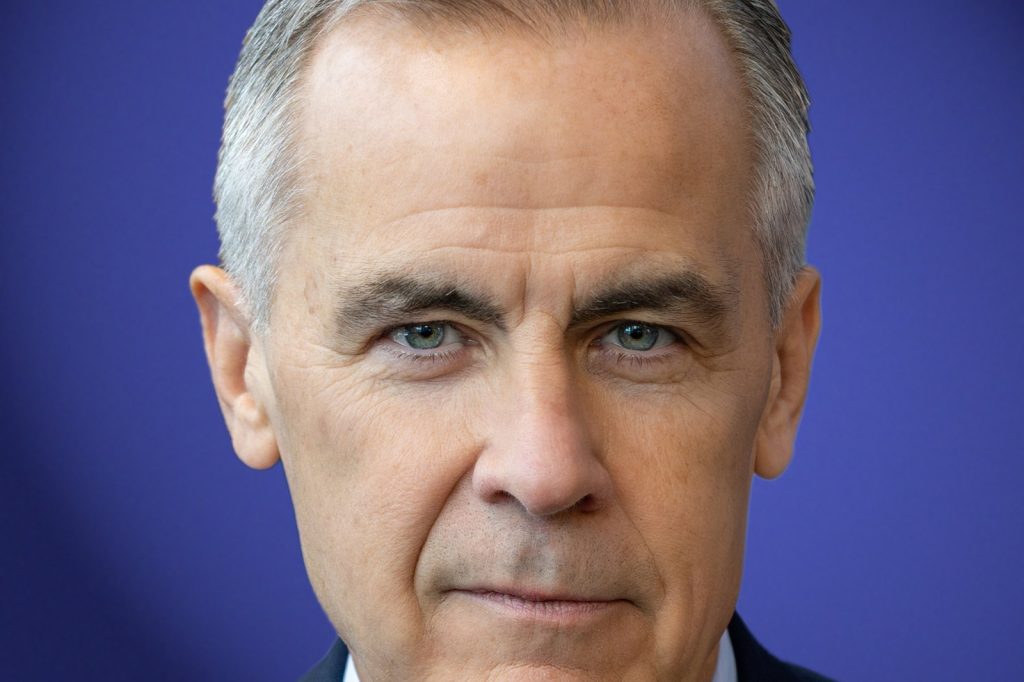
STRASBOURG – The applause starts before Mark Carney has said a word. Lawmakers in the European Parliament chamber crowd toward the Canadian prime minister as he walks in on Thursday, September 17, hands out for a shake, phones up for selfies. One member of parliament has pulled on a Canadian hockey jersey.
When he finishes, the chamber stands.
An offer from von der Leyen
The scene was set a day earlier. Carney sat in the front row of the chamber on Wednesday while European Commission President Ursula von der Leyen told him, “I would like to work with you on opening the door for Canada to be the first associate member of the EU.” Carney rose and embraced her as MEPs gave the idea a standing ovation, Euronews reported.
Associate member is not a status that exists in the bloc’s treaties. It would have to be invented. Von der Leyen said Europe wants to take its relationship with Canada to “the highest level possible,” moving past the existing free trade agreement toward what she called an “Alliance for the Future” and a “common prosperity and economic security space.”
On Thursday, Carney said he welcomed the proposal, though he admitted that “associate membership” remains to be defined. He listed where he wants deeper integration: trade, defense, critical minerals, artificial intelligence, energy, space, research and financial services. The aim is to leave both sides less exposed to economic and geopolitical pressure.
He told reporters afterward that he is not seeking full EU membership. “We do not seek power to dominate others,” he said. “On the contrary, we are pursuing resilience so that no one can control our open markets, impair our sovereignty, threaten our territorial integrity, or undermine our freedoms, our democracies, our rule of law.”
Washington in the background
The United States is the room’s unseen guest. Canada sends roughly 70% of its exports there, which leaves it badly exposed to President Donald Trump’s tariffs. Ottawa has hit back and rejected demands that Carney says threaten Canadian sovereignty. Europe went another way, shelving retaliation and accepting tariffs of up to 15% on most EU exports to the US.
Trump suggested the proposed arrangement could be a “hostile act” and threatened heavy tariffs on Europe if he judged its intentions unfriendly. Asked about it, Carney pointed home. “Canadians are united that nobody is going to tell us what language we speak. No one is going to dictate our culture or with whom we can strike agreements internationally,” he said.
At the World Economic Forum in Davos in January, Carney had warned that when countries negotiate alone with a dominant power, “we negotiate from weakness. We accept what is offered.”
What already exists
Jonathan Wilkinson, Canada’s ambassador-designate to the EU, said Ottawa wants “to get as close as we possibly can” to Europe while increasing Canada’s independence. A step has already been taken: this year Canada became the first non-European country to join the EU’s 150-billion-euro ($173-billion) SAFE defense procurement program, which opens joint procurement to Canadian companies.
Carney said any enhanced partnership would be debated in Canada’s Parliament and put to a final vote. He will host EU leaders at a summit in Montreal on Oct. 29-30 to discuss the new relationship in more detail.
Nelson Wiseman, professor emeritus at the University of Toronto, said Europeans regard Canada as a country that understands the United States well, and that “Carney’s shrewdness in dealing with Trump has captured Europe’s attention.”
Sources
- Video. EU – Canada: Standing ovation for Mark Carney at European Parliament | Euronews
- Carney embraces EU associate membership proposal as Trump pushes Canada closer to Europe – Yahoo News Canada




