
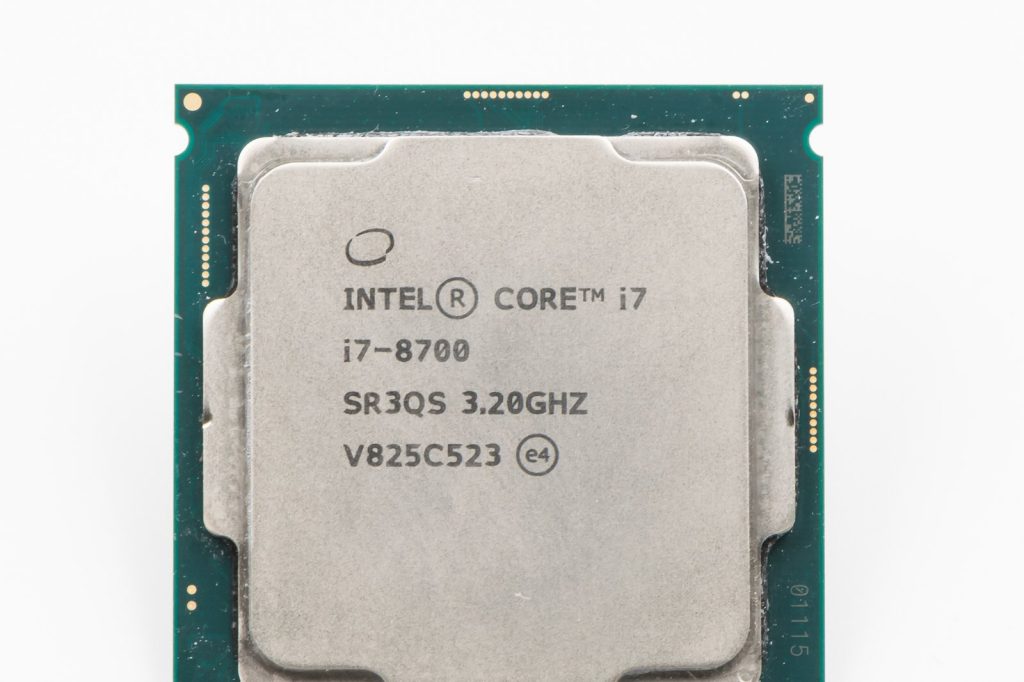
The United States made 37% of the world’s chips in 1990. By 2022 the share was 12%, and for the most advanced logic chips it was zero. That last figure is what pushed Washington to act. President Joe Biden signed the CHIPS and Science Act on August 9, 2022, appropriating $52.7 billion, including $39 billion in subsidies for manufacturing on U.S. soil plus a 25% investment tax credit for equipment costs.
The target is 20% of world chip production by 2030, and 28% of advanced logic. A March 2026 scorecard from Live in the Future thinks 15% to 18% is more realistic.
Why Washington cared
The pandemic shortage made the case. Demand for laptops, tablets and webcams outran supply, then carmakers, who had put orders on hold during lockdowns, found the capacity already given to other customers. Ford, General Motors, Toyota and others halted production. AlixPartners estimated the shortage cost the auto industry about $210 billion in revenue in 2021, CNET reported. Officials also did not like how much the economy and the military depended on Asian chipmakers, and China was spending heavily on its own.
“We don’t want to create a situation where the United States, which created the semiconductor industry and Silicon Valley, would be completely dependent on other nations for that product,” said Al Thompson, who leads Intel’s U.S. government relations.
The projects
Intel said in January 2022 that it would spend $20 billion on two fabs near Columbus, Ohio. The site could eventually hold eight fabs costing $100 billion. Intel got the largest CHIPS award, $8.5 billion toward a $100 billion plan covering Arizona, Ohio, New Mexico and Oregon. Its first product on the 18A process, the Panther Lake Core Ultra Series 3, debuted at CES 2026. But the foundry division has reported billions in operating losses, and outside customers remain scarce.
TSMC’s first Arizona fab began making 4nm chips in late 2024, and the scorecard says wafers have gone to Apple, Nvidia and AMD. A second fab started construction in April 2025, with volume production targeted for 2027. Total planned investment across three Arizona fabs is $65 billion. The chips still go back to Taiwan for advanced packaging. TechInsights puts TSMC’s extra cost for a wafer made in Arizona at under 10%; AMD’s Lisa Su has said 5% to 20%.
Samsung’s $17 billion plant in Taylor, Texas, is the weak spot. It secured up to $4.7 billion in CHIPS grants, and as of March 2025 the building was 91.8% complete. No production equipment had been installed, because there were no confirmed customers. Analyst Joanne Chiao of TrendForce told Nikkei Asia that “restrictions on chip exports to China and lack of U.S. demand keep capacity underutilized.”
Micron received $6.1 billion and GlobalFoundries $1.5 billion.
Tally so far
Roughly $450 billion in private investment has been announced, about $8 for each public dollar. The scorecard counts more than 50,000 construction workers on fab sites and expects 40,000 direct manufacturing jobs once they run. Most of the private money has not yet been spent, it cautions: pledges are not disbursements.
Time is the catch. “It takes years to build a fab,” Intel’s Keyvan Esfarjani said in 2022, adding that Intel’s two new Arizona fabs would not begin mass manufacturing until the second half of 2024.
Sources
- Global Chip Shortage and $53B Subsidy Boosts US Manufacturing – CNET
- CHIPS and Science Act – Wikipedia
- The U.S. Spent $52 Billion to Reshore Chips. Here's the Report Card.




