
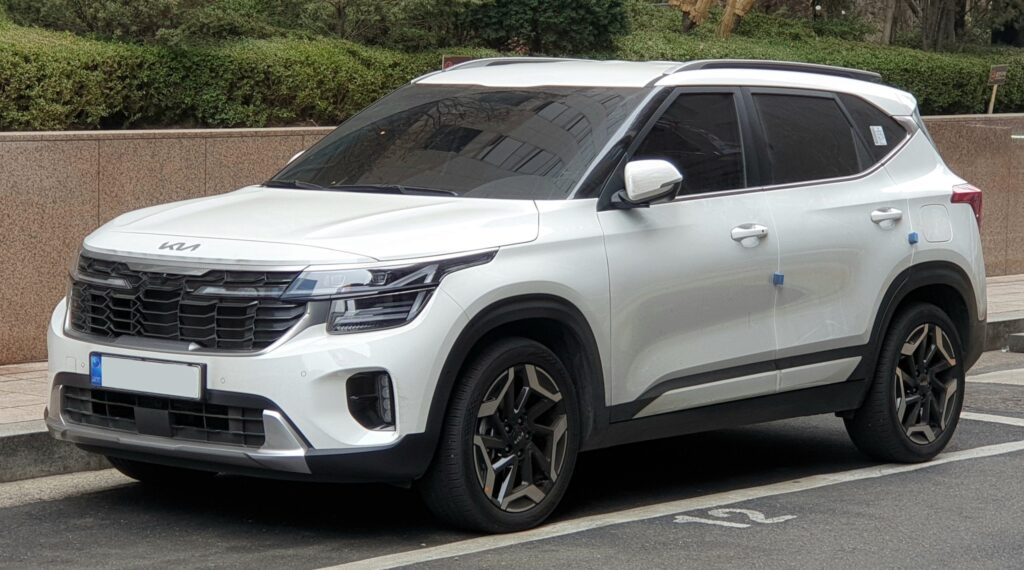
Two Seltos, Two Very Different Drives
Consumer Reports did not review the 2027 Kia Seltos from behind a desk. The nonprofit’s autos team, led by managing editor Jeff S. Bartlett, bought their own Seltos S, in all-wheel-drive form, the way any customer would: an MSRP of $28,090, floor mats at $200, a destination fee of $1,495, and a bottom line of $29,785, with final assembly in Gwangju, South Korea. Then Kia lent them the other end of the range, an X-Line SX that ran to $37,250 once the $2,500 Prestige package, all-weather mats, floor mats and a $45 first aid kit were counted. The testers’ verdict on the pairing was blunt: each version delivered quite a different driving experience.
The review, updated September 21, 2026, carries the headline claim that the redesigned model “Levels Up with Tech and Comfort”, and its subhead bills the subcompact SUV as “a tempting alternative to the Chevrolet Trailblazer and Toyota Corolla Cross”. What earns that billing is familiar stuff done well: a compliant ride, more cabin room than before, and controls that do not fight the driver. Features borrowed from Kia’s larger SUVs, plus easy front access, put it ahead of most subcompact rivals in the testers’ judgment.
The Engine Is the Catch
Here’s what it means for buyers: the weak point sits under the hood. The 147-hp 2.0-liter base four-cylinder, an engine carried over from the previous generation, is what the review calls “the Achilles heel.” It ships in S, EX, LX and X-Line S trims and drives through a continuously variable transmission. The livelier choice, a 190-hp, 1.6-liter turbocharged four, belongs to the top X-Line SX alone, paired with an 8-speed automatic. A Seltos Hybrid joins the range with the 2027 model year, according to Kia. In plain terms, the base engine is a city motor: the testers call it sluggish and a fit for city streets; on the highway they point buyers toward the turbo or the hybrid to come.
Small Outside, Grown-Up Inside
The second-generation Seltos grew slightly in most dimensions, and its comfort, convenience and active-safety equipment now rivals what larger, costlier SUV classes offer. Think of it like a studio apartment gaining built-in storage: the footprint barely moves, the livability jumps. The styling carries the brand’s current cues, among them smooth body sides, narrow lighting elements, blocky wheel designs and a “floating” roof.
Not everything landed, the review adds: “We don’t love the powered pop-out exterior door handles, odd-shaped steering wheel, and head restraints that tilt far forward.” Small complaints, but they are the parts a driver touches every single day.
What Comes Next at the Test Track
This is an initial expert assessment, not the final word. Once the purchased Seltos passes 2,000 break-in miles, it will face more than 50 evaluations at the Auto Test Center run by Consumer Reports, which measures braking, acceleration, usability, car-seat fit and handling. Full road-test results follow for members. Of the specific car they bought, the testers wrote that it “hits a sweet spot for price and value.”
The class context explains why this little SUV is getting so much attention. The subcompact segment blossomed a few years ago as a wave of tall hatchbacks built in markets around the world, with the Trailblazer, the Hyundai Kona and the Seltos itself pairing small-car frugality with bigger doors, a high roof and genuine cabin room on a small platform sized for cities. That first generation of baby SUVs is growing up now, and the 2027 Seltos is one of the clearest examples yet of what the second act looks like.




