
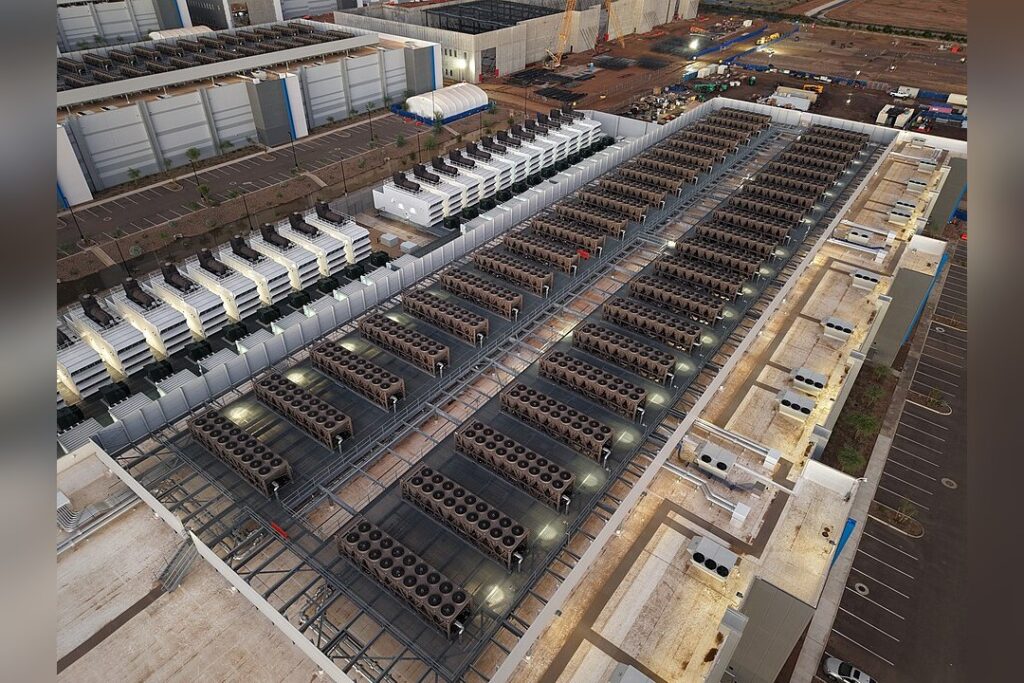
In New Mexico, a data center campus is being built with Oracle and STACK Infrastructure that is designed to run on up to 2.45 GW of fuel cell capacity from Bloom Energy. Over 15 years, Bloom says, the site’s average annual water draw should match that of roughly nine U.S. households.
That is the company’s projection, not a measured result, and Energies Media noted that Bloom has not cited independent verification of its water figures. Still, the pitch rests on a piece of science that has been around for more than 150 years.
A lawyer’s gas battery
William Robert Grove (1811 to 1896) was a Welsh lawyer who turned to science and made his name in 1838 with an improved wet-cell battery. His next trick was stranger. He sealed one end of a platinum electrode in oxygen and another in hydrogen, with the other ends dipped in sulfuric acid, and found that a constant current flowed. The water level rose in both tubes as it did.
The idea of splitting water with electricity was already known; British scientists William Nicholson and Anthony Carlisle had described it in 1800. Running the process backwards, Grove wrote, was “a step further that any hitherto recorded.” By linking several sets of electrodes in series he built what he called a “gas battery.” The Smithsonian’s National Museum of American History counts it as the first fuel cell.
Nobody agreed on why it worked. Christian Schönbein, Grove’s friend and correspondent, argued that a chemical reaction produced the current. Johann Poggendorff defended the rival “contact theory” that Alessandro Volta had proposed to explain his own 1799 battery. Grove sided with Schönbein. The Smithsonian notes that both camps turned out to hold some truth.
The fuel cell stayed a curiosity through the 1800s. In 1893 Friedrich Wilhelm Ostwald, a founder of physical chemistry, worked out experimentally how the electrodes, electrolyte and reacting agents fit together. Even so, the museum says, no practical device emerged from those nineteenth-century attempts, and fuel cell research became intense only in the 1900s.
Why data centers are listening
Bloom’s argument is about heat. Coal plants, gas turbines and diesel generators burn fuel, and that heat typically needs a great deal of cooling water. Its fuel cells convert fuel directly into electricity through an electrochemical reaction, so there is no combustion to cool. The reaction also produces water, which the systems recycle. After a one-time fill at startup, the company says, normal operation needs no extra water.
At the New Mexico campus, neither the fuel cells nor the data center’s closed-loop cooling are designed to need potable water for normal operations. Potable water on site is expected to cover only drinking and sanitation for employees.
Water has become a flashpoint for new AI facilities. Bloom’s 2026 Data Center Power Report flagged water use as one of the top concerns developers expect when they ask communities to back a project, and the company cites Gallup research finding that nearly half of Americans worry “a great deal” about the environmental impact of AI data centers.
Sources
- Fuel Cells: Discovering the Science – Fuel Cell Origins 1840-1890 | Smithsonian National Museum of American History
- Bloom Energy fuel cells cut water use at AI data centers to near-household levels, company says




