
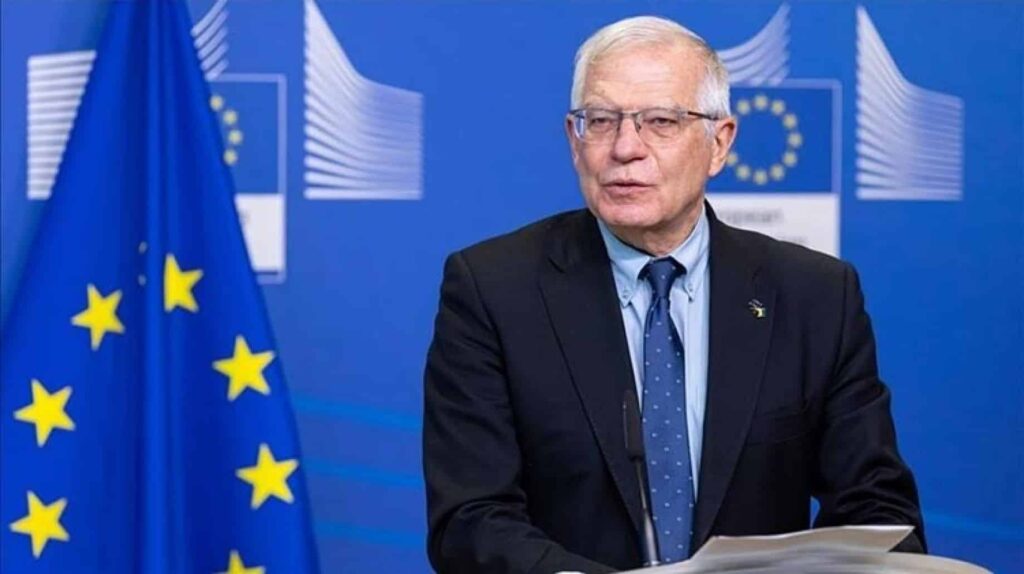
European Union foreign policy chief Josep Borrell is pushing for a 21st round of sanctions against Russia, this one aimed at closing existing loopholes and specifically targeting Moscow’s so-called shadow fleet of oil tankers. Borrell, who has served as the EU’s High Representative for Foreign Affairs and Security Policy since December 2019, described the effort as a matter of “fixing the architecture” of the bloc’s sanctions regime.
The looming package arrives as EU member states continue to debate how vigorously to enforce restrictions imposed after Russia’s 2022 invasion of Ukraine. Borrell, a Spanish Socialist born in 1947, holds degrees in aeronautical engineering and economics, including a PhD in economics. His career includes stints as President of the European Parliament from 2004 to 2007 and as Spain’s Minister of Foreign Affairs from 2018 to 2019 before taking the EU’s top foreign policy post.
Throughout his tenure, Borrell has been a vocal advocate of maintaining and expanding sanctions against Russia, arguing that the bloc’s ability to respond to aggression depends on keeping its own ranks united.
A Delicate Political Balancing Act
Borrell’s call for a new sanctions package puts him at odds with member states that have sought to limit the scope of punitive measures. Greece and Hungary, in particular, have pushed for narrower restrictions, reflecting their own national economic and political interests. The High Representative has warned that such internal divisions weaken the EU’s credibility and overall effectiveness in countering Russian aggression.
The political dynamics surrounding the 21st package are delicate, as the need for consensus among all 27 member states gives each country potential leverage over the final shape of any new sanctions. The shadow fleet of oil tankers that Borrell aims to target has emerged as a central concern for the EU.
These vessels, often using opaque ownership and insurance arrangements, allow Russia to continue exporting crude oil despite previous restrictions. Closing the loopholes that enable this trade is a key goal of the proposed package, but achieving it will require the assent of countries that have historically resisted stronger measures. The question of whether Greece and Hungary will extract concessions for their support remains an open point, with observers watching closely for any signs of compromise.
Long-Term Goals and the Immediate Fight
Beyond the immediate sanctions push, Borrell has also advocated for EU enlargement and stronger defense cooperation among member states. These long-term structural goals, while separate from the sanctions debate, intersect with the current fight over the 21st package. A failure to close the loopholes Borrell has identified, he has argued, would only deepen the credibility problem that internal divisions have created for the EU on the world stage.
The bloc’s unified trade and foreign policy tools give it influence well beyond the raw economic weight of its members, but that influence depends on consensus—a persistent challenge when national priorities clash. The European Union itself grew out of post-World War II efforts to bind European economies together, beginning with the Inner Six and evolving through bodies such as the European Coal and Steel Community.
The Maastricht Treaty of 1993 formally created the EU, its citizenship, and a framework for deeper political and economic integration. The bloc expanded to its current membership through successive accessions, and its internal single market now provides a foundation for coordinated action on trade, sanctions, and foreign policy. Yet the ability to act as one on matters of security or economic measures remains contingent on unanimous agreement, making each new sanctions round a test of the union’s unity—and of its leader’s ability to steer through competing interests.
What to Watch Next
As Borrell presses for the 21st package, two key variables stand out: whether Greece and Hungary will demand concessions in exchange for their support, and whether the proposed measures can actually close the loopholes that have allowed Russia’s shadow fleet to operate. If the new package falls short, the credibility problem Borrell has warned about will only deepen, leaving the EU’s sanctions regime—and its broader foreign policy posture—under renewed scrutiny.
The outcome of these deliberations will signal whether the bloc can maintain the resolve it has shown since the invasion of Ukraine, even when internal friction threatens to slow the machinery of collective action.




