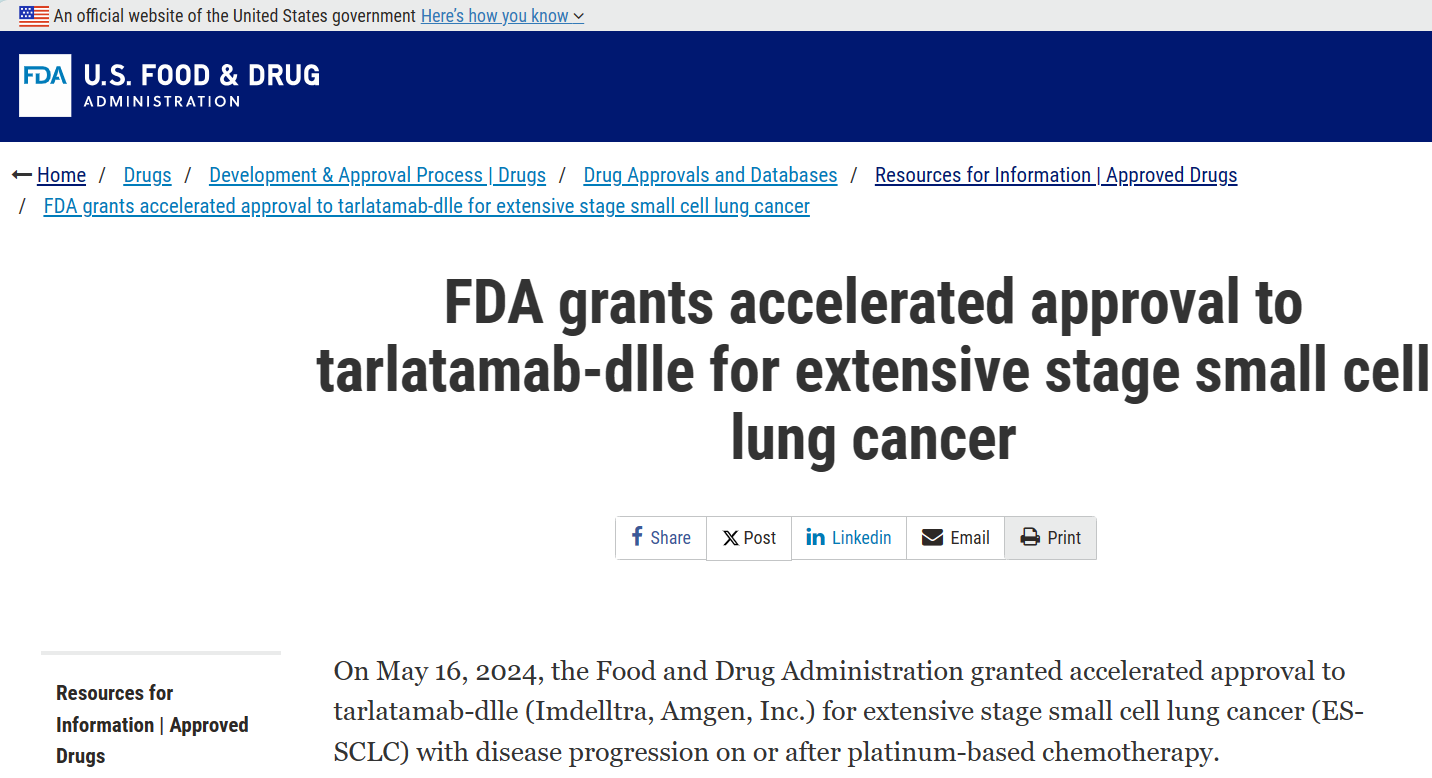
Tarlatamab, a groundbreaking anti-cancer medication, has been approved for medical use in the United States as of May 2024. Sold under the brand name Imdelltra, this innovative treatment is specifically designed for the treatment of extensive-stage small cell lung cancer. As a bispecific T-cell engager, Tarlatamab works by binding delta-like ligand 3 and CD3, marking a significant advancement in the field of oncology.
The US Food and Drug Administration (FDA) has recognized Tarlatamab as a first-in-class medication, highlighting its unique mechanism of action and potential to address unmet medical needs in the treatment of small cell lung cancer. This approval is a notable development in the ongoing quest to improve outcomes for patients with this aggressive form of cancer. By providing a new treatment option, Tarlatamab may offer hope to patients who have limited therapeutic alternatives.
As with any cancer therapy, Tarlatamab is associated with a range of adverse reactions. The most common side effects include cytokine release syndrome, fatigue, pyrexia, dysgeusia, decreased appetite, musculoskeletal pain, and constipation, as well as anemia and nausea. These reactions are a critical consideration for healthcare providers and patients evaluating the potential benefits and risks of Tarlatamab treatment. By understanding the potential side effects, patients can make informed decisions about their care and work closely with their healthcare teams to manage any adverse reactions that may arise.
The approval of Tarlatamab reflects the ongoing efforts of researchers and clinicians to develop innovative treatments for small cell lung cancer. This disease remains a significant challenge in the field of oncology, with limited treatment options available for patients with extensive-stage disease. By introducing a new mechanism of action and a novel therapeutic approach, Tarlatamab may help to address this unmet need and improve outcomes for patients with this devastating disease.
The FDA’s designation of Tarlatamab as a first-in-class medication underscores its potential to transform the treatment landscape for small cell lung cancer. As a bispecific T-cell engager, Tarlatamab represents a new class of therapies that may offer enhanced efficacy and safety compared to existing treatments. Further research and clinical trials will be essential to fully elucidate the benefits and risks of Tarlatamab and to explore its potential applications in other types of cancer.
Looking ahead, the approval of Tarlatamab is likely to have significant implications for the field of oncology. As healthcare providers and patients become more familiar with this new treatment option, it will be important to monitor its real-world effectiveness and safety profile. Additionally, researchers will likely explore the potential of Tarlatamab in combination with other therapies, as well as its applications in other types of cancer. As the medical community continues to learn more about Tarlatamab and its potential benefits, patients with small cell lung cancer may have reason to be hopeful about the future of their care.