
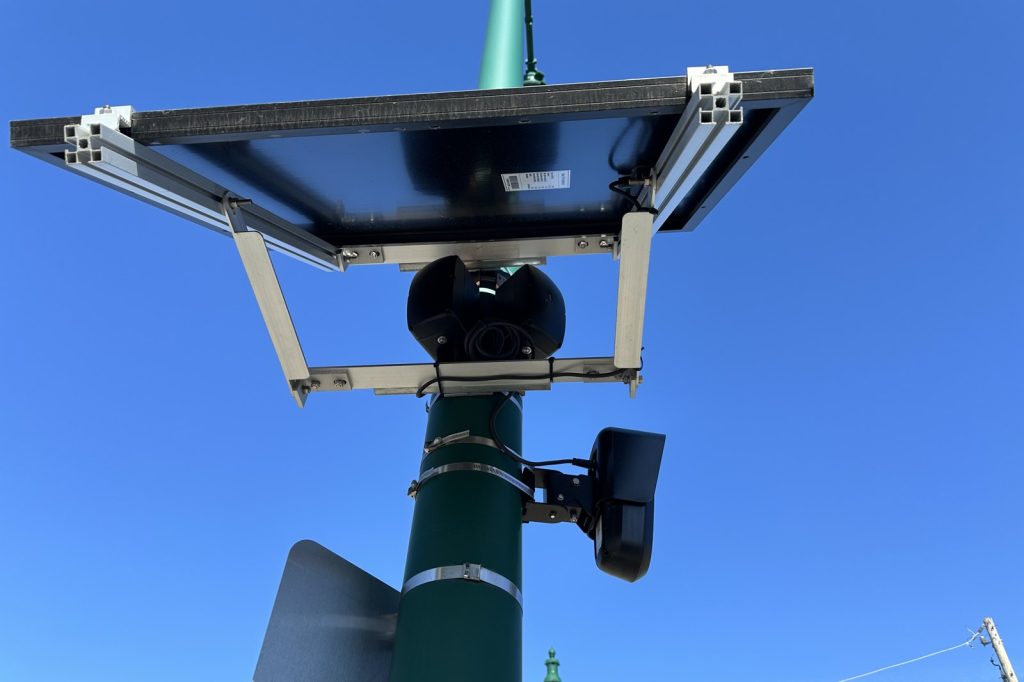
Drive across an American town and a small black box on a pole may log your car without you noticing. Flock Safety says it now has more than 120,000 of them, spread across 49 states and more than 6,000 communities, according to Mashable. The cameras sit beside roads, at intersections and at the entrances to neighborhoods and parking lots.
From Atlanta start-up to national network
Garrett Langley, Matt Feury and Paige Todd founded Flock in Atlanta in 2017. Last year the company raised $275 million at a $7.5 billion valuation, Mashable reported. It is best known for license plate readers, but it also sells wider surveillance systems and is developing drones for first responders after buying Aerodome.
The customers are police departments, businesses, schools and homeowners associations. Each camera is an automated license plate reader. It does not wait for a speeding or red-light offense. It photographs every vehicle that passes and turns the image into searchable data: plate, location, make, model, color, body type and time. Flock’s software also picks out features such as a bumper sticker or a dent, building what Mashable calls a “vehicle fingerprint.”
An officer can search for one plate or describe a car, say a blue Toyota with a bumper sticker. Vehicles tied to stolen-car reports, missing people or investigations can go on a “hotlist,” and a possible match triggers an alert with the car’s location. Departments can also let neighboring agencies search their data, which in some states reaches across much of the country.
What police and the company point to
Flock says its network has supported more than 1 million investigations and helped find more than 10,000 missing people in 2025. On July 30, North Carolina authorities said the cameras helped track a vehicle linked to a child abduction. A woman was arrested in Charlotte the day before, and the child was taken into protective custody.
The company’s website says its recommended default data retention has dropped from 30 days to 7 days, and that every search is logged.
The pushback
Critics focus on the people who are not suspected of anything. One camera records a single moment, but thousands of them can follow the same car across a day. Some critics argue the data could show when drivers visit health centers, protests or places of worship. Flock rejects the label of mass surveillance.
Immigration enforcement is one flashpoint. In May 2025, 404 Media reviewed search logs showing more than 4,000 lookups that local and state police ran at the request of federal officials, as an informal favor, or for potentially immigration-related purposes. A February 2026 investigation by The 74 found outside departments had searched cameras owned by a Texas school district, some of those queries to assist the Department of Homeland Security. Flock says it has no contract with ICE and that the agency cannot directly reach its cameras or data.
Personal misuse is another. The Institute for Justice has collected 28 reported cases in which officers allegedly used license plate readers to follow partners, former partners, colleagues or other romantic interests. On July 29, the North Carolina State Bureau of Investigation arrested Charlotte-Mecklenburg police officer Seth Elliot and charged him with illegally accessing a government computer, alleging he ran an unauthorized plate search through Flock.
The system also gets plates wrong. In June 2026, Joel Feder, an editor at The Drive, was test-driving a Range Rover with a New Jersey manufacturer plate when four Minnesota police cars boxed in him and his wife in a parking lot. Officers had been getting alerts for a different plate with a similar code that was reported lost in California. Langley later said departments need a clearer way to challenge and correct bad hotlist entries.
More than 80 municipalities have ended or declined to renew their Flock agreements, and Washington is among the states that have restricted how plate data is collected, searched and shared. Mashable counted 33 incidents across 23 states in which people damaged or destroyed cameras in apparent protest. They have been painted, cut down, burned and hit with vehicles.
Sources
- What are Flock cameras? How they work and why they're controversial. | Mashable
- Flock Safety (company website)




