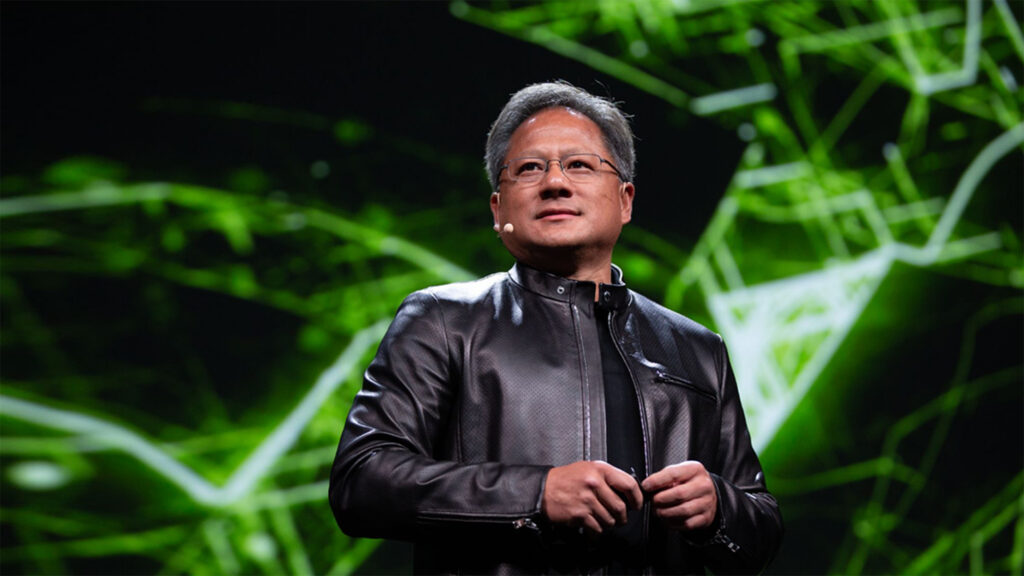
For about two hours on the evening of February 14, Nvidia CEO Jensen Huang worked the tables at a Korean fried chicken restaurant in Santa Clara, mixing somaek, a soju and beer drink, and toasting more than 30 SK Hynix and Nvidia engineers at each one. He arrived around 5:20 p.m.
“We are one team,” he told them, and “I am proud of you.” At the final toast he said: “I know the development schedule for HBM4 and Vera Rubin is tight, but I believe in you. Now is the time for SK Hynix and Nvidia to show the world greatness together.” He urged the engineers to deliver HBM4 with no delays.
Industry observers called the dinner highly unusual. It was arranged quickly, after Huang told Nvidia staff to organize an evening to encourage SK Hynix’s memory engineers.
Why the memory matters
HBM4, the sixth generation of high-bandwidth memory, is built by stacking 12 layers of DRAM. Nvidia’s next accelerator, Vera Rubin, is due in the second half of the year and uses it. Nvidia asks suppliers for an operating speed above 11 Gbps and bandwidth above 3.0 TB/s, figures more than 30% higher than rival AMD requires.
SK Hynix joined Nvidia’s supply chain in July 2020 with HBM2E and later became the de facto exclusive supplier of HBM3 and HBM3E. HBM4 is a more open contest. On February 12, Samsung Electronics shipped the first formal HBM4 products to Nvidia, at 11.7 Gbps (up to 13 Gbps) and 3.3 TB/s.
SK Hynix says its HBM4 reaches 11.7 Gbps or higher. It is supplying paid samples to Nvidia in bulk while it tunes performance, and the industry expects Nvidia’s official mass supply approval soon.
Who gets what share
According to industry sources, Nvidia first split this year’s HBM supply in December: SK Hynix more than 55%, Samsung more than 20% and close to 30%, and Micron about 20%. Samsung’s progress could shift those numbers. Most in the industry still expect SK Hynix to hold the largest quota once it finishes quality optimization in the first quarter.
One semiconductor source said final HBM4 optimization at all three memory makers would not be done until around March. The source added that memory makers have recently leaned toward raising general DRAM output for profit rather than chasing HBM share.