General Motors wants to halve the time it takes to build a car, and it says AI is how. At GM Forward 2026 in New York, CEO Mary Barra, President Mark Reuss and Chief Product Officer Sterling Anderson laid out a plan built on a new centralized electrical architecture, with AI-accelerated development, a rebooted OnStar, next-generation EVs and eyes-off autonomy that reaches the company’s trucks.
GM says some of this is already running internally. Owners get a first taste in the coming months, with broader rollouts from 2028.
AI in the Engineering Cycle
Anderson said AI will cut today’s four-to-five-year development time in half. The examples are striking. Aerodynamics testing that took 60 hours now takes 60 seconds, and structural analysis that ate months now takes hours. “You can imagine what that does for iteration speed,” Anderson said.
On its lithium manganese-rich battery, engineers evaluated more than 300,000 designs virtually before building a physical prototype. GM says the concept reached formal program approval in a month.
The raw material, according to Anderson, is history. “The size and scale of GM with its data isn’t an anchor, it’s an advantage,” he said. “Decades of data and experience. Smaller players can build models, but can’t match GM’s data.” Its testing operation produces roughly a million miles of detailed sensor data a month, topped up with billions of virtual miles.
Asked whether the savings would reach buyers, Barra sidestepped, noting only that GM already sells a large part of its lineup at a profit for $30,000 or less.
One Computer Instead of Dozens
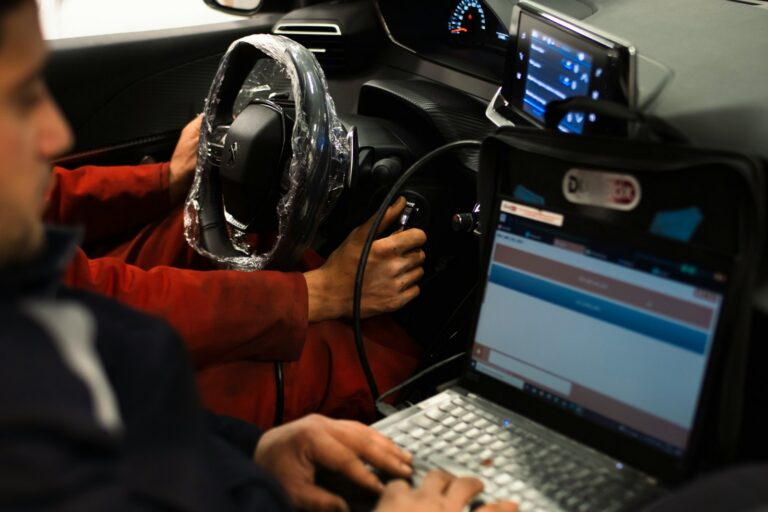
Under the hood, the 2028 Cadillac Escalade IQ will be the first vehicle on a new architecture with a central compute unit. Modern cars can carry 80 to 100 or more ECUs, which makes over-the-air updates a headache. GM says its new system manages with one computer, offers about 40 times the power of today’s setup and trims wiring by 30 percent. A spokesperson said it has the power of 40 laptops. It will spread to full-size trucks and SUVs, gas and electric.
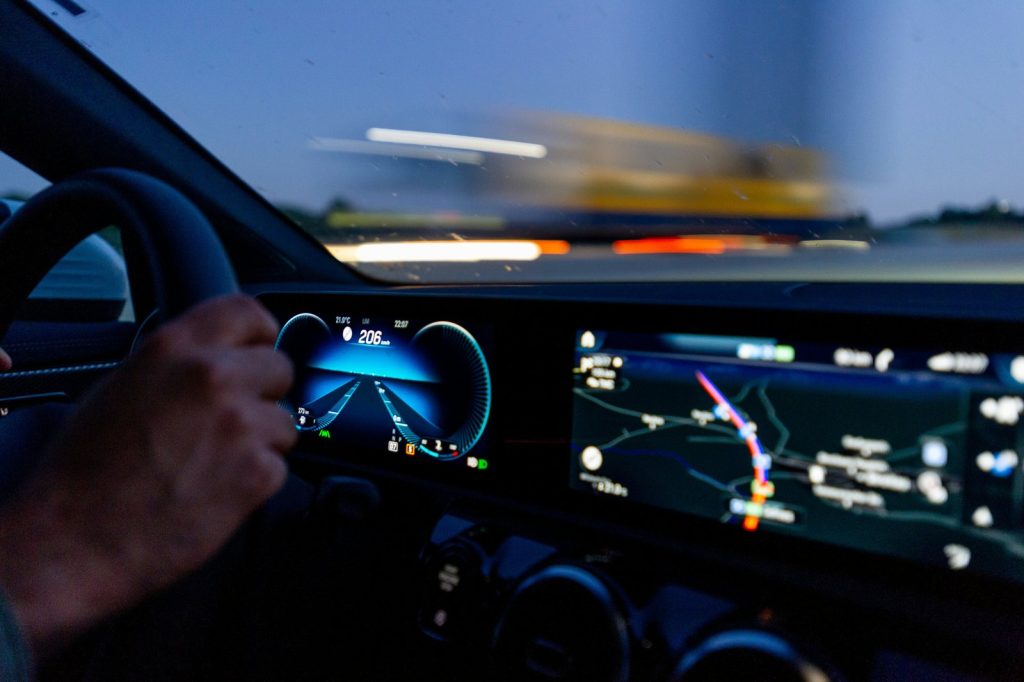
The Escalade IQ also gets GM’s eyes-off driving system, a step beyond today’s hands-free Super Cruise. GM plans to extend it to popular full-size SUVs and light-duty pickups, the combustion-engined vehicles where its sales are strongest.
The Next EVs
GM would not commit to a date for its fourth-generation EVs. It did say they will use LMR batteries with 33% more energy density than LFP, and new motors with 40% fewer parts than today’s Ultium units, plus 20% more range per kWh. The AI-driven development cycle is expected to start in 2028, which puts the first vehicles from it on the road around 2030.
OnStar Becomes the Assistant
A new in-vehicle OnStar AI assistant arrives later this year, first in the 2027 Lyriq and then across the lineup, gas and electric. GM says it will be wired into the vehicle’s subsystems, so a driver can ask what an earlier warning chime meant. The live human option stays.
Next year, the separate Chevrolet, Cadillac, Buick and GMC apps give way to one OnStar app covering the whole family’s vehicles. Parents can track cars and people through device permissions, such as Find My on an iPhone. The app’s AI can have the car started and warm 15 minutes before the calendar says it is time to leave.
Paul Waatti, Director of Industry Analysis at AutoPacific, told The Drive the technology impressed, but the devil is in the details, “or, historically at GM, execution.”
Sources
- GM Is Going All-In On AI, EVs, And Self-Driving Tech
- GM Is Going All-In On AI, EVs, And Self-Driving Tech
- GM Just Laid Out Its Entire Future. It Runs on AI, Eyes-Off Driving, and One Central Computer
Photo: Randy Tarampi / Unsplash (Unsplash License)