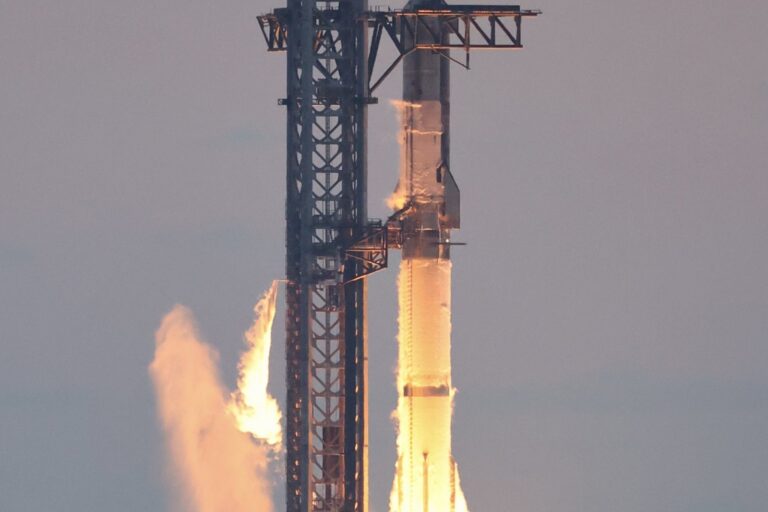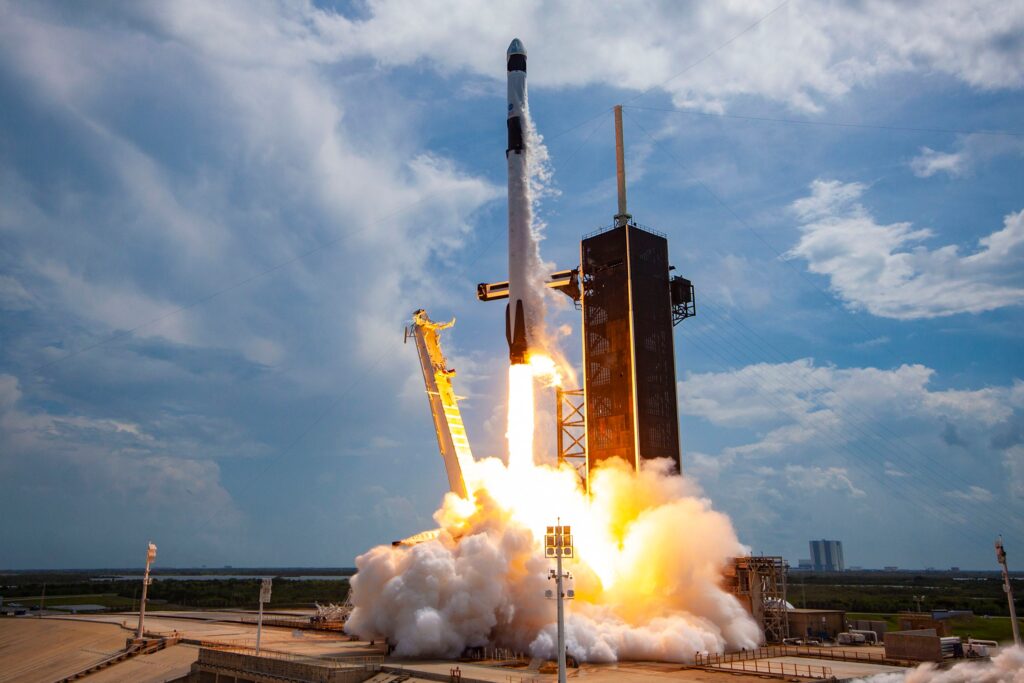
Google’s chips are in orbit. On a Thursday morning at 11:32 a.m. PT, a SpaceX Falcon 9 lifted off from Vandenberg Space Force Base in California carrying a refrigerator-sized test satellite that Google calls MVP. It was one of 130 payloads on the Transporter-18 rideshare, alongside cubesats and orbital transfer vehicles.
The question it carries sounds like science fiction: can the data centers that power AI one day run in space?
What is actually on board
Under the hood, MVP is modest. Four of Google’s custom TPU accelerators sit inside a spacecraft built by Planet, the satellite imagery firm, and together they reportedly offer about the computing power of one server in a data center. Solar panels supply roughly a kilowatt, which the New York Times likened to a microwave or hair dryer. The satellite will answer simple queries using Google’s Gemini and operate for about a year. It could circle the Earth for up to six years before burning up in the atmosphere.
The plan was once two custom satellites in 2027. Google wanted to move faster, so it put its chips into a Planet satellite that was already built.
This is the first in-orbit test for Project Suncatcher, a research effort Google announced in November 2025. Google is not the first to put AI hardware in space, but MVP is the first step by a major tech company toward orbital data centers.
Surviving the trip
The pitch comes down to power. In low Earth orbit, Google says, satellites get near-constant sunlight and can generate up to eight times the solar power of panels on the ground. Meanwhile, communities across the US are fighting AI data centers in their backyards, and many of those sites strain local water supplies.
The hardware has three problems to survive. First, launch: the ride to orbit takes roughly 10 minutes and loads a spacecraft with up to 10 times the force of gravity. Engineers shook the satellite on all three axes before launch, and it held. Second, radiation, which can cause bit flips that switch a chip’s binary code. From February 2025, Google blasted its chips with a cyclotron at UC Davis’s Crocker Nuclear Laboratory at a dose equal to five years in space. Restarting usually cleared the errors.
Third, heat, and the detail that matters most. A vacuum carries no heat away by air or water. Google built layers: a putty-like thermal material draws heat into aluminum and copper, and a radiator panel pushes it into space. Even so, the chips can run only about 15 minutes before shutting down to cool off, Travis Beals, Google’s senior director for Project Suncatcher, told the New York Times.
“This first launch is about seeing what works, identifying points of failure, and applying those findings to future missions,” Beals wrote in Google’s announcement.
A crowded sky
Google has company. SpaceX, which supplied the ride, has filed plans with the FCC for up to 1 million orbital data center satellites, according to Data Center Dynamics. Startup Starcloud launched an Nvidia H100 GPU in November 2025 and trained a small AI model there. Jeff Bezos has said gigawatt-scale data centers will be in space within 10 or more years.
Google’s longer plan involves clusters of satellites carrying dozens of TPUs each, linked by lasers. It intends to test those links with two satellites in 2027.
Sources
- Google's first Suncatcher orbital data center test launches October 1
- Google Is About to Test Whether the Data Center Can Leave Earth
- Could AI data centers run in space? Google launches its first test