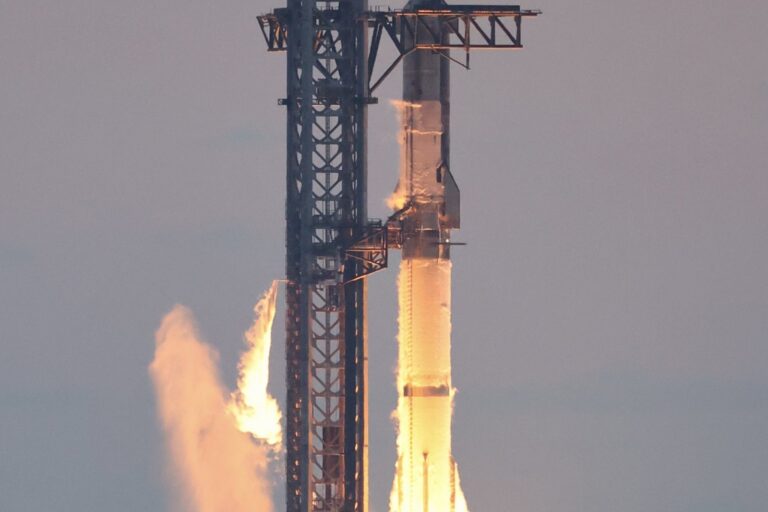
A SpaceX Falcon 9 left pad 40 at Cape Canaveral Space Force Station at 2:53:25 a.m. EDT on April 21, 2026. On top was GPS III-8, Space Vehicle 10, the last satellite in the Space Force’s GPS III series.
Its arrival brings the constellation to 32 active satellites, with extra vehicles held in reserve on orbit. Space Systems Command and Combat Forces Command ran the National Security Space Launch mission together. The satellite acquired its signal soon after launch and is being managed from Lockheed Martin’s Denver Launch and Checkout Operations Center until it joins the operational GPS control network.
SV10 will take about 10 days to raise its orbit to its working position. Two to three days of on-orbit testing follow, and then satellite operations pass to the Space Force.
What is new on SV10
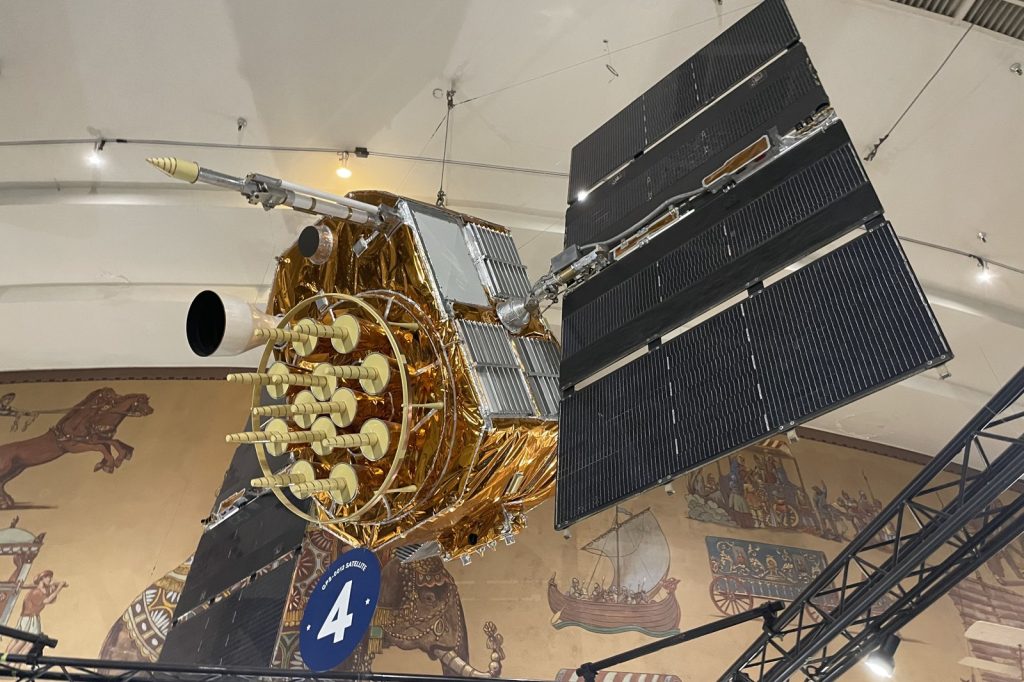
The satellite carries M-code technology, which the Space Force describes as three times more accurate and eight times more resistant to jamming than the previous generation. It also flies several demonstrations: an optical crosslink payload that tests satellite-to-satellite laser communication, a new space-qualified atomic clock, a Laser Retroreflector Array, and the first 3D-printed Omni Antenna ever used on a GPS satellite. The clock is a demonstration Digital Rubidium Atomic Frequency Standard.
Testing of the crosslink and the clock will feed into the design of the next series, GPS IIIF. Lockheed Martin is under contract to build 12 of those at its Denver facility and has begun using augmented reality and digital twin tools to speed up production. GPS IIIF will add Regional Military Protection, which the company says brings a boost of more than 60 times in anti-jamming performance.
The jamming problem
GPS feeds precision-guided munitions, unmanned systems, logistics, communications timing and command networks. That makes it a target. Russia has used large-scale GPS jamming and spoofing in Ukraine and across Eastern Europe, and China has invested heavily in electronic warfare systems meant to disrupt satellite navigation signals in the Indo-Pacific.
Both countries have also pushed their own systems. China’s BeiDou-3 reached global operational capability in 2020 and keeps expanding, while Russia has kept modernizing GLONASS.
Launch change and open problems
This was the fourth time SpaceX carried a GPS satellite originally assigned to United Launch Alliance’s Vulcan rocket, after repeated development delays on that vehicle. Vulcan has since received NSSL certification, but it was recently grounded in high-power configurations after a booster anomaly. The switch to the Falcon 9 for this mission took under seven weeks.
M-code only helps if the receiver can use it. The military still fields many legacy GPS receivers that cannot take advantage of the signal’s security and anti-jamming performance, and getting compatible terminals to the joint force remains a challenge.
The Space Force’s Mission Delta 31 will bring SV10 into the active constellation. Observers are also watching how quickly the remaining Block IIA and IIR satellites are retired as GPS III and later IIIF vehicles provide enough coverage.