For more than 13 years, Dr Carla Mitchell chased a dream she once thought belonged to Americans and NASA. In 2029, a South African-led mission she directs is due to land on the Moon. Africa2Moon will ride on China’s Chang’e 8 lander and set down three antennas, each 30 centimetres across, built to pick up low-frequency radio waves that Earth’s atmosphere blocks.
A mission built on goodwill
A mission like this should have cost more than $100 million. Mitchell, who is also Africa programme manager at the South African Radio Astronomy Observatory (SARAO), says the real cash cost will be under half a million dollars. South African companies and universities made the hardware at no charge, and more than 30 scientists and engineers gave their time over a decade. In the early years, she says, it took a lot of “begging and pleading.” Then China opened a call for payloads on Chang’e 8, and last year Africa2Moon was picked. That brought in SARAO, the South African National Space Agency and other partners across Africa, and the project is now in its qualification phase.
She told BizNews that tenacity got it here, and that the most successful technology projects bring government, academia and industry together. Among the partners she named: the company ESL, Petrowell, which finished the composite materials, and the University of Stellenbosch, which supplied the electronics and involves postgraduate students in the work. The African Space Research Institute (ASRI) at the University of KwaZulu-Natal is developing rockets for a South African launch capability. Students from other countries, Ghana among them, have contributed too.
Why the balls
The antennas are called the Bounced African Low Lunar Spheres, or BALLS, and they look just as the name suggests. Each is an autonomous antenna for radio waves under 20 megahertz, which the atmosphere obscures, so the work has to be done from space and ideally from the lunar surface. Thirty centimetres is as big as the lander allows and as small as the science permits. As a technology demonstrator on the near side, the three spheres could form the first radio astronomy array on the Moon from any country.
If it works, a far-side mission with 55 instruments would follow. The far side is what Mitchell calls the holy grail for radio astronomers, shielded from Earth’s emissions and the quietest place in the solar system during lunar night. The ambition is an antenna for every African nation.
Tests to survive
First comes qualification, which runs until the middle of next year. The spheres must endure temperatures as low as minus 200 degrees centigrade, a vacuum simulation, radiation, vibration for launch and landing, and lunar dust, which is abrasive and clings to electronics. “Each time we go through one of these tests, we hold our breath,” she said. If they pass, flight models will be built and shipped to China. No date is fixed, but launch windows usually fall in May and August, so she expects August 2029, followed by a 20 to 30 day trip she calls certain to be stressful.
What it means for the continent
Mitchell trained in finance and economics, studied at the International Space University in France, and recently presented at a NASA Ames conference, closing a loop for the little girl who thought space was not for her. She says many young people across Africa still think that. Her colleague Dr Adriana Marais, the head of science, describes the project as giving Africa a seat at the table. South Africa already supplies components to hundreds of missions worldwide and the national space agency helps track deep-space probes, Mitchell notes, but it has not led one. She hopes the mission shows what collaboration can do and tells young Africans: that was great, now do more.
Sources
- Africa’s first Moon mission is South African-led, and local expertise slashed the cost
- South African National Space Agency
- Africa’s first Moon mission is South African-led, and local expertise slashed the cost
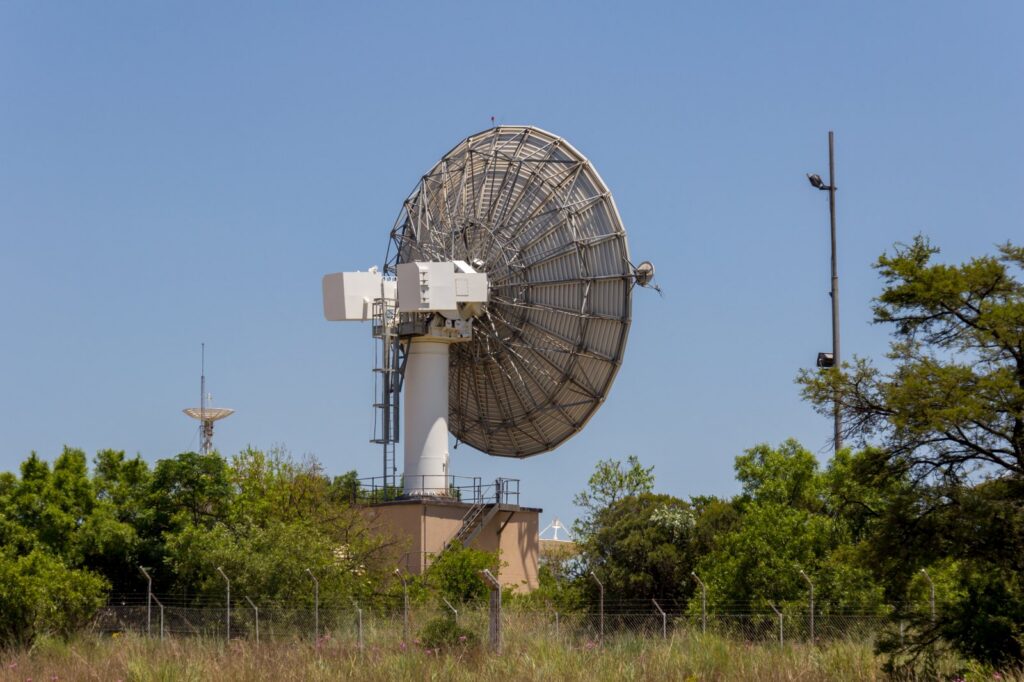
Photo: Photograph by Mike Peel (www.mikepeel.net). (CC BY-SA 4.0)