
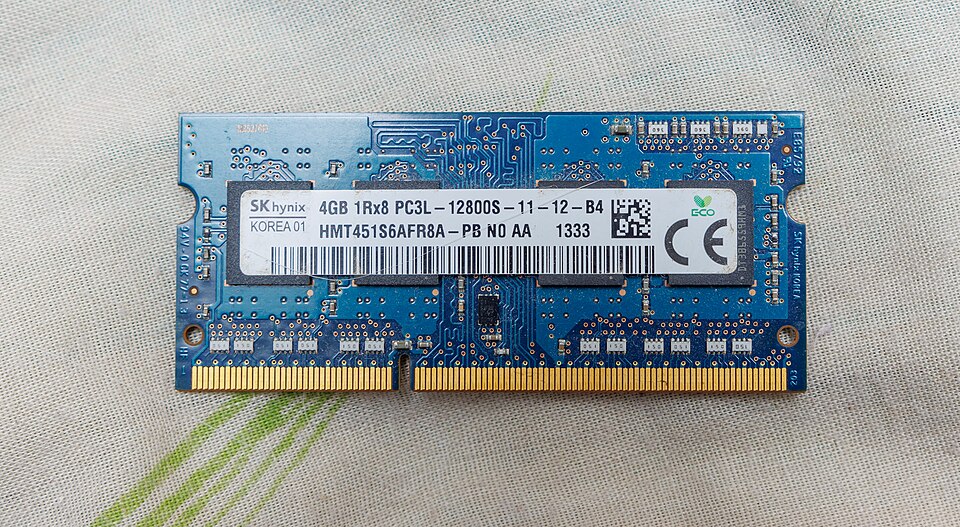
SEOUL, August 15 — The memory chip industry, long accustomed to its cyclical dance of feast and famine, now finds itself at another inflection point. For all the noise around AI and data centres, the salient point is this: the current underinvestment may well leave the sector scrambling to meet demand by 2027. SK Hynix, one of the world’s largest memory manufacturers, reported a net loss of 2.58 trillion South Korean won for the first nine months of 2023.
Notably, this followed a record profit of 11.76 trillion won in 2021, a stark illustration of the volatility that defines the industry. The downturn was not subtle.
A global oversupply of DRAM and NAND flash memory triggered a 50-70% drop in chip prices throughout 2022 and 2023, leaving even the most established players exposed.
The Mechanics of the Downturn
DRAM, or Dynamic Random-Access Memory, is the volatile memory that powers PCs, servers, and mobile devices. NAND flash, its non-volatile counterpart, is the backbone of SSDs and USB drives. Both have been caught in the same storm.
The industry’s capital expenditure for memory production tells the story. Global CapEx peaked at $150 billion USD in 2021, a year of record profits and aggressive expansion.
By 2023, that figure had dropped to an estimated $100 billion USD, as companies reined in their ambitions. SK Hynix, which had spent $12.8 billion USD on CapEx in 2022, halved its 2023 budget. The message was clear: the era of unchecked growth had, for the moment, come to an end.
The Long Shadow of Underinvestment
Here’s the rub. The lead time for bringing new DRAM fabrication plants online is typically 3-4 years, with costs exceeding $10 billion USD per facility. The decisions made today—or, more pertinently, the decisions not made—will echo well into the latter half of the decade.
Industry analysts, surveying the current landscape, predict a supply shortfall by 2027. Demand from AI, data centres, and 5G applications is expected to outpace production capacity, a reversal of the oversupply that has defined the past two years.
It would seem, then, that the pendulum is already swinging back.
What to Watch
The question now is whether the industry can recalibrate in time. With new facilities taking years to come online, and budgets only now beginning to stabilise, the gap between supply and demand may prove difficult to close. For all the talk of AI and next-generation technology, the immediate future of memory chips may hinge on something far more prosaic: whether the sector can muster the capital—and the nerve—to invest at the scale required.
One thing, at least, is certain. The boom-and-bust cycle is not yet broken.
It has merely entered its next phase.
Sources
{“@context”: “https://schema.org”, “@type”: “NewsArticle”, “headline”: “Memory Chip Industry Faces 2027 Supply Crunch After SK Hynix Losses”, “description”: “SEOUL, August 15 — The memory chip industry, long accustomed to its cyclical dance of feast and famine, now finds itself at another inflection point….”, “datePublished”: “2026-08-15T09:30:00+00:00”, “author”: {“@type”: “Person”, “name”: “Ethan Smith”}, “publisher”: {“@type”: “Organization”, “name”: “InfoPulse Today”, “url”: “https://newsfeed.infopulsetoday.com/”}, “citation”: [{“@type”: “CreativeWork”, “url”: “https://en.wikipedia.org/wiki/DRAM”}]}




