
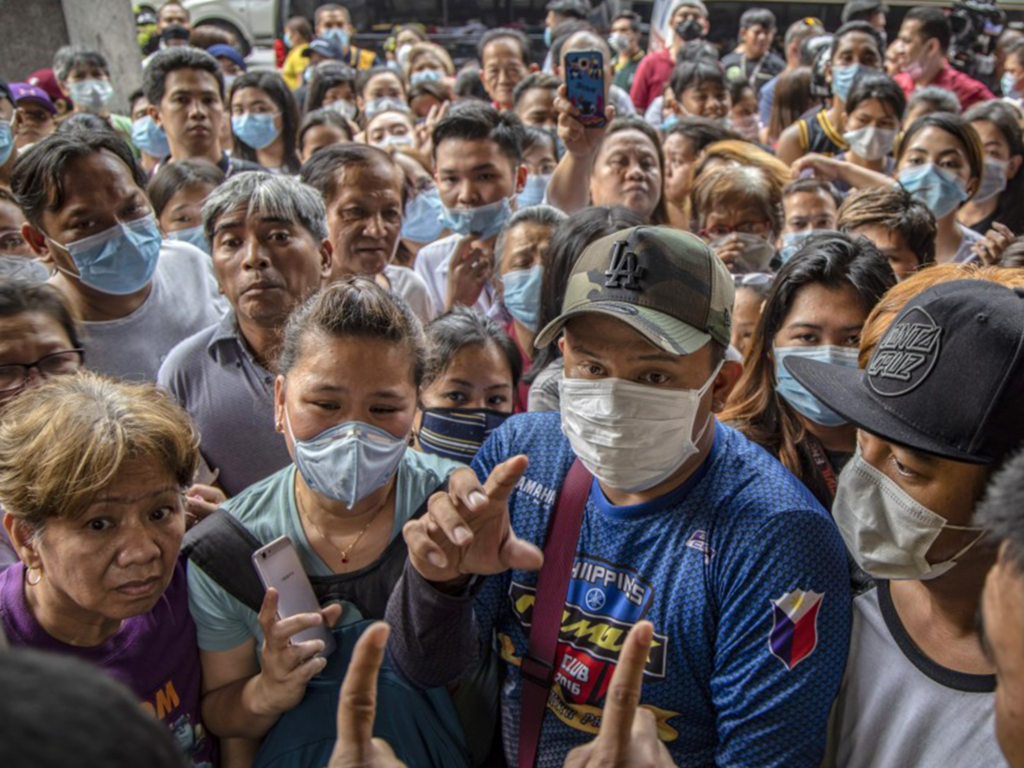
Manila, March 12, 2020 — cybernewschronicle.com — Philippine President Rodrigo Duterte declared a “state of public health emergency” on Monday as the Coronavirus Disease 2019 (COVID-19) started spreading in the country’s capital city Manila and its neighboring towns. “The outbreak… constitutes an emergency that threatens national security, which requires a whole-of-government response,” the President said in a proclamation. During his announcement on March 9, the number of infected people was only 20 but as of Wednesday morning, 13 additional cases were confirmed by health authorities, bringing the total to 33.
The health emergency enables the release of financial assistance to local governments for them to efficiently deal with the widening coronavirus outbreak. It also eases the rules in procuring necessary health resources such as testing kits, masks and protective gears.
With this, the Department of Trade and Industry immediately implemented price control measures on protective masks. Meanwhile, several events, from conferences to sporting activities to festivals, have been canceled in efforts to contain the virus spread. Classes in all levels in Metro Manila were also suspended from March 10 to 14.
Other cities and towns have likewise suspended classes this week to accommodate the disinfection of classrooms. Lawmakers are currently urging the Education department to postpone graduation rites this month to prevent any possible transmission.
The Philippine government said it is also considering lockdown and suspension of work at the municipal, city or provincial level if the situation continues to escalate. The declaration follows a pattern of governments worldwide invoking emergency powers as COVID‑19 cases rise, allowing rapid mobilization of resources and coordination across agencies. Such measures typically grant health authorities broader authority to allocate funds, streamline procurement, and enforce public health directives aimed at limiting transmission.
In the Philippines, the Department of Health has been leading surveillance and testing efforts since the virus was first identified, working closely with local government units to trace contacts and isolate suspected cases. The escalation to a public health emergency signals a shift from localized containment to a more centralized response, reflecting concerns that community spread could outpace existing containment capacities. School closures and the cancellation of mass gatherings are standard mitigation strategies recommended by international health organizations to reduce crowding and slow the spread of respiratory infections.
By suspending classes and events, authorities aim to protect vulnerable populations, including the elderly and those with pre‑existing conditions, while buying time to expand testing and treatment capabilities. Economic considerations also play a role, as the government seeks to balance public health priorities with the potential impact on commerce and livelihoods.
Price controls on essential protective equipment are intended to prevent shortages and price gouging, ensuring that both health workers and the general public have access to necessary supplies during the heightened response period.




