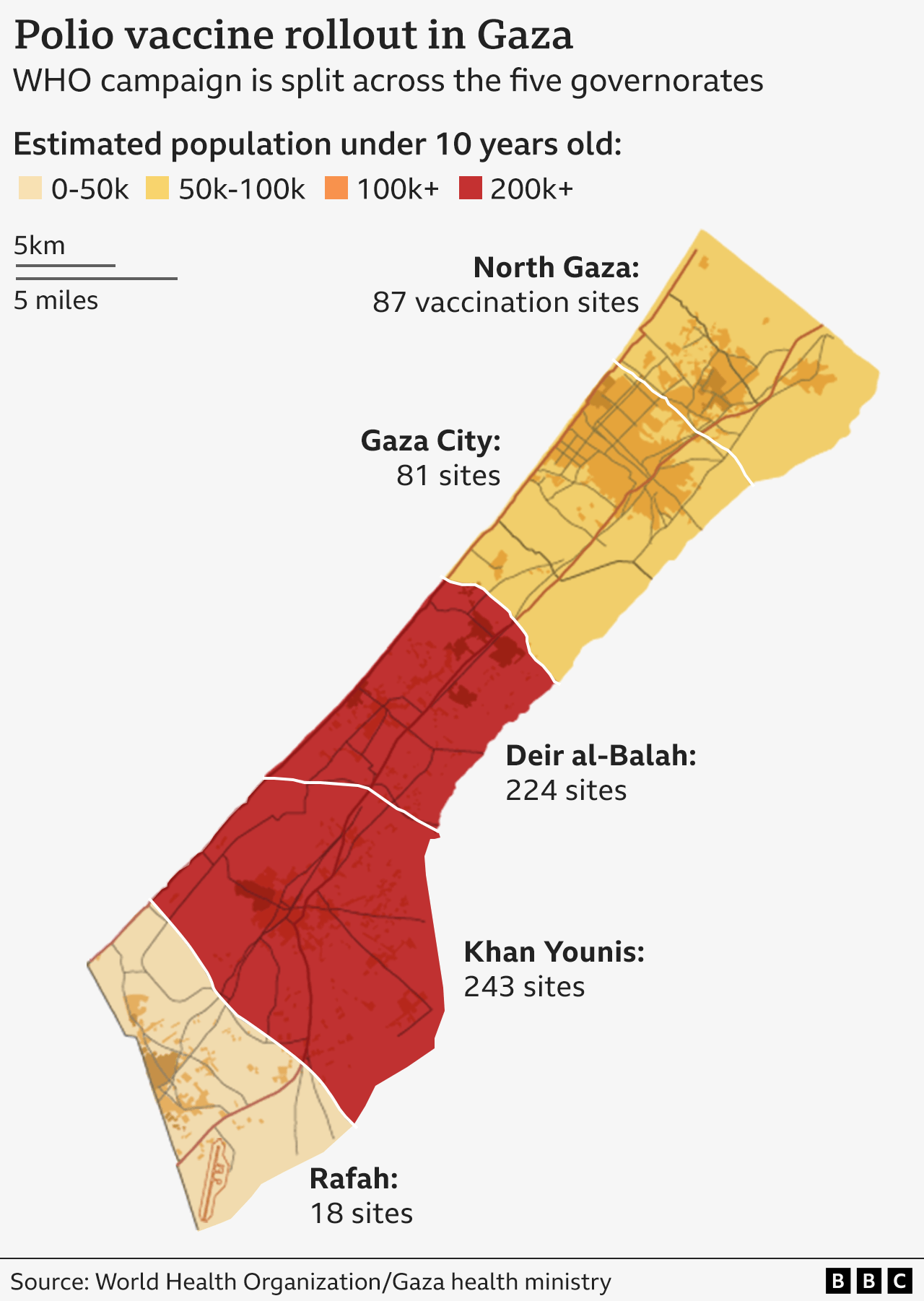
The 2024 Gaza Strip polio epidemic, an outbreak of circulating vaccine-derived poliovirus type 2 (cVDPV2), was first discovered on July 16, 2024, and officially declared an epidemic by the Gaza health ministry on July 29. This marked a significant public health concern, as it represented the first occurrence of poliovirus in the Gaza Strip in 25 years, since the virus was completely eradicated from the region.
The Gaza health ministry has stated that the epidemic poses a significant risk to the citizens of Gaza and to bordering countries. The ministry has also described the outbreak as “a setback to the global polio eradication program”. This concern is shared by global health authorities, who are closely monitoring the situation. The World Health Organization (WHO) has reported that it is “very likely” that polio cases have infected citizens of Gaza and are spreading among its population.
However, detecting cases of polio in the Gaza Strip has proven to be challenging. The virus is asymptomatic in most cases, making it difficult to identify infected individuals. Furthermore, Israeli medical blockades have prevented the confirmation of cases, hindering the ability of health authorities to respond effectively to the outbreak. Despite these challenges, tests in Jordan confirmed the first polio infection in Gaza on August 16, located in the central Gaza strip.
The United Nations has confirmed one case of paralysis in a 10-month-old baby, highlighting the serious consequences of the epidemic. The WHO and other global health authorities are working closely with local health authorities to respond to the outbreak and prevent further spread of the virus. The Gaza health ministry has called for increased support and resources to combat the epidemic, emphasizing the need for a coordinated response to address the crisis.
In a positive development, on August 29, 2024, Israel made a “preliminary commitment” to comply with pauses in the fighting, which could potentially facilitate the delivery of humanitarian aid and medical supplies to the affected areas. This commitment, if fulfilled, could help alleviate the suffering of those affected by the epidemic and support the efforts of health authorities to contain the outbreak.
As the situation continues to unfold, it is essential to monitor the response of local and global health authorities to the epidemic. The ability of health authorities to detect and respond to cases of polio, as well as the effectiveness of measures to prevent further spread of the virus, will be crucial in determining the outcome of the outbreak. The international community will be watching closely to see how the situation develops and what steps are taken to address the crisis and prevent similar outbreaks in the future.
Looking ahead, it is likely that the WHO and other global health authorities will continue to play a critical role in supporting the response to the epidemic. The provision of humanitarian aid, medical supplies, and technical expertise will be essential in helping to contain the outbreak and prevent further suffering. As the situation continues to evolve, it is essential to remain vigilant and committed to supporting the efforts of health authorities to address the crisis and protect the health and well-being of the people of Gaza.