
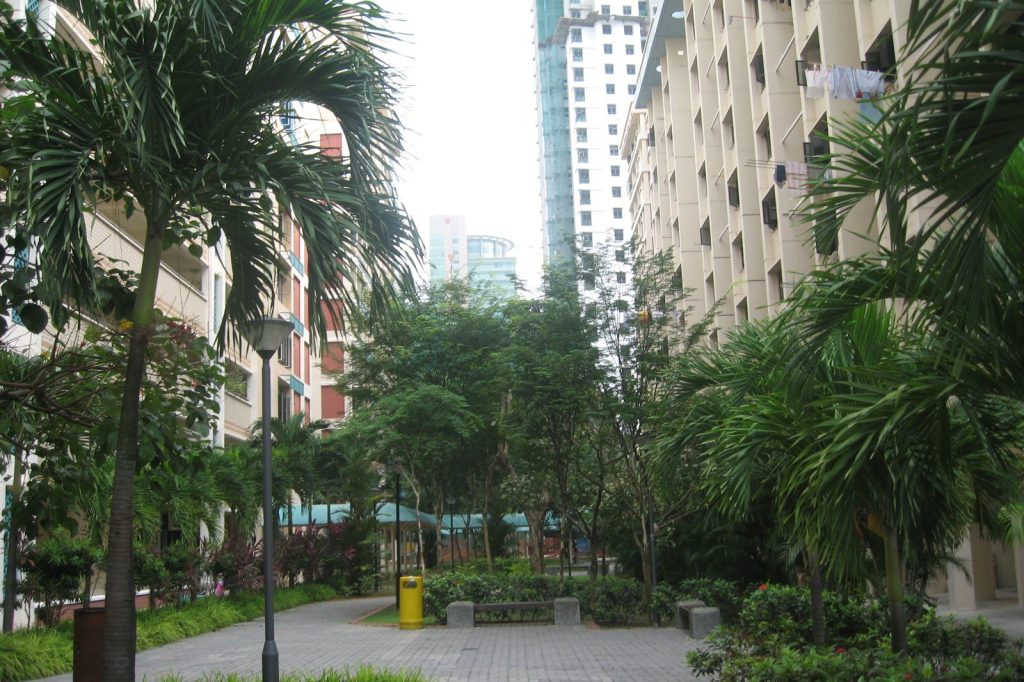
“Please keep one-metre distancing, please keep to five persons per group.” The voice came from a machine on wheels, and it was aimed at a cluster of elderly residents watching a chess match in a Singapore housing estate. A camera on top of the robot looked straight at them.
This was Xavier, a patrol robot that made its debut on 5 September 2021 at Toa Payoh Central. The Home Team Science and Technology Agency, known as HTX, ran the three-week trial together with the National Environment Agency, the Land Transport Authority, the Singapore Food Agency and the Housing and Development Board. According to the Guardian, two robots were sent out, one through a housing estate and one through a shopping centre, each fitted with seven cameras.
What Xavier was built to spot
HTX described Xavier as an autonomous ground robot meant to support public officers. Its cameras and sensors feed video analytics software, which looks for behaviour the authorities consider undesirable: smoking where it is banned, illegal hawking, badly parked bicycles, groups of more than five people, and motorised mobility devices or motorcycles on footpaths. When the software flags a scene, an alert goes to a command centre and a human operator, and the robot shows a message meant to educate the public and discourage the behaviour.
The agency built separate algorithms for each partner, because each had different needs. Its engineers had little real-world data for rare scenarios, so they gathered footage at the trial site, mimicking the camera heights on the robot, and added synthetic data from 3D modelling and public datasets.
Xavier is a relative of M.A.T.A.R., a robot that has helped the Singapore Police Force at National Day parades, Chingay festivals and Marina Bay countdowns. Cheng Wee Kiang, who directs HTX’s robotics centre, said the single platform lets the agency “force multiply” other agencies beyond the Home Team. HTX said the machine could cut the manpower needed for foot patrols and leave officers free for higher-order work.
Residents were not all comfortable
For people living and shopping nearby, the reaction was mixed. Frannie Teo, a 34-year-old research assistant who walked through the mall during the trial, said the robot “reminds me of Robocop”. The idea brought to mind a “dystopian world of robots”, she added, and she felt hesitant about it.
Digital rights activist Lee Yi Ting saw it as one more way Singaporeans are watched. People feel they have to be careful what they say and do, she told Agence France-Presse, to a far greater extent than elsewhere. Privacy lawyer Indulekshmi Rajeswari put it more bluntly: “There are no privacy law constraints on what the government can or cannot do.”
The Guardian placed the trial against a wider backdrop. The island of about 5.5 million people has 90,000 police cameras, a number set to double by 2030, and facial recognition could be installed on lampposts. Earlier in 2021 there was a rare public backlash when authorities admitted that police had accessed contract-tracing data.
Officials answered on two fronts. They said the robots were not being used during the trial to identify or act against offenders. And they pointed to a shrinking workforce. “The workforce is actually shrinking,” said Ong Ka Hing of the agency that developed Xavier.
HTX said it would keep refining the robot after Toa Payoh so it fits what each agency needs when it is eventually deployed. Jaslyn Goh, a lead engineer on the team, said she hoped residents would come to see Xavier as “an iconic friendly neighborhood robot”. Her advice to anyone who spotted it rolling past: say hi.
Sources
- Meet our newest patrol pal, Xavier!
- ‘Dystopian world’: Singapore patrol robots stoke fears of surveillance state | Singapore | The Guardian




