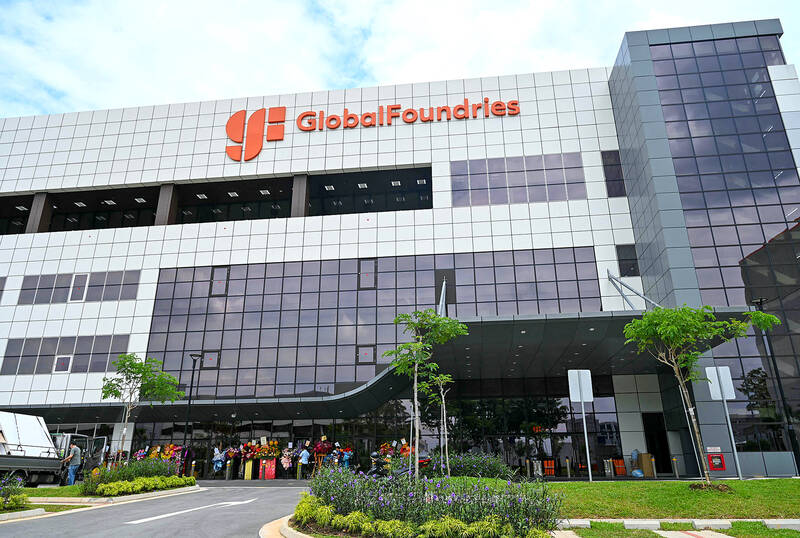
Six billion dollars sounds like a lot until you set it beside Intel’s $20 billion in March and TSMC’s $100 billion in April. GlobalFoundries, the Mubadala-owned chipmaker, announced its own number in June 2021 anyway: $6 billion to add capacity in Singapore, Germany and the United States while a chip shortage squeezed carmakers and electronics firms.
The split is lopsided. More than $4 billion goes to Singapore over two years, with $1 billion each for the German and American sites. Singapore, notably, is where the action is. The operation there accounts for about a third of the company’s revenue.
What Singapore gets
The new fab will add 450,000 wafers a year, which takes the whole campus to 1.5 million. Production is due to begin in early 2023, with most of the extra output running by the end of that year. Chips for cars and 5G equipment will come off the line under long-term contracts with customers, and the plant should create about 1,000 jobs. Another account of the project put its cleanroom at 250,000 square feet.
Tom Caulfield, the chief executive, said the money would not come from the company alone. Governments and customers paying in advance would contribute, and the Singapore Economic Development Board and committed customers were named as co-investors in the new fab. He called the $4 billion “the first” of a staged programme running five to ten years, and declined to put a figure on the total.
“GF is meeting the challenge of the global semiconductor shortage by accelerating our investments around the world,” Caulfield said. He also told reporters that automotive customers would get priority.
A shortage with no quick end
How did the world run short? Manufacturers misjudged demand for semiconductors during the pandemic, and then working from home pushed up sales of computers and other gadgets, so electronics makers ordered more chips than usual. Intel and other big names warned that the shortage would last into the following year. Caulfield was gloomier still, telling a news conference he believed the industry would fail to keep up with demand for the next five to eight years.
Governments joined in. The United States and Japan pressed for faster deliveries, and earlier that month the United States approved $54 billion to boost domestic chip production and research.
The company was also preparing to go public. Its Singapore plan followed an exit last year from a plant in the Chinese city of Chengdu, and a stock market listing was expected in late 2021. Building a fab and ordering tools for existing sites showed investors where management meant to take the business.
Sources
- GlobalFoundries to spend $6 billion on chip capacity expansion in Singapore, Germany and the U.S. (Reuters, reporter Aradhana Aravindan, Singapore; English rendering of the German-language republication on kulturpoebel.de)
- GlobalFoundries Expands Production Capacity With a $4 Billion Fab in Singapore (Tom's Hardware, Anton Shilov)
- Amid Global Chip Shortage, GlobalFoundries Files For U.S. IPO (Swarajya)