SEOUL, October 28, 2026. SK Hynix booked 104.6155 trillion won in third-quarter revenue, the first time in its history that a quarter has topped 100 trillion won. Operating profit came to 83.3338 trillion won, an 80% margin, and net profit was 39.7756 trillion won. Against that backdrop, Chinese technology groups are reported to be asking Korea’s memory makers for supply contracts that run to 2035.
The Chinese ask
Alibaba, Tencent and ByteDance are reportedly seeking long-term deals with Samsung Electronics and SK Hynix, some reaching to 2035, well past the usual three to five years. Industry sources say major US technology companies are also looking for long-term arrangements. The reason is AI servers and data centers, which need more memory than the industry can currently supply.
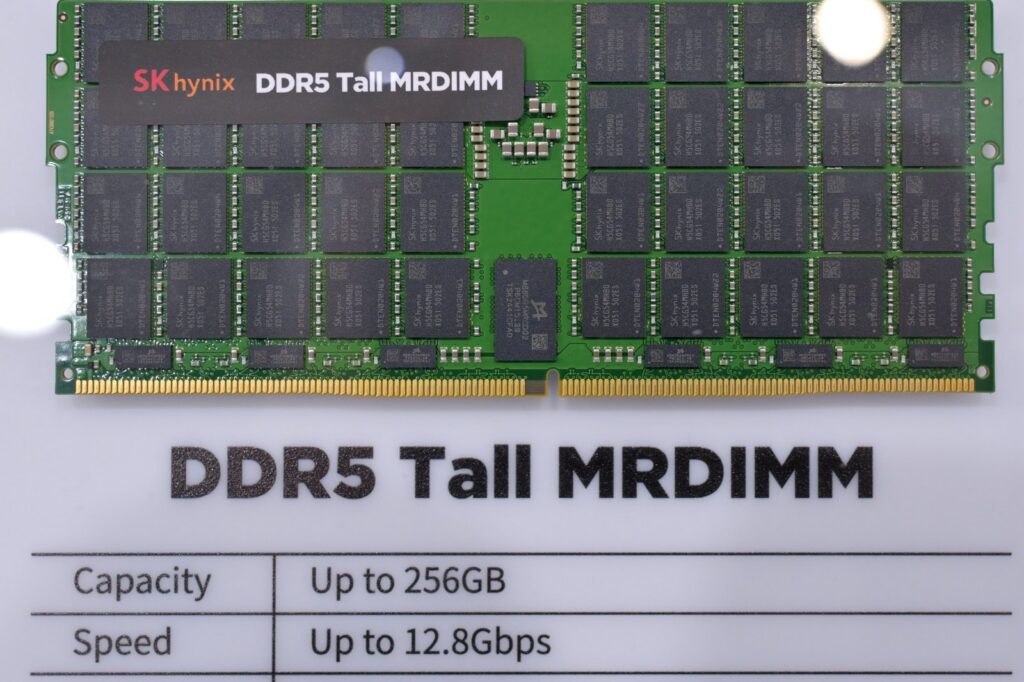
Two products are in demand: DDR and LPDDR. DDR helps servers process data quickly. LPDDR draws less power, is common in smartphones, and is attracting interest for AI servers because it can lower electricity use. Buyers are prepared to pay higher prices to lock in volume. For Samsung and SK Hynix, such deals mean steadier demand.
What the quarter looked like
Revenue rose 32% and operating profit 38% from the previous quarter, when revenue was 79.3187 trillion won. The company credits server DDR5, with HBM4 shipments starting in earnest, and in NAND the expansion of 321-layer TLC eSSD. Cash and equivalents ended the quarter at 114.5 trillion won, up 26.5 trillion won, while borrowings fell 2.8 trillion won to 15.8 trillion won, leaving net cash of 98.7 trillion won.
CEO Kwak Noh-Jung said SK Hynix discontinued its review of a Solidigm IPO after weighing financial market conditions. The company will instead return the gains from its Kioxia investment this year through a special dividend. The board approved a third-quarter dividend of 14 trillion won, or 20,000 won per share, half of it the special payout, plus a 20 trillion won share repurchase.
SK Hynix says it has already signed long-term agreements with 14 major customers, including leading cloud providers, covering more than 50% of its 2027 and 2028 production capacity. Those contracts typically run five years, and it is discussing extensions. Prices float within an agreed range. The company expects demand to outrun supply through 2030, since leading-edge processes are hard and new plants take long to build. It plans to ramp M15X to maximum capacity by year-end and expects HBM4 to overtake HBM3E in shipments and revenue in the fourth quarter.
How the company got here
Chung Ju-yung founded Hyundai Electronics in 1983. Its early SRAM bet failed on yields, and it moved to DRAM by importing foreign designs. By 1992 it was the world’s ninth DRAM maker. The 1997 Asian financial crisis led Seoul to push Hyundai and LG to merge their chip businesses, and in 1998 Hyundai bought LG Semicon for US$2.1 billion. Prices fell 80% in 2001, producing a 5 trillion won annual loss, and the company was rebranded Hynix. SK acquired it for US$3 billion in February 2012. It now counts Nvidia, Microsoft, Apple and Hewlett Packard Enterprise among its customers, and began trading American depositary receipts on Nasdaq on July 10, 2026, raising US$26.5 billion.
Sources
- Chinese tech giants seek long-term memory deals with Samsung and SK Hynix – Sammy Fans
- SK Hynix
- SK hynix Announces 3Q26 Financial Results | SK hynix Newsroom
Photo: 4300streetcar (CC BY 4.0)