
A single Taiwanese company now produces more than nine of every ten of the world’s most advanced computer chips, according to industry data. Taiwan Semiconductor Manufacturing Company, the largest dedicated foundry globally, controls over 90% of manufacturing capacity for chips built on 7-nanometer processes and below. These components power Apple’s iPhones and Macs, AMD’s Ryzen and EPYC processors, and Nvidia’s GeForce and data center graphics processing units. TSMC’s market capitalization surpassed $500 billion in 2021, and the company reported 2022 revenue of $75.9 billion.
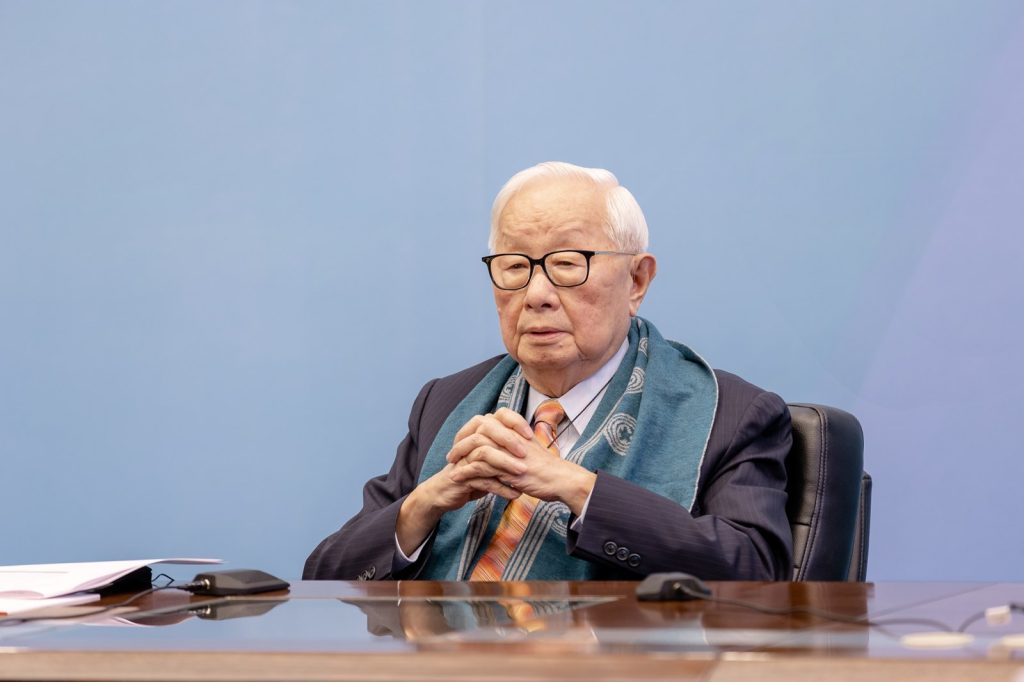
Founded in 1987 by Morris Chang, TSMC pioneered the pure-play foundry model — a business that makes chips designed by other firms rather than selling its own branded electronics. That model allowed chip designers to avoid building their own costly factories, and it reshaped how the electronics industry sources its core components.
A two-player market with a wide gap
TSMC’s dominance is measured not only in production volume but also in the technology gap separating it from its nearest competitor. Samsung Electronics holds the second-largest foundry position with roughly 17% market share in 2022. The South Korean conglomerate traces its origins to a 1938 trading company and entered the semiconductor business in 1974.
Today, Samsung produces its own Exynos processors and fabricates chips for Qualcomm and other clients. But the gap between the two leaders is substantial.
Advanced node production — the smallest, most powerful process technologies — has remained concentrated in East Asia for decades. That geographic concentration left the world reliant on a small number of plants for the brains inside phones, computers, and servers. The split between design-only chip houses and separate manufacturers, pioneered by TSMC, intensified that reliance because only a handful of companies can afford the multi-billion-dollar investment needed for leading-edge fabrication.
Geopolitical risk and the push for diversification
The concentration of advanced chip production in Taiwan presents a clear geopolitical risk, officials and analysts have noted. Any disruption to TSMC’s operations — whether from natural disaster, military conflict, or political instability — could cripple the global electronics supply chain.
The company alone accounts for the vast majority of the world’s most sophisticated logic chips. That risk has driven a deliberate push to diversify production geography. Both TSMC and Samsung are pouring tens of billions of dollars into new fabrication plants outside their home markets.
TSMC is building three fabs in Arizona, with a total investment of $40 billion announced between 2020 and 2022. The company also announced a $12 billion fab in Japan in 2021.
Samsung is building a $17 billion fab in Taylor, Texas, announced in 2021. These projects represent a shift toward spreading capacity, though analysts note that building and ramping advanced fabs takes years. The offshore fab builds now underway mark the beginning of a long-term effort to reduce dependence on a single region.
Persistent vulnerability and what to watch
The Arizona and Texas projects are part of a broader strategy to bring advanced manufacturing to the United States. Yet even with these investments, the concentration of capability in Taiwan remains the central fact of the semiconductor industry — and a persistent vulnerability for the global economy.
A single region still holds most of the capacity for the smallest process nodes, meaning disruption at one site could stall multiple industries at once. Readers depend on these components for daily devices and work, from smartphones to data center servers. What to watch next: the pace of construction at TSMC’s Arizona site and Samsung’s Texas facility, and whether further government incentives emerge to accelerate domestic chip production.
The world’s most advanced chips will remain largely made in Taiwan for the foreseeable future, even as billions of dollars flow into new factories elsewhere.




